TL;DR
Learn how a dental insurance verification virtual assistant improves pre-visit readiness, reduces preventable denials, and protects front-desk capacity in US practices.
Use a practical model for delegation, HIPAA-aware controls, payer follow-up SOPs, and first-90-day onboarding.
Track the right insurance KPIs so your team can prove ROI through fewer eligibility surprises and stronger schedule quality.
Table of Contents
- Introduction
- What does a dental insurance verification virtual assistant actually do for a US practice?
- Is a dental insurance verification virtual assistant HIPAA-compliant and legally workable?
- How much does a dental insurance verification virtual assistant cost, and what ROI should owners expect?
- Which workflows should a practice delegate first to get fast wins from a dental insurance verification virtual assistant?
- What KPIs should you track to manage a dental insurance verification virtual assistant long term?
- Final Thoughts
Introduction
A dental insurance verification virtual assistant can remove one of the biggest operational bottlenecks in US dental practices: preventable insurance surprises that appear at check-in and destabilize the day. Many offices are clinically strong but still lose momentum because eligibility checks happen too late, plan details are documented inconsistently, and prior-authorization status is discovered only when the patient is already in the chair flow.
If you are building a dental operations system this quarter, start with the broader service context at /industries/dental, then use this guide to design an insurance verification lane that is explicit, measurable, and stable under pressure.
This article follows a PAA-first structure with five high-intent buyer questions. You will see exactly what to delegate, how to apply HIPAA-aware controls, what cost and ROI model to use, how to onboard in 90 days, and which KPIs prove long-term impact. For adjacent context, pair this guide with Dental Virtual Assistant Guide for US Practices, Dental Virtual Receptionist Guide for US Practices, Dental Billing Virtual Assistant Guide for US Practices, HIPAA Virtual Assistant Compliance Guide for US Clinics, and Healthcare Virtual Assistant Playbook for US Practices.
Throughout, recommendations are anchored to reputable references including HHS HIPAA resources, HHS Business Associate guidance, CMS oral health resources, CDC Oral Health, and BLS data for medical records specialists.
What does a dental insurance verification virtual assistant actually do for a US practice?
Snippet answer: A dental insurance verification virtual assistant owns structured pre-visit insurance workflows such as eligibility checks, benefit documentation, authorization status follow-up, and payer exception routing so in-office teams can run cleaner schedules and reduce preventable claim friction.
Most offices frame insurance verification as a single task: “call payer, confirm active coverage.” In practice, verification is a workflow chain with timing dependencies. If one link breaks, downstream operations break with it. Front desk gets interrupted, patients receive unclear financial expectations, treatment starts are delayed, and billing teams inherit avoidable denial risk.
A high-performing dental insurance verification virtual assistant usually owns these workflow lanes:
- Next-day and next-48-hour eligibility checks by appointment type.
- Benefit snapshot documentation in a standardized template.
- Missing-information outreach for policy/member/group details.
- Prior-authorization status tracking and pending-item follow-up.
- Coordination notes for front desk and treatment coordinators.
- Escalation logs for high-risk exceptions and payer ambiguities.
The point is not to make one person “do everything insurance.” The point is to centralize repetitive verification execution into one accountable lane with clear output standards.
What stays in-office
Even with strong remote support, these responsibilities should remain with local leadership:
- Final financial policy interpretation for edge-case situations.
- Clinical sequencing decisions tied to authorization timing.
- High-discretion patient conversations involving disputes.
- Contract-level payer interpretation where legal exposure exists.
This boundary protects governance and keeps the remote role focused on repeatable throughput.
Why this role creates leverage quickly
Insurance verification work is highly interrupt-driven when unmanaged. In many offices, it is split across front desk staff who already handle phones, scheduling, and patient check-in. Because verification requires uninterrupted focus, this fragmented ownership usually creates rework.
A dedicated dental insurance verification virtual assistant improves outcomes through consistency:
- Verification happens earlier, before same-day pressure begins.
- Documentation quality improves because one template is used every time.
- Exception identification becomes predictable because queues are reviewed daily.
- Front-desk interruptions decline because information is prepared in advance.
Small improvements here compound across production, collections, and patient experience.
Practical daily cadence
A simple schedule works better than a complex one:
- Morning queue: next-day appointments and unresolved prior-day exceptions.
- Midday update: blockers needing office decision.
- Afternoon closeout: completion report and next-day risk flags.
This cadence gives managers visibility without adding unnecessary reporting overhead.
Common failure mode to avoid
The most frequent mistake is assigning verification as a side task to a general admin role without clear completion definitions. If “done” is vague, quality varies by person and day. Treat verification as a production lane with exact required fields, stop conditions, and escalation rules.
For teams designing broader role architecture, this same lane-based logic appears in Medical Virtual Assistant Guide for US Clinics and Virtual Medical Assistant Services for US Clinics.
Is a dental insurance verification virtual assistant HIPAA-compliant and legally workable?
Snippet answer: A dental insurance verification virtual assistant can operate in a HIPAA-aligned model when your practice defines role boundaries, enforces minimum-necessary access, uses approved systems, documents training, and audits performance on a recurring cadence.
Compliance is not automatic, and it is not prevented by remote work alone. The deciding factor is governance. Federal guidance is clear that covered entities and business associates must implement appropriate safeguards for PHI handling, regardless of physical location.
Primary references:
- HHS HIPAA for Professionals
- HHS Business Associate guidance
- HHS Security Rule guidance
- OCR compliance and enforcement
The practical takeaway: build controls first, then scale role scope.
Minimum control stack before go-live
Before a dental insurance verification virtual assistant handles live appointments, implement this baseline:
- Written role charter with allowed and prohibited actions.
- Unique credentials, MFA, and strict no-shared-login policy.
- Least-privilege permissions limited to required systems.
- Approved communication channels only for patient/payer contact.
- SOPs with version control and clear escalation rules.
- Training logs for workflows, privacy, and security expectations.
- QA sampling and documented corrective-action process.
- Offboarding checklist with immediate access revocation.
This is not bureaucracy for its own sake. It is operational reliability.
Where compliance risk usually appears
Most breakdowns are operational shortcuts:
- Access granted too broadly “for convenience.”
- Personal channels used for business communication.
- Missing documentation of completed verification actions.
- No audit sampling after launch.
- Weak escalation pathways for unclear payer responses.
Each shortcut weakens traceability. In insurance-heavy workflows, missing traceability drives both compliance and revenue risk.
Role boundaries that reduce risk
A strong model splits responsibilities clearly:
- The assistant executes scripted, SOP-based verification tasks.
- The office manager or billing lead resolves high-discretion exceptions.
- Clinical staff retain treatment decisions linked to authorization uncertainty.
When boundaries are explicit, training quality improves and escalation decisions become faster.
Aligning to broader dental operations standards
Even though insurance verification is administrative, it supports the clinical environment. Helpful ecosystem references include ADA practice resources, CDC oral-health guidance, and CMS oral-health resources. They reinforce a shared principle: consistent process design improves outcomes.
For deeper governance detail, see HIPAA Virtual Assistant Compliance Guide for US Clinics.
How much does a dental insurance verification virtual assistant cost, and what ROI should owners expect?
Snippet answer: The real ROI for a dental insurance verification virtual assistant comes from reduced insurance friction, better schedule readiness, and fewer preventable denials, not hourly-rate comparison alone.
Cost questions matter, but labor-rate-only comparisons usually lead to weak decisions. Verification is a throughput function tied directly to chair utilization and claim reliability. If verification is inconsistent, hidden costs appear quickly through front-desk interruptions, reschedules, patient confusion, and avoidable rework.
Build a full-cost model
Include these components in evaluation:
- Base service fee or compensation.
- Onboarding and calibration time.
- Manager oversight time during first 30 to 60 days.
- Tooling and communication stack costs.
- QA review and reporting cadence.
Then compare full cost against measurable process gains.
Main value drivers in dental insurance operations
A dental insurance verification virtual assistant usually creates value through:
- Higher pre-visit verification completion.
- Lower same-day insurance surprise rate.
- Faster exception routing before appointment day.
- Fewer eligibility-related denials downstream.
- Lower interruption load on front desk and treatment coordinators.
These are operational gains that also affect revenue.
Directional ROI example
Consider a mid-sized office with recurring verification misses:
- If next-day verification completion rises from inconsistent levels to near-complete coverage, same-day disruptions decline materially.
- If eligibility error-linked denials drop, rework time decreases and cash conversion improves.
- If front desk interruptions decline, call-response and patient check-in quality improve in parallel.
The point is not a universal benchmark. The point is to measure your own before-and-after trends with discipline.
KPI-linked ROI framework (30-60-90)
Use a phased interpretation:
- Day 30: process stability signs (completion rate, documentation quality, SLA adherence).
- Day 60: operational signs (lower same-day exceptions, faster escalation closure).
- Day 90: financial signs (decline in eligibility-driven denials, reduced rework hours, improved schedule reliability).
If day-30 operational discipline is weak, day-90 financial gains usually underperform.
Cost mistakes to avoid
Common modeling mistakes:
- Ignoring manager calibration time.
- Measuring only hourly spend, not output quality.
- Expanding role scope before first-lane stability.
- Skipping baseline data capture before launch.
Without baseline metrics, ROI discussions become opinion-based.
Practical decision rule
Treat hiring as an operating investment, not staffing relief. Move forward when you can define:
- Baseline insurance friction metrics.
- 90-day improvement targets.
- Weekly review cadence and owners.
- Escalation rules for unresolved payer issues.
For broader economics context, Virtual Assistant Cost Calculator Guide for SMB Teams and How to Hire Remote Talent Without Recruiting Fees are useful complements.
Which workflows should a practice delegate first to get fast wins from a dental insurance verification virtual assistant?
Snippet answer: Start with high-volume, low-ambiguity verification tasks that are easy to audit, then expand only after completion quality and escalation speed are stable.
The fastest way to fail this role is broad delegation on day one. The fastest way to win is a staged rollout where each lane has clear success criteria.
Phase 1 (Days 1-30): foundational verification lane
Primary objective: stable, predictable pre-visit execution.
Delegate first:
- Next-day eligibility verification for scheduled patients.
- Standardized benefit breakdown entry in the practice system.
- Missing policy-detail follow-up with scripted outreach.
- Exception tagging for unresolved or conflicting payer responses.
Keep in-office:
- Complex plan-interpretation decisions.
- Sensitive patient-financial disputes.
- Clinical scheduling decisions affected by uncertain authorization.
Success criteria:
- High verification completion before appointment day.
- Consistent note quality using one template.
- Daily unresolved-item log with owner and next step.
Phase 2 (Days 31-60): authorization and exception handling support
Primary objective: reduce downstream surprises.
Add:
- Authorization status follow-up for defined procedure categories.
- Payer call-log tracking with timestamped outcomes.
- Escalation pathway for unresolved auth timing conflicts.
Do not add yet:
- Full denial-management ownership.
- Complex appeals requiring mixed clinical/financial judgment.
Success criteria:
- Authorization lead-time compliance improves.
- Fewer day-of-service authorization gaps.
- Escalation response times become predictable.
Phase 3 (Days 61-90): optimization and cross-lane coordination
Primary objective: convert execution into managerial insight.
Add:
- Weekly trend reporting by payer and exception type.
- Root-cause notes on repeated eligibility misses.
- SOP feedback loop for recurring documentation defects.
Success criteria:
- Verification quality sustains under volume.
- Repeated exceptions decrease over time.
- Manager review time shifts from firefighting to trend coaching.
SOP format that keeps delegation clean
Use a short SOP per workflow:
- Trigger: when this workflow starts.
- Inputs: what data is required.
- Steps: exact sequence to execute.
- Stop conditions: when to escalate.
- Output: required note format and status code.
- QA points: what gets sampled weekly.
Short SOPs reduce ambiguity and accelerate training.
Staffing profile that fits this lane
Prioritize candidates who show:
- Process consistency in repetitive workflows.
- Clear written documentation habits.
- Calm escalation judgment under incomplete information.
- Discipline with scripts and checklists.
In insurance verification, reliability usually outperforms improvisation.
Tools and communication guardrails
Before expanding scope, ensure:
- Centralized tracker for verification status.
- Defined payer contact scripts.
- Single source of truth for appointment priority.
- Approved channels for patient and payer communication.
This lane-based deployment mirrors operating discipline from Dental Virtual Assistant Playbook for US Practices and Law Firm Intake Process Playbook: narrow start, stable quality, controlled expansion.
What KPIs should you track to manage a dental insurance verification virtual assistant long term?
Snippet answer: Use a compact KPI system tied to verification quality, appointment readiness, and downstream denial prevention; review weekly with clear ownership and corrective actions.
If measurement is vague, the role will drift. Strong KPI design makes performance transparent and improves decision speed.
Core KPI set (first 90 days and beyond)
Track these first:
- Next-day verification completion rate.
- Same-day insurance exception rate at check-in.
- Authorization lead-time compliance rate.
- Eligibility-related denial rate.
- Verification documentation QA pass rate.
- Front-desk interruption volume tied to insurance clarifications.
These metrics connect daily admin execution to business outcomes.
Leading vs lagging indicators
Use both categories:
- Leading indicators: completion rate, auth lead-time, QA pass rate.
- Lagging indicators: eligibility-related denials, rework hours, scheduling disruption impact.
Leading metrics show whether your system is healthy before financial lagging outcomes appear.
KPI ownership model
Assign explicit ownership:
- Assistant owns completion, documentation quality, and queue updates.
- Billing lead owns exception decisions and payer escalation strategy.
- Office manager/owner owns weekly review cadence and prioritization.
Shared responsibility without named owners usually reduces accountability.
Weekly review format (30 to 45 minutes)
A practical agenda:
- KPI snapshot vs baseline and prior week.
- Top three blockers by operational impact.
- Root-cause analysis for repeated exceptions.
- Corrective actions with owner and due date.
- SOP/script changes required this week.
Keep the meeting short and decision-focused.
QA sampling that keeps data trustworthy
KPI performance should be validated by QA:
- Sample completed verifications weekly.
- Score against SOP and note-quality checklist.
- Categorize error patterns.
- Apply targeted retraining.
Without QA, KPI improvements may hide documentation drift.
Dashboard design principle
Keep reporting simple enough to be used consistently:
- One-page weekly summary.
- Trend arrows for primary metrics.
- Exception heatmap by payer.
- Action tracker from prior week.
A perfect dashboard you never open is less useful than a simple one you review every Friday.
External context for sustained KPI culture
Administrative burden in healthcare and dental operations is persistent, not temporary. Reference points like CMS operational resources, ONC health IT resources, and BLS healthcare support trends support the same strategic point: disciplined admin systems are now a core performance lever.
For teams scaling beyond insurance verification, related internal frameworks include Insurance Back Office Services for US Agencies, Outsourced Bookkeeping Services Guide for US Businesses, and QuickBooks Virtual Assistant Guide for US Businesses, each emphasizing process-first, metric-led management.
Final Thoughts
A dental insurance verification virtual assistant is most valuable when treated as an operating function with clear ownership, not as ad hoc overflow support. Practices that define lane boundaries, enforce HIPAA-aware controls, and run weekly KPI reviews typically see fewer day-of-service surprises, better front-desk flow, and cleaner downstream revenue-cycle execution.
Start narrow, prove stability, and expand with discipline. That sequence protects patient experience while improving schedule reliability and financial predictability.
For dental-specific service context and role alignment, keep your strategy anchored to /industries/dental, then implement this guide as a phased 90-day rollout.
Frequently Asked Questions
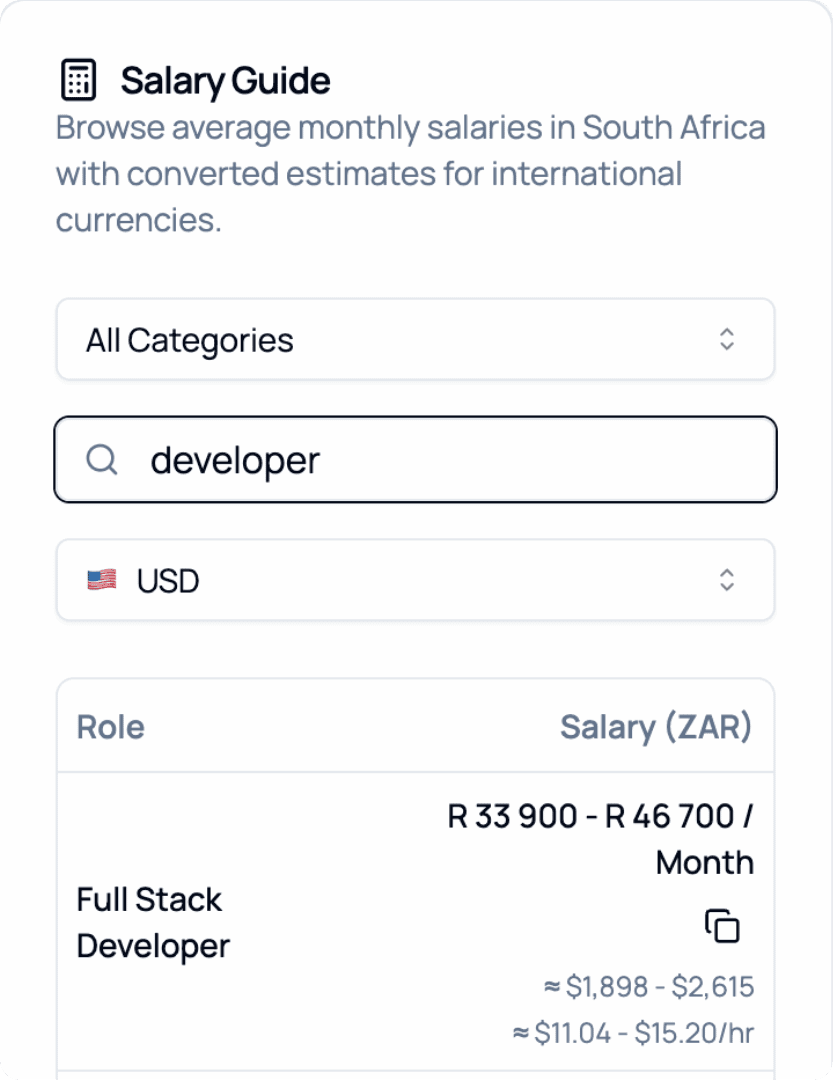
2026 Salary Guide: South Africa
Discover South African Salaries by Role. Compare costs and see how much you can save.