TL;DR
Learn how a dental virtual assistant improves schedule utilization, insurance execution, and front-desk consistency in US practices.
Use a practical 30-60-90 rollout for delegation, HIPAA-aligned controls, and KPI management.
See what to delegate first, what to keep local, and how to measure ROI with confidence.
Table of Contents
- Introduction
- What does a dental virtual assistant actually do in a US practice?
- How much does a dental virtual assistant cost, and what ROI should practices expect?
- Which workflows should a dental office delegate first to get fast wins?
- How do you run a dental virtual assistant model with HIPAA-aligned controls?
- How should a practice hire, onboard, and manage a dental virtual assistant in the first 90 days?
- Final Thoughts
Introduction
A dental virtual assistant can be a force multiplier for US practices when the model is built as an operations system, not a generic staffing shortcut. Teams often feel pressure first at the front desk, then in insurance, then in follow-up. Calls stack up, recall lists age, claims stall, and treatment plans sit unscheduled. The clinical team works harder, but avoidable administrative friction still leaks production.
If you are mapping your remote support strategy for dentistry, start with /industries/dental for service context, then use this guide to design a practical execution model for your own office. The key is to separate repeatable administrative work from clinical judgment, assign clear ownership, and measure outcomes weekly.
This article is structured in a PAA-first format so you can scan fast and implement fast. You will get direct answers to five high-intent questions buyers ask before hiring a dental virtual assistant: role scope, cost and ROI, delegation order, compliance design, and first-90-day management. You will also see internal operating references to related guides such as Healthcare Virtual Assistant Playbook for US Practices, HIPAA Virtual Assistant Compliance Guide for US Clinics, Virtual Medical Assistant Services for US Clinics, How to Hire a Virtual Assistant for Small Business in 2026, and Virtual Assistant Onboarding Checklist for 2026.
Throughout, we anchor operating choices to reputable references, including HHS HIPAA guidance, CMS oral-health resources, CDC dental infection prevention guidance, OSHA dentistry materials, and BLS occupation data.
What does a dental virtual assistant actually do in a US practice?
Snippet answer: A dental virtual assistant handles non-clinical, repeatable admin workflows like scheduling, eligibility prep, recall outreach, treatment follow-up, and claims tracking, while clinical decisions and patient care remain with licensed in-office staff.
A strong dental virtual assistant model starts with one principle: delegate by workflow, not by random task volume. Many offices fail because they throw miscellaneous work at a new remote hire and call it support. That creates context switching, quality drift, and weak accountability. High-performing practices define workflow lanes and assign clear daily outcomes.
Typical high-value lanes include:
- Appointment flow: confirmations, reschedules, short-notice fill-ins, and waitlist outreach.
- Insurance prep: pre-visit eligibility checks, benefit snapshot documentation, and missing-info flags.
- Recall/reactivation: overdue hygiene and perio maintenance outreach under scripted cadence.
- Treatment follow-up: unscheduled treatment callbacks, estimate reminders, and escalation routing.
- Revenue-cycle support: claim status checks, denial reason tagging, and payer follow-up logs.
This lane approach aligns with how a dental office actually makes money. Your chair schedule, accepted treatment, and clean claims process are connected. If one lane lags, production and patient experience both suffer.
What should stay in-house:
- Diagnosis and treatment decisions.
- Clinical risk conversations and informed consent.
- Complex payment disputes that need manager discretion.
- Exception handling with legal or high-risk patient implications.
What can be delegated safely with SOPs:
- Rules-based communication.
- Documentation and tracker maintenance.
- Task routing, queue prep, and callback sequencing.
- Portal status checks and standardized follow-up steps.
This is the same operating logic used in adjacent guides like Medical Virtual Assistant Guide for US Clinics and Legal Intake Specialist Playbook for US Law Firms: keep role boundaries explicit, then optimize repetitive workflows inside those boundaries.
From an execution standpoint, your assistant should work from a daily production list, not ad hoc instructions. A simple structure is enough:
- Morning queue review by lane priority.
- Output targets by lane (for example, 100 percent eligibility completion for next-day schedule).
- Escalation window and owner for exception cases.
- End-of-day closeout with unresolved items and handoff notes.
This moves the role from “extra helper” to “operational function.”
How much does a dental virtual assistant cost, and what ROI should practices expect?
Snippet answer: ROI is usually strongest when practices model value beyond hourly cost, focusing on schedule utilization, recall recovery, treatment follow-up conversion, and faster insurance execution; many offices see measurable gains by day 60 to 90.
A common buying mistake is to compare remote support only against local wage rates. That misses the actual economic question: how much production and cash flow are being lost because key admin workflows are inconsistent?
In dentistry, small execution failures compound quickly:
- Unconfirmed appointments increase avoidable open chair time.
- Delayed eligibility work causes same-day front desk congestion.
- Weak recall cadence reduces hygiene reactivation.
- Treatment follow-up gaps lower case acceptance velocity.
- Slow claim follow-up increases A/R aging.
A practical ROI model has three layers.
Layer 1: Capacity value
- Hours shifted from in-office overload to dedicated workflow execution.
- Reduction in overtime pressure for local staff.
- Better response speed across phone, text, and inbox channels.
Layer 2: Revenue impact
- More filled appointments through stronger confirmation and waitlist execution.
- More rebooked overdue patients from recall discipline.
- More converted unscheduled treatment via structured follow-up.
- Faster claim movement through consistent payer follow-up.
Layer 3: Risk and quality impact
- Fewer handoff misses due to standardized logs.
- Clearer audit trail for compliance-sensitive workflows.
- Higher consistency in patient communication scripts.
Example directional model for a mid-sized practice:
- If daily open-chair leakage drops by one additional recovered slot on average, monthly production impact can exceed the remote support cost by itself.
- If recall reactivation improves by even a low single-digit percentage, hygiene and downstream treatment opportunity rises.
- If eligibility completion moves close to full completion before appointment day, front-desk bottlenecks and same-day billing confusion decline.
The point is not a universal number. The point is decision quality. Practices that track lane KPIs weekly can prove whether the model is working. Practices that rely on subjective feeling usually under-manage the role.
Start with a 90-day runway and score progress by trend, not isolated weeks. Compare baseline to day-30, day-60, and day-90 for:
- Schedule fill rate.
- Recall reactivation conversion.
- Unscheduled treatment re-engagement.
- Eligibility completion before visit.
- Claims follow-up cycle time.
For broader hiring context, this approach complements the planning frameworks in How to Hire Remote Talent Without Recruiting Fees and Virtual Assistant Cost Calculator Guide for SMB Teams.
Which workflows should a dental office delegate first to get fast wins?
Snippet answer: Start with high-volume, low-ambiguity workflows that are easy to measure, especially confirmations, eligibility prep, recall outreach, and unscheduled treatment follow-up; then scale only after QA is stable.
The fastest path to results is a wave-based rollout. Most offices already know where pain lives, but execution improves when delegation follows a strict sequence.
Wave 1: Days 1-30
Primary objective: immediate throughput and visibility.
Delegate first:
- Appointment confirmations and short-notice fill sequence.
- Next-day insurance eligibility checks with standardized note format.
- Overdue recall outreach based on pre-defined list criteria.
- Voicemail triage and callback queue assembly.
Do not delegate first:
- High-complexity billing exceptions.
- Cross-lane mixed ownership tasks.
- Undefined “help wherever needed” work.
Success criteria in this phase:
- SLA compliance for calls/texts.
- Clear completion rate on next-day eligibility.
- Daily unresolved-item log with documented handoffs.
Wave 2: Days 31-60
Primary objective: revenue protection and conversion support.
Add lanes:
- Unscheduled treatment follow-up with multi-step cadence.
- Claim status follow-up for aging buckets.
- Referral coordination and records request tracking.
- Patient financing reminder workflows under approved scripts.
Success criteria in this phase:
- Improved contact-to-book ratio on targeted recall and treatment lists.
- Shorter average claim follow-up cycle time.
- Fewer rework loops caused by missing documentation.
Wave 3: Days 61-90
Primary objective: optimization and manager-grade reporting.
Expand to:
- No-show prevention segmentation by provider/day/time slot.
- Denial trend tracking by payer category.
- Monthly KPI pack with root-cause notes and corrective actions.
Success criteria in this phase:
- Stable QA pass rates.
- Predictable weekly output by lane.
- Leadership decisions informed by trend data, not anecdote.
What makes this rollout durable is not complexity. It is consistency. Keep SOPs lean, communication scripts clear, and escalation pathways explicit. For implementation rhythm, teams can also borrow the discipline used in Outsourced Bookkeeping Support Guide for US Businesses: phase scope, validate quality, then scale.
How do you run a dental virtual assistant model with HIPAA-aligned controls?
Snippet answer: HIPAA-aligned execution depends on governance controls, not geography: role-based access, least-privilege permissions, approved communication channels, training logs, auditable activity, and clear incident response.
Compliance confusion often blocks good operations decisions. A remote team is not automatically compliant or non-compliant. Compliance comes from the controls you design and enforce.
For US practices, reference points include:
A practical minimum control stack for dental admin delegation:
- Role charter with explicit allowed and prohibited actions.
- Written agreements and confidentiality standards reviewed by counsel.
- Unique accounts, MFA, and no credential sharing.
- Least-privilege access by workflow lane.
- Approved channels only for patient communication and documentation.
- SOP and script version control.
- QA sampling and audit cadence.
- Formal incident escalation and immediate access revocation process.
The most common compliance failures are operational, not theoretical:
- Over-broad permissions “to save time.”
- Personal channels used for business communication.
- Weak script discipline in sensitive conversations.
- Missing audit reviews after onboarding.
Lane-based permissions reduce risk and simplify management:
- Scheduling lane gets schedule and communication history only.
- Insurance lane gets payer and eligibility systems needed for assigned tasks.
- Claims lane gets status and denial tracking systems.
- Treatment follow-up lane gets estimate status and outreach logs.
This also improves training quality because each lane has clear rules, examples, and QA criteria.
Operationally, your model should align with broader care-environment standards for handoff quality and patient safety context, even though the role is non-clinical. Helpful sources:
These references do not expand scope into clinical duties. They help the admin system support the care system responsibly.
How should a practice hire, onboard, and manage a dental virtual assistant in the first 90 days?
Snippet answer: Hire for workflow reliability and communication discipline, onboard with lane-specific SOPs and scripts, then run a weekly QA and KPI cadence so performance improves predictably through day 90.
Many offices over-index on resume keywords and under-index on operating behavior. For this role, you want a candidate who executes process with consistency under clear quality standards.
Hiring profile that usually performs well:
- Strong written and verbal communication with documentation discipline.
- Proven experience in high-volume admin workflows.
- Comfort with scripts, checklists, and CRM/PMS tooling.
- Good escalation judgment for exceptions.
- Reliable routine execution over long cycles.
Interview for operating behavior, not just familiarity:
- Ask for a structured example of handling a broken process and how they restored consistency.
- Use scenario questions around patient communication boundaries.
- Test note quality with a short mock call summary.
- Evaluate how they prioritize queue-based workloads.
Onboarding blueprint (30-60-90)
Days 1-14:
- Role guardrails and compliance orientation.
- Tool access by least privilege.
- SOP walkthroughs by lane.
- Script roleplay and documentation standards.
- Daily supervisor review.
Days 15-30:
- Controlled production in one lane.
- QA sampling on every shift.
- Calibration sessions to tighten scripts and edge-case handling.
- Weekly KPI check on assigned outputs.
Days 31-60:
- Add a second lane after first-lane stability.
- Expand accountability to measurable conversion metrics.
- Shift from daily correction to pattern-level coaching.
Days 61-90:
- Establish weekly operating review with root-cause log.
- Standardize monthly leadership scorecard.
- Document process improvements and update SOP versions.
Management cadence that sustains gains
Use a simple rhythm:
- Daily: 10-15 minute blocker + queue review.
- Weekly: KPI trend review and QA sample calibration.
- Monthly: leadership performance summary and lane-level action plan.
Do not skip the measurement layer. A dental virtual assistant succeeds when managers can answer, with data, whether throughput, quality, and financial outcomes are improving.
Core KPI starter set:
- Schedule fill rate by provider/daypart.
- Confirmation completion and response-time SLA.
- Overdue recall contact-to-book conversion.
- Unscheduled treatment follow-up completion and conversion.
- Eligibility completion before appointment.
- Claim follow-up cycle time for targeted aging buckets.
- QA pass rate for script and documentation adherence.
If this cadence feels heavy, start smaller, but keep it consistent. Consistency beats complexity.
For teams building a repeatable operating model across roles, the structure aligns with Healthcare Virtual Assistant Playbook for US Practices and Law Firm Intake Process Playbook: clear lane ownership, documented workflows, and trend-based management.
Final Thoughts
A dental virtual assistant is not a shortcut. It is an operational system decision. Practices that win with this model do three things well: they protect role boundaries, run lane-based execution with SOP discipline, and manage performance with weekly KPI review.
If your office is currently trapped in reactive front-desk work, start with one lane, one owner, and one scorecard. Prove stability, then scale. That sequence protects patient experience while improving administrative throughput and financial consistency.
For service and role context specific to dentistry, use /industries/dental as your anchor page, then map this guide into your 90-day rollout plan.
Frequently Asked Questions
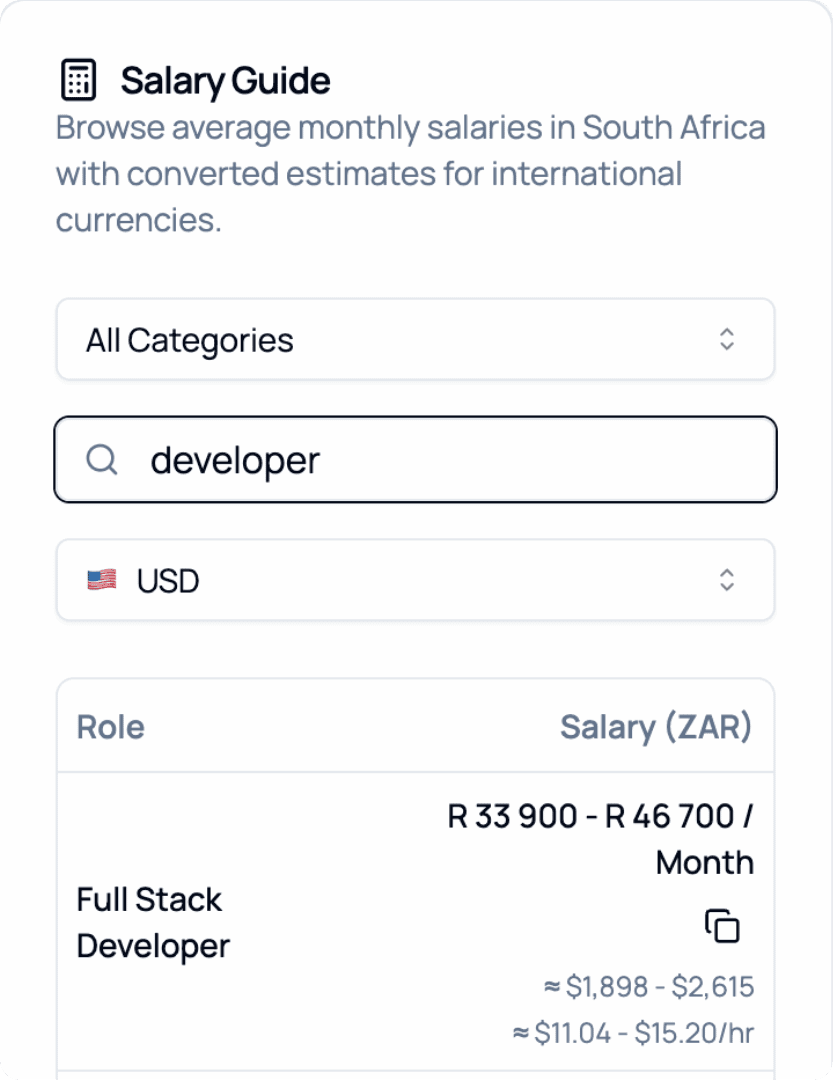
2026 Salary Guide: South Africa
Discover South African Salaries by Role. Compare costs and see how much you can save.