TL;DR
Understand realistic cost ranges and what changes virtual assistant pricing in 2026.
Compare self serve and done for you models so you can choose based on workload and risk.
Use a practical framework to build a role based budget before you hire.
Table of Contents
- What virtual assistant cost really means in 2026
- Typical pricing ranges by model
- Why two teams can pay the same and get different outcomes
- The five biggest cost levers
- Self serve versus done for you
- Budget planning by business stage
- Cost control without quality loss
- A practical hiring calculator framework
- Common mistakes that inflate spend
- How HireSava supports both cost paths
- Implementation plan for the next two weeks
- Final answer
- FAQ
If you are searching virtual assistant onboarding checklist 2026, you are likely trying to make a budget decision without slowing down hiring or sacrificing quality. Most teams do this backwards. They compare only hourly rates, then discover later that delivery quality, onboarding drag, and management overhead are the real cost drivers. This guide gives you a practical framework you can use immediately.
In 2026, virtual assistant hiring works best when you define outcomes first and pricing model second. If outcomes are vague, even a low cost hire can become expensive. If outcomes are clear, you can choose the right model quickly and scale with less risk.
What virtual assistant cost really means in 2026
When founders ask what a virtual assistant costs, they usually mean one of three things. First is direct pay rate. Second is total monthly spend. Third is cost to get reliable output without constant supervision. The first number is easy to compare and the third number is what actually determines ROI.
Typical pricing ranges by model
Self serve offshore hiring often sits in lower hourly ranges, while managed support comes at higher monthly totals because it bundles sourcing, vetting, onboarding structure, and oversight. Onshore support can be significantly higher depending on specialization and timezone requirements. The right model depends on your team bandwidth and tolerance for execution risk.
Why two teams can pay the same and get different outcomes
Team A hires at a low rate but lacks SOPs and spends weeks on trial and error. Team B pays slightly more but receives a role matched candidate with process support and clear weekly scorecards. Team B reaches useful output faster and usually wins on total cost over a quarter.
The five biggest cost levers
- Role complexity and decision load.
- Tool stack complexity and training burden.
- Expected response times and coverage windows.
- Domain specialization such as legal, real estate, insurance, or ecommerce operations.
- Quality controls such as manager review, QA loops, and documented handoffs.
Self serve versus done for you
Self serve is usually a better fit for operators who can run sourcing, interviewing, onboarding, and quality control internally. Done for you is usually better when founder time is constrained, hiring mistakes are expensive, or speed matters because growth opportunities are time sensitive.
Budget planning by business stage
Early stage teams should prioritize one high leverage role with a clear output target. Growth stage teams should prioritize process reliability and coverage continuity. Mature teams should move to role based pods and cross trained backups so output does not depend on one person.
Cost control without quality loss
The best way to lower cost is not squeezing rate. It is reducing rework. Set explicit weekly outcomes, define quality thresholds, and build simple SOPs. Rework can erase any rate advantage in a single month.
A practical hiring calculator framework
Start with expected weekly outputs. Estimate time requirement for each output. Add management overhead and onboarding ramp. Compare two to three models based on total monthly cost and expected time to stable output. Choose the model with strongest expected ROI over ninety days, not just week one.
Common mistakes that inflate spend
Hiring without role scorecards, combining unrelated responsibilities into one role, ignoring communication fit, skipping onboarding docs, and changing priorities daily are the fastest ways to waste budget.
How HireSava supports both cost paths
HireSava supports self serve hiring for operators who want direct control and done for you recruiting for teams that want structured sourcing and vetting support. This gives you flexibility to start with one model and evolve as your workload changes.
Implementation plan for the next two weeks
Week one: define role outcomes, tool access, and scorecard. Week two: launch sourcing, evaluate candidates against role specific criteria, and start a measured onboarding sprint. By end of week two, you should have clear performance signals and a decision to scale, adjust, or replace.
Final answer
If you are evaluating virtual assistant cost in 2026, compare full delivery cost, not just hourly rate. Teams that align role scope, management model, and quality standards tend to reach stable output faster and spend less over time.
FAQ
What is a realistic monthly budget for one virtual assistant?
It depends on role complexity and management model. A practical approach is to set a target output, then map budget to the model that can deliver that output consistently.
Is lower hourly always better?
No. Lower hourly can increase hidden costs when onboarding takes longer or quality is inconsistent.
When should I choose done for you recruiting?
Choose done for you when speed and quality control matter more than minimizing direct hourly spend.
Can I switch from self serve to managed later?
Yes. Many teams start self serve, then move to managed support as workload and quality requirements increase.
How do I avoid overhiring?
Use a role scorecard with weekly outcomes and only add scope once baseline outputs are stable.
Explore related hiring options
Useful next pages based on this article's topic:
- Virtual Assistant role overview — hiring and onboarding guidance
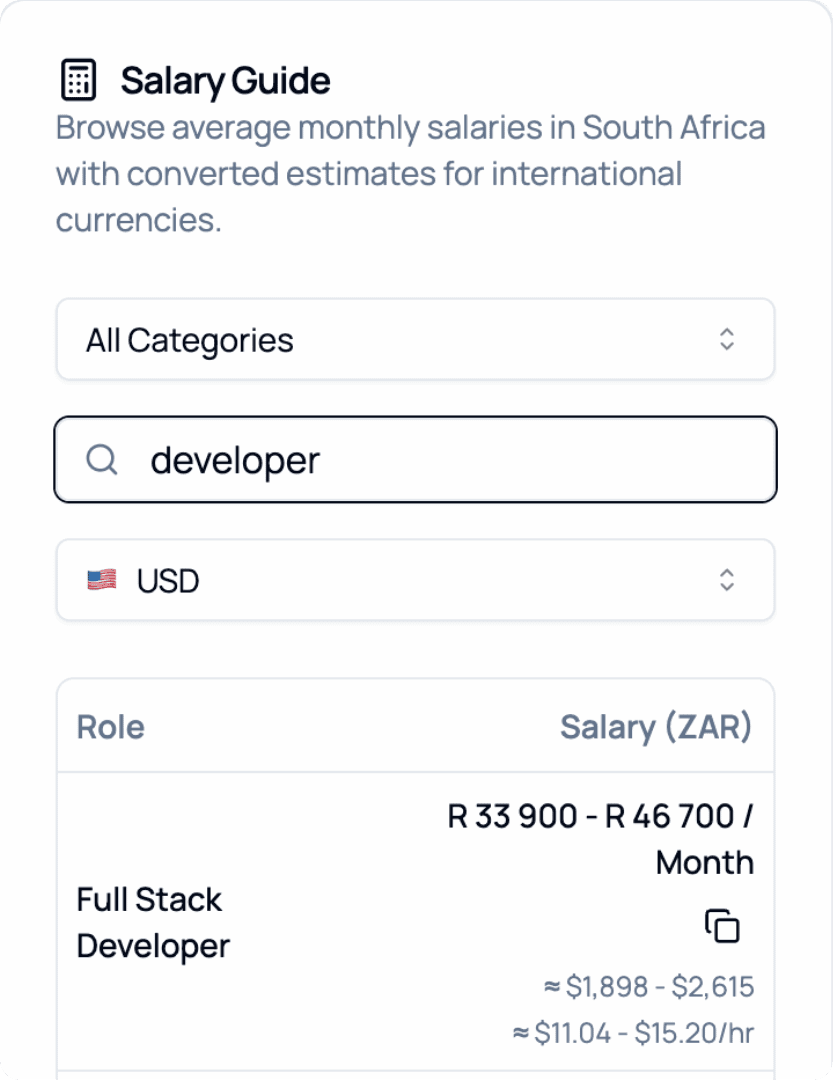
2026 Salary Guide: South Africa
Discover South African Salaries by Role. Compare costs and see how much you can save.