TL;DR
Understand what virtual medical assistant services include for front-desk, intake, referral, and revenue-cycle workflows.
Learn which clinic tasks to delegate first to reduce no-shows, speed up scheduling, and improve patient communication.
Use a HIPAA-aware hiring and onboarding framework to launch safely and measure ROI in the first 90 days.
Table of Contents
- Introduction
- What are virtual medical assistant services, and what do they actually cover in a US clinic?
- Which clinic workflows should be delegated first to get fast, low-risk ROI?
- How much do virtual medical assistant services cost, and how should clinics calculate ROI?
- How can clinics use virtual medical assistant services while staying HIPAA compliant and secure?
- What is the best way to hire, onboard, and manage a virtual medical assistant in the first 90 days?
- Final Thoughts
Introduction
US clinics are under constant pressure: patient demand is high, administrative load keeps rising, and labor costs continue to tighten margins. Most leaders do not struggle because they lack clinical quality. They struggle because too much time is trapped in repetitive operations. Phones ring all day, scheduling queues grow, insurance checks sit unresolved, referrals move slowly, and your in-house team spends valuable hours context-switching between urgent but low-complexity tasks.
That is exactly where virtual medical assistant services can change the operating model.
When implemented correctly, these services are not a generic outsourcing patch. They are a structured way to separate clinical judgment from operational throughput. Your clinicians and practice leaders stay focused on care quality, case complexity, and patient outcomes, while trained remote support handles recurring workflows such as appointment coordination, patient follow-ups, intake preparation, eligibility checks, and documentation support.
For clinics, this matters for three reasons:
- It improves access. Patients get faster responses and fewer scheduling delays.
- It protects revenue. Fewer avoidable admin errors mean fewer denials, fewer write-offs, and cleaner handoffs.
- It reduces burnout. Onsite teams spend less time firefighting repetitive tasks.
The market environment reinforces this need. The Centers for Medicare & Medicaid Services continues to push value-based care models and stronger operational accountability. The Agency for Healthcare Research and Quality highlights the connection between care quality and system reliability. The U.S. Bureau of Labor Statistics healthcare support data also reflects ongoing demand pressure across healthcare roles. In plain terms, clinics need durable systems, not heroic effort.
This guide answers the most common PAA-style questions clinic operators ask before buying virtual medical assistant services. It focuses on practical execution for US clinics, not theory.
If you are evaluating support models now, start with HireSava's healthcare overview at Healthcare Industry Support, then use this article to design role scope, compliance controls, and launch metrics.
You will also see adjacent playbooks that support implementation, including How to Hire a Virtual Assistant for Small Business in 2026, Virtual Assistant Onboarding Checklist, Virtual Assistant Cost Calculator Guide, and How to Hire Remote Talent Without Recruiting Fees.
What are virtual medical assistant services, and what do they actually cover in a US clinic?
Short answer: virtual medical assistant services provide remote, process-driven support for administrative and coordination workflows in healthcare, including patient scheduling, intake prep, insurance verification, referral management, documentation support, and non-clinical patient communication.
Most clinics do not need “more help” in general. They need specific ownership for tasks that are frequent, rules-based, and time-sensitive. A healthcare virtual assistant works best when the role is designed around clear workflow lanes with SOPs, turnaround targets, and escalation rules.
In day-to-day clinic operations, these services typically include:
- Patient scheduling and rescheduling: inbound/outbound appointment coordination, calendar optimization, waitlist fills, and cancellation recovery.
- Patient intake support: collecting missing forms, confirming demographics, and preparing records before visits.
- Insurance eligibility verification: checking active coverage, plan details, copays, and referral/pre-auth requirements before the appointment.
- Referral coordination: tracking inbound/outbound referral status, obtaining records, and following up with specialist offices.
- Medical documentation support: pre-chart preparation, inbox organization, and EHR task routing based on clinic protocols.
- Billing-adjacent admin: claim status follow-up, denial packet preparation support, and patient billing communication triage.
- Patient communication workflows: reminders, post-visit follow-ups, telehealth instructions, and no-show recovery outreach.
A few terms are often used interchangeably but should be separated:
- Medical virtual assistant: broad term for remote non-clinical support in healthcare.
- Remote medical administrative support: often focused on scheduling, records, front-office workflows, and communication.
- Medical billing support virtual assistant: concentrated on claims, follow-ups, payment posting support, and denial workflows.
- HIPAA compliant virtual assistant: indicates that controls, training, and access governance were designed for protected health information handling.
This distinction matters because many clinics buy a broad package and end up with unclear accountability. A role with vague ownership creates slower response times and quality drift. A role with bounded workflow ownership creates consistent output.
What these services should not own
A virtual assistant should not independently make clinical decisions, diagnose, prescribe, or operate outside your legal and compliance framework. The role is operational, not medical judgment.
The U.S. Department of Health and Human Services OCR HIPAA guidance is clear that covered entities and business associates must protect PHI with appropriate safeguards. Role design must follow that requirement from day one.
Why this model works for clinics specifically
Clinics live and die by flow reliability. Small delays stack quickly:
- One eligibility miss can trigger a denied claim.
- One referral bottleneck can delay care and frustrate patients.
- One missed reminder can become an empty slot and lost revenue.
By assigning recurring administrative throughput to a healthcare virtual assistant, clinics build a more stable operating rhythm. That stability improves both patient experience and financial performance.
Which clinic workflows should be delegated first to get fast, low-risk ROI?
Short answer: delegate high-volume, rules-based tasks first, especially scheduling, eligibility checks, referral tracking, reminder/follow-up communication, and EHR inbox triage.
Many clinics delegate in the wrong order. They start with complex, exception-heavy processes and conclude that remote support “doesn’t work.” The better approach is phased delegation: begin where variability is lower and measurable impact is immediate.
Use this delegation filter:
- Task happens multiple times per day.
- Process can be documented with a checklist.
- Completion quality can be audited quickly.
- Turnaround time directly affects patient access or revenue.
1) Appointment scheduling and no-show prevention
This is usually the fastest win. A virtual assistant can own reminder cadence, rebooking workflows, waitlist backfills, and confirmation protocols. For many clinics, reduced no-shows alone justifies early investment.
Practical workflow examples:
- 72-hour reminder with pre-visit instructions.
- 24-hour confirmation plus reschedule link/call option.
- Same-day waitlist backfill for late cancellations.
- Post no-show callback sequence within 24 hours.
2) Insurance verification and pre-visit financial clarity
Eligibility verification is one of the most valuable medical administrative support functions because errors here ripple into denials and patient billing disputes.
A trained VA can prepare a standardized pre-visit verification checklist:
- Active status and effective dates.
- Benefit details and estimated patient responsibility.
- Referral/pre-auth needs.
- Documentation requirements by payer.
The CMS provider resources and payer-specific manuals should shape your SOPs.
3) Referral and records coordination
Referral workflows often fail due to fragmented communication between offices. A dedicated owner can track request dates, record receipt, follow-up cadence, and appointment completion.
This directly improves patient progression through care and reduces front-desk rework.
4) EHR inbox and admin queue triage
A virtual medical office assistant can pre-sort inbox tasks by protocol, route items to appropriate staff, and escalate urgent items using clear criteria. Even partial ownership can sharply reduce clinician inbox overload.
5) Post-visit communication and recall campaigns
Many clinics lose reactivation opportunities because outreach happens inconsistently. A VA can run recall lists, preventive-care reminders, chronic-care follow-ups, and annual-visit campaigns under approved scripts.
The CDC preventive care resources and specialty-specific care cadence guidelines can inform these campaigns.
A practical “first 30 days” delegation map
Week 1:
- Scheduling reminders and confirmations.
- Basic intake completion calls.
Week 2:
- Eligibility verification prep with QA review.
- Referral status logging and follow-up.
Week 3:
- EHR inbox categorization and routing support.
- Recall outreach for overdue patients.
Week 4:
- KPI review and SOP refinement.
- Expand ownership in one additional lane.
If you need a broader hiring framework before launch, use How to Hire Remote Talent Without Recruiting Fees and Virtual Assistant Onboarding Checklist as implementation companions.
How much do virtual medical assistant services cost, and how should clinics calculate ROI?
Short answer: cost varies by scope, complexity, and coverage hours, but clinics should buy outcomes, not cheap hours; ROI comes from fewer no-shows, cleaner eligibility workflows, faster intake, and reduced onsite admin burden.
Pricing discussions often fail because clinics compare service fees to salary only. Real decision-making requires total cost and total impact.
Cost model: what to include
For in-house administrative hiring, include:
- Base compensation.
- Payroll taxes and benefits.
- Hiring and onboarding time.
- Manager oversight cost.
- Paid non-productive time.
- Turnover and replacement risk.
For virtual medical assistant services, include:
- Monthly fee or hourly blocks.
- Scope definition and onboarding ramp.
- Tool access and supervision cadence.
- QA and compliance governance effort.
A low fee is meaningless if the service produces rework or denial risk. A higher fee can be cheaper if output quality and reliability are stronger.
ROI buckets clinics can measure quickly
- Capacity recovery
- Front-desk hours redirected from repetitive calls to patient-facing exceptions.
- Clinician/admin time saved from inbox triage and pre-visit cleanup.
- Revenue protection
- Lower no-show rates from reminder and rebooking consistency.
- Fewer eligibility-related claim issues.
- Faster referral completion and visit conversion.
- Patient experience
- Reduced hold times and callback delays.
- Higher appointment access consistency.
- Better communication continuity before and after visits.
KPI starter set for 90-day evaluation
Track baseline vs post-launch for:
- No-show rate by provider/location.
- Time-to-answer and callback completion rate.
- Eligibility error rate.
- Days-to-referral completion.
- New patient scheduling lead time.
- Claim denial rate for registration/eligibility reasons.
- Patient communication SLA adherence.
Tie each KPI to one workflow owner. If ownership is ambiguous, performance drifts.
Common pricing mistakes to avoid
- Buying “general admin support” with no lane ownership.
- Ignoring QA requirements in the first 30 days.
- Underestimating documentation effort for SOP handoff.
- Delegating too many complex tasks before stabilization.
- Measuring only labor savings, not throughput and quality.
External benchmarks that help set realistic expectations
The Medical Group Management Association (MGMA) regularly discusses practice operations trends around staffing strain and access performance. The American Medical Association practice resources also emphasize administrative burden as a core operational challenge.
Use those perspectives as context, but build your model using your clinic’s own data. Benchmark insight is useful; internal baseline is decisive.
If you are budget-planning now, run a practical estimate with Virtual Assistant Cost Calculator Guide and pair it with a KPI scorecard before purchasing.
How can clinics use virtual medical assistant services while staying HIPAA compliant and secure?
Short answer: clinics can use virtual medical assistant services safely when they implement role-based access, business associate agreements, documented SOPs, secure tooling, audit logs, and ongoing quality controls.
Compliance concerns are valid. Healthcare operations involve PHI, payer data, financial information, and legal exposure. The right question is not whether remote support is inherently risky; it is whether your controls are mature.
Core control framework for clinics
- Contractual controls
- Execute a Business Associate Agreement when applicable.
- Define permitted uses/disclosures and breach notification terms.
- Clarify subcontractor controls and data handling obligations.
- Access controls
- Enforce least-privilege system access.
- Use unique user accounts and MFA.
- Restrict download/export rights by role.
- Remove access immediately on role change/offboarding.
- Process controls
- SOPs for every recurring workflow touching PHI.
- Escalation playbooks for exceptions.
- Verification checklists for high-risk steps (eligibility, referrals, billing details).
- Technical controls
- Approved communication channels only.
- No PHI in unauthorized messaging tools.
- Encrypted systems where required.
- Audit logging and periodic access review.
- Training and governance
- Initial HIPAA/security orientation.
- Quarterly refreshers and policy updates.
- QA audits with corrective action loops.
The HHS HIPAA Security Rule guidance and ONC health IT resources are good primary references for control design.
Where clinics usually create risk
- Shared logins for convenience.
- PHI sent through unsecured channels.
- Unclear escalation for urgent clinical messages.
- No periodic QA review after onboarding.
- Informal workarounds that bypass SOPs.
These are governance failures, not remote-work failures.
A practical QA cadence that works
Daily (first month):
- Spot-check completed tasks for accuracy and documentation quality.
Weekly:
- Review turnaround SLAs, exception rates, and escalation compliance.
Monthly:
- Audit access permissions and security behavior.
- Update SOPs based on recurring edge cases.
For many clinics, this routine turns compliance from a one-time checklist into ongoing operational discipline.
Patient trust implications
Security and responsiveness are connected. Patients judge trust not only by privacy policy language but by whether your clinic communicates clearly, follows through on requests, and resolves issues without repeated calls.
A well-governed HIPAA compliant virtual assistant model can improve both privacy posture and communication quality when implemented with explicit controls.
What is the best way to hire, onboard, and manage a virtual medical assistant in the first 90 days?
Short answer: define workflow ownership and KPI targets before recruiting, hire through practical task assessments, then run a 30-60-90 day onboarding plan with structured QA, escalation rules, and weekly performance reviews.
Most failed implementations break before day one. Clinics post a vague role, interview for personality, and skip process documentation. The result is predictable: confusion, rework, and frustration.
A stronger rollout has five phases.
Phase 1: Role architecture (before interviews)
Create a one-page scorecard:
- Primary workflow lanes.
- Out-of-scope boundaries.
- Daily/weekly deliverables.
- Response-time and quality targets.
- Escalation matrix with named owners.
Decide whether you need one broad coordinator or multiple specialized lanes (for example, scheduling + intake vs eligibility + referral).
Phase 2: Task-based hiring
Use short paid assessments instead of abstract interviews:
- Schedule optimization exercise with same-day cancellation scenario.
- Eligibility verification simulation with payer variation.
- Referral follow-up workflow with missing-record edge case.
- Patient message drafting for reminder and reschedule contexts.
Score on accuracy, communication clarity, protocol adherence, and speed.
Phase 3: 30-day launch
Days 1-10:
- System setup, access controls, SOP walkthroughs.
- Shadowing with live examples.
- Daily check-ins for rapid calibration.
Days 11-20:
- Independent execution in low-risk lanes.
- QA review for each completed workflow.
- Script/template refinement.
Days 21-30:
- Expand controlled ownership.
- Begin weekly KPI reporting.
- Reduce supervision from daily to scheduled cadence.
Phase 4: 60-day stabilization
- Introduce one additional workflow lane.
- Tighten SLA targets and exception handling.
- Document top recurring issues and fixes.
- Compare KPI trendlines against baseline.
At this stage, most clinics start seeing consistent improvement in scheduling velocity, reduced no-show friction, and cleaner pre-visit preparation.
Phase 5: 90-day optimization
- Decide scale path: deepen one role or add a second specialist.
- Build cross-coverage for continuity.
- Formalize governance dashboard for leadership review.
- Link VA outputs to front-desk and billing outcomes.
Management rhythm that keeps quality high
A virtual medical office assistant performs best under simple, consistent management:
- Weekly 30-minute performance review.
- Monthly SOP refresh session.
- Clear “red flag” escalation channels.
- Visible KPI board shared with clinic leadership.
This is where many clinics underestimate the upside. The goal is not just labor substitution. The goal is to build repeatable operations that scale without chaos.
If you are comparing talent pools for communication-heavy patient workflows, Why US Companies Hire from South Africa offers additional context on language and service alignment.
Final Thoughts
For most US clinics, growth constraints are operational before they are clinical. Demand exists, but throughput is unstable. Staff capacity is finite, and administrative complexity continues to rise.
That is why virtual medical assistant services are now a practical operating decision, not an experimental one.
When clinics delegate the right workflows in the right order, they usually see three outcomes quickly:
- Faster patient communication and scheduling reliability.
- Cleaner pre-visit and insurance workflows with fewer avoidable errors.
- Better focus for onsite teams on complex, high-value work.
The key is disciplined implementation:
- Start with bounded workflow ownership.
- Build HIPAA-aware controls and QA from day one.
- Measure outcomes with a KPI dashboard, not anecdotes.
- Expand only after the first lane is stable.
Use this guide as your launch framework, then tailor it to specialty, payer mix, and staffing model. If you need role-mapping support first, begin at Healthcare Industry Support, then align your rollout plan with Virtual Assistant Onboarding Checklist and Virtual Assistant Cost Calculator Guide.
Done well, this model does more than reduce admin burden. It gives your clinic a reliable operational engine to improve access, protect revenue, and support better patient care at scale.
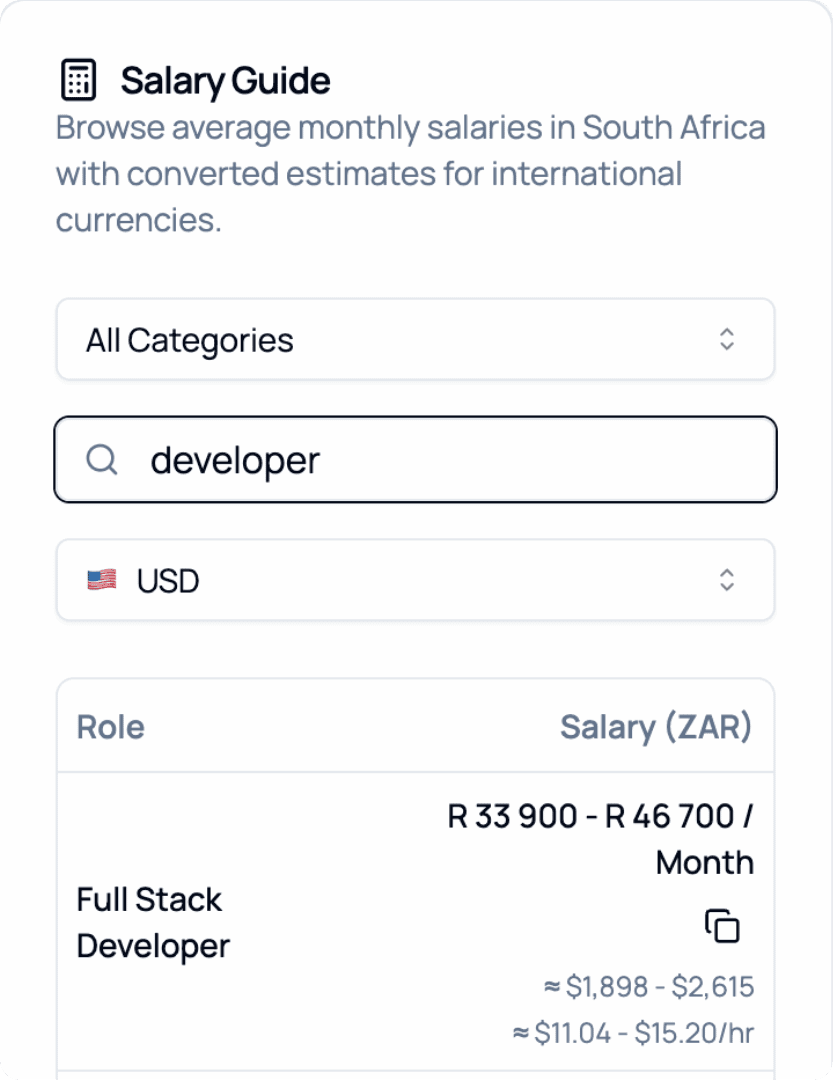
2026 Salary Guide: South Africa
Discover South African Salaries by Role. Compare costs and see how much you can save.