TL;DR
Understand what outsourced bookkeeping services include, where controller or CPA judgment should remain in-house, and how to avoid scope confusion.
Use a practical cost model that compares service fees, supervision overhead, and the business value of faster close cycles and cleaner books.
Follow a phased delegation approach for AP/AR operations, reconciliations, and month-end support without losing control quality.
Implement governance basics for secure, compliant bookkeeping operations with role-based access, SOPs, and recurring quality reviews.
Table of Contents
- Introduction
- What are outsourced bookkeeping services, and which US businesses benefit most?
- How much do outsourced bookkeeping services cost, and how should you measure ROI?
- Which bookkeeping tasks should you outsource first for the best results?
- How do you choose the right outsourced bookkeeping services provider?
- How do you keep outsourced bookkeeping services secure, compliant, and high-performing over time?
- Final Thoughts
Introduction
Most US business owners do not struggle because they lack accounting software. They struggle because finance operations are inconsistent: transactions are posted late, reconciliations are unfinished, accounts receivable follow-up is reactive, and month-end close turns into a recurring fire drill.
That is exactly the operating gap that outsourced bookkeeping services are meant to solve. When structured correctly, these services create reliable execution capacity without forcing a full-time in-house hire before workload and complexity justify it. If you are evaluating role design in your vertical, start with HireSava's accounting industry support page, then use this guide to design scope, controls, and performance metrics.
This guide is written in a PAA-first format with five high-intent buyer questions. You will get practical answers on service scope, pricing and ROI, delegation sequence, provider selection, and governance.
You will also see references to reputable anchors such as IRS recordkeeping guidance, SBA finance management guidance, NIST Cybersecurity Framework, and AICPA resources.
For additional context, pair this article with QuickBooks Virtual Assistant Guide for US Businesses, Outsourced Bookkeeping Support Guide for US Businesses, Virtual Assistant Cost Calculator Guide for SMB Teams, How to Hire a Virtual Assistant for Small Business in 2026, and How to Hire Remote Talent Without Recruiting Fees.
What are outsourced bookkeeping services, and which US businesses benefit most?
Snippet answer: Outsourced bookkeeping services are recurring, process-driven finance operations delivered by an external specialist or team under your SOPs and control model, while your internal owner, controller, or CPA retains final accounting policy and sign-off authority.
The biggest misconception is that outsourcing bookkeeping means handing over "all finance" to a third party. That is not the model most growth-stage companies need. A strong model is modular. You outsource repeatable process execution, keep policy and judgment internal, and establish explicit escalation paths.
What outsourced bookkeeping services usually include
A mature service scope typically includes:
- Daily transaction categorization using your approved chart of accounts
- Receipt and source-document collection and attachment hygiene
- Accounts payable queue management with due-date tracking
- Accounts receivable follow-up and aging updates
- Bank and credit card reconciliations
- Month-end close checklist support and variance prep
- Exception tracking with documented escalation
This work is operationally heavy and consistency-sensitive. It can be delegated effectively when SOPs are clear.
What should usually remain in-house
US businesses should usually keep these responsibilities with internal finance leadership or a licensed advisor:
- Accounting policy decisions (for example, recognition logic and classification rules)
- Tax strategy and filing decisions
- Material accrual and reserve judgment
- Final financial statement approval
- Lender and board-level accounting representation
A practical rule: process execution can be outsourced; accountability for judgment should remain with named internal owners.
Business profiles that gain the most
Outsourced bookkeeping services are often highest leverage for:
- Founder-led firms where leadership is still doing bookkeeping after hours
- Service businesses with growing invoice volume and weak AR rhythm
- Ecommerce operators managing high transaction counts and frequent exceptions
- Multi-entity teams that need close discipline before adding local headcount
- Agencies and professional firms where delivery leaders are pulled into finance cleanup
Business profiles that should fix fundamentals first
Outsourcing cannot fix structural chaos. Stabilize first if you have:
- No documented chart-of-accounts standards
- No monthly close checklist
- No owner for approval decisions
- Inconsistent source-document retention
- Frequent undocumented adjustments
If these basics are missing, service handoffs create motion but not quality.
Why timing matters
Many operators wait until bookkeeping problems become urgent, then try to backfill months of data under pressure. That creates high error risk and poor decision visibility. A better model is early delegation with clear rules so books remain current as complexity increases.
If your books depend on one person's memory and heroic effort, you already have key-person risk. Properly scoped outsourced bookkeeping services reduce that risk while improving reporting cadence.
How much do outsourced bookkeeping services cost, and how should you measure ROI?
Snippet answer: You should evaluate outsourced bookkeeping services on total operating economics, not hourly rate alone, by combining service fees, internal supervision cost, tooling, rework burden, and measurable gains in close speed, cash-cycle performance, and decision quality.
Hourly price comparisons alone usually lead to bad decisions. A cheaper provider with weak controls often costs more in downstream rework, delayed reporting, and cash-management mistakes.
Common pricing structures in the US market
Most engagements use one of these pricing models:
- Hourly billing with variable monthly totals
- Monthly retainer for defined recurring scope
- Tiered package by transaction volume and number of accounts
- Hybrid structure (cleanup project plus ongoing monthly support)
Each can work when scope and service levels are explicit.
Total-cost framework (what must be included)
| Cost or Value Element | Include in Decision | Why It Matters | | :--- | :--- | :--- | | Base monthly fee | Yes | Direct visible spend | | Internal review time | Yes | Hidden owner/controller cost | | Tooling and licenses | Yes | Required operating stack | | Error correction burden | Yes | Reveals true output quality | | Reporting-delay cost | Yes | Late close reduces decision velocity | | Cash-flow improvement value | Yes | AR and AP discipline affects liquidity | | Continuity/backup value | Yes | Reduces disruption risk |
Practical ROI equation for operators
Use this simple baseline:
(Recovered high-value hours x internal hourly value) + cash-flow gains + avoided rework - total outsourced cost = net monthly impact
Example:
- 26 hours/month recovered from owner and controller
- $170 blended internal value per hour
- $1,150 monthly benefit from tighter AR follow-up
- $700 monthly reduction in rework
- $3,950 all-in service and tooling cost
(26 x 170) + 1,150 + 700 - 3,950 = $2,320 net monthly impact
The point is not to force a specific number. The point is to evaluate value with complete economics.
KPI set that makes ROI objective
Track for at least 90 days:
- Days to close month-end
- Reconciliation completion rate by deadline
- Number of uncategorized items older than 14 days
- AR over-30 and over-60-day percentages
- AP due-date miss rate
- Finance-lead rework time per week
- On-time delivery of management packet
If these indicators improve and stay stable, your model is likely working.
Why ROI commonly fails
ROI underperforms for predictable reasons:
- Scope is vague and everything becomes "urgent"
- No decision-rights matrix exists for approvals and exceptions
- Onboarding is rushed and SOP interpretation drifts
- KPIs are not baselined before transition
- Leadership changes process weekly and breaks consistency
A stable operating cadence solves most of these issues.
For additional cost-model context, compare with Virtual Assistant Cost Calculator Guide for SMB Teams, What Is an Onshore and Offshore Team?, and QuickBooks Virtual Assistant Guide for US Businesses.
Which bookkeeping tasks should you outsource first for the best results?
Snippet answer: Start outsourced bookkeeping services with high-frequency, rules-based workflows that directly improve data quality and cash rhythm, then expand to reconciliation and close support only after quality metrics are stable.
Delegation sequence is one of the biggest determinants of success. Teams that start with complex edge cases usually experience avoidable rework and conclude the model does not work. The model usually works; the sequence was wrong.
Phase 1: Daily bookkeeping hygiene
Start with:
- Routine transaction coding using approved rules
- Receipt and invoice attachment completion
- Daily cleanup of uncategorized or unmatched items
- Basic vendor/customer master data consistency checks
- Exception flagging for unusual entries
Why first: it improves downstream reporting quality before month-end pressure builds.
Success targets:
- Uncategorized queue near zero after weekly closeout
- Fewer recodes requested by reviewer
- More stable P&L category consistency month to month
Phase 2: AP/AR operating cadence
Once baseline quality is stable, delegate:
- AR follow-up workflow by aging segment
- AP due-date queue management and approval tracking
- Unapplied payment cleanup and dispute logging
- Payment status updates and documentation
- Escalation routing for blockers
Why second: cash visibility improves quickly and predictably.
Success targets:
- Downward trend in over-30-day AR
- Fewer missed vendor due dates
- Better reliability of near-term cash planning
Phase 3: Reconciliation and close support
After quality and cadence are stable, add:
- Bank and credit card reconciliations
- Support schedule preparation
- Variance draft notes
- Preliminary balance checks before review
- Draft management packet assembly
Why third: these tasks require stronger context and discipline.
Success targets:
- Faster close cycle
- Fewer post-close adjustments
- Fewer unresolved exceptions entering close week
Phase 4: Optimization and SOP refinement
With steady performance, expand into:
- Rule optimization in accounting software
- SOP version updates based on recurring errors
- Exception root-cause logs
- Cross-functional handoff improvements (ops, sales, finance)
- KPI dashboard prep for weekly review
Why fourth: optimization only works when baseline execution is reliable.
Task split that protects governance
Keep this separation explicit:
- Outsourced team executes recurring workflows
- Internal finance owner reviews judgment-sensitive items
- Controller/CPA approves policy-impacting treatment and final output
This split creates scale without governance drift.
Delegation-readiness checklist
Before expanding scope, confirm all six:
- SOP is documented and current
- QA reviewer is assigned
- Turnaround expectations are explicit
- Exception path is documented
- KPI baseline is tracked
- Access rights are mapped to least privilege
If one is missing, fix it before adding complexity.
If you are still defining role boundaries, pair this with Outsourced Bookkeeping Support Guide for US Businesses, Virtual Assistant Onboarding Checklist for 2026, and How to Hire Remote Talent Without Recruiting Fees.
How do you choose the right outsourced bookkeeping services provider?
Snippet answer: Choose outsourced bookkeeping services providers by validating process capability, control maturity, and continuity plans, not just price or generic years of experience.
Provider selection should be treated like operational risk management, not a quick procurement decision. Most failures are not caused by technical bookkeeping knowledge alone. They are caused by weak execution systems.
What to test before signing
Use scenario-based validation instead of marketing claims. Ask the provider to demonstrate:
- Transaction coding decisions with edge cases
- Reconciliation workflow and discrepancy escalation
- AP approval routing and dual-control logic
- AR communication and dispute handling playbooks
- Month-end close checklist ownership and delivery timing
A provider that cannot explain workflow in concrete terms will likely struggle under live volume.
Scorecard criteria that actually predict outcomes
Use a weighted scorecard across these areas:
| Selection Dimension | What to Verify | | :--- | :--- | | Process maturity | Documented SOPs by workflow, not just tribal knowledge | | Control design | Role-based access model, approval separation, audit trail habits | | Quality system | QA cadence, error tracking, and root-cause correction | | Continuity model | Backup staffing, handoff procedures, and transition coverage | | Communication rhythm | Weekly KPI review and clear escalation windows | | Tool proficiency | Practical depth in QuickBooks Online and adjacent stack |
Red flags to treat seriously
Do not ignore these warning signs:
- Shared credential practices or vague access controls
- No clear answer on who reviews quality before delivery
- No documented backup coverage during absence
- Overpromising "we handle everything" without scope boundaries
- Resistance to KPI-based governance
A low-price offer with these weaknesses often creates the highest total cost.
Contract and operating expectations
Before kickoff, align on:
- In-scope and out-of-scope task matrix
- Service-level expectations by workflow type
- Escalation ownership and response windows
- Data retention and document management rules
- Review cadence and KPI dashboard format
This alignment prevents ambiguity and reduces rework.
Practical references for control language
When drafting standards and expectations, reputable sources help align internal stakeholders:
- IRS recordkeeping guidance
- SBA financial management guidance
- NIST Cybersecurity Framework
- Intuit QuickBooks Online user-role documentation
These are not legal or tax advice, but they are useful anchors for governance design.
Build for partnership, not dependency
A strong provider should increase your system resilience, not become your new single point of failure. Require documentation standards, backup plans, and transparent workflows from day one.
If onboarding and provider governance are still informal, revisit How to Hire a Virtual Assistant for Small Business in 2026 and Virtual Assistant Onboarding Checklist for 2026 before full rollout.
How do you keep outsourced bookkeeping services secure, compliant, and high-performing over time?
Snippet answer: Long-term success with outsourced bookkeeping services requires role-based access, approval separation, documented SOP governance, and KPI-driven management cadence with recurring quality and control reviews.
Security and performance are not separate topics. In bookkeeping operations, weak controls and weak outcomes usually appear together.
Access model: least privilege by workflow
Define minimum-required access for each task:
- Data-entry permissions for routine coding work
- Restricted rights for account-structure changes
- Segmented access for payroll-sensitive information
- No shared credentials
- Multi-factor authentication for all finance systems
This reduces both error exposure and fraud risk.
Approval architecture: separate execution from authorization
Apply dual-control patterns wherever cash or policy impact exists:
- Outsourced team prepares AP queue and documentation
- Internal approver authorizes payment release
- Outsourced team updates ledger status and records evidence
Use similar splits for journal entries, write-offs, and material corrections.
Documentation system: make work auditable
Maintain core control artifacts:
- Monthly close checklist with owners and deadlines
- Reconciliation SOPs by account class
- Exception matrix with escalation owners
- AR/AP communication templates
- QA checklist with reviewer sign-off
Strong documentation protects continuity, training speed, and audit readiness.
Management cadence: keep it lightweight but strict
A practical operating rhythm:
- Daily async status update on priorities and blockers
- Weekly KPI review (quality, backlog, aging trends)
- Monthly close retrospective and process corrections
- Quarterly control review (access, unresolved exceptions, continuity risks)
This is enough structure for reliability without bureaucratic overhead.
Performance scorecard to monitor monthly
Track a balanced set of metrics:
- Days-to-close
- Reconciliation completion by due date
- Error/rework incidents per close cycle
- AR aging trend
- AP timeliness
- Exception backlog age and ownership
- Stakeholder satisfaction from finance reviewer
Avoid tracking "hours online" as the primary metric. In bookkeeping, value is measured by accuracy, timeliness, and decision usefulness.
30-60-90 operating ramp for sustainable performance
Days 1-30: Access setup, SOP walkthrough, shadowed execution, high-frequency QA.
Days 31-60: Full ownership of daily hygiene plus AR/AP cadence with weekly calibration.
Days 61-90: Reconciliation and close-support ownership under review with optimization backlog.
This phased model prevents the two most common failure patterns: premature scope expansion and under-defined governance.
Compliance posture for US businesses
Even outside heavily regulated sectors, bookkeeping records influence tax defensibility, lender trust, board confidence, and strategic planning quality. Strong control design is not optional overhead. It is core operating infrastructure.
For teams implementing a broader remote operations model, connect this section with What Is an Onshore and Offshore Team?, How to Hire Remote Talent Without Recruiting Fees, and Outsourced Bookkeeping Support Guide for US Businesses.
Final Thoughts
Outsourced bookkeeping services create real leverage when they are treated as a finance operating system, not a low-cost labor shortcut. The winning pattern is consistent across business sizes: define scope clearly, delegate in phases, protect approval boundaries, and manage by KPI trends rather than ad hoc impressions.
If your books are frequently behind, do not start with bigger hiring bets. Start with operating design: document workflows, define review authority, establish access controls, and baseline performance metrics. Then scale support against those standards.
For accounting-focused teams mapping role design by growth stage, use HireSava's accounting industry page as your next step.
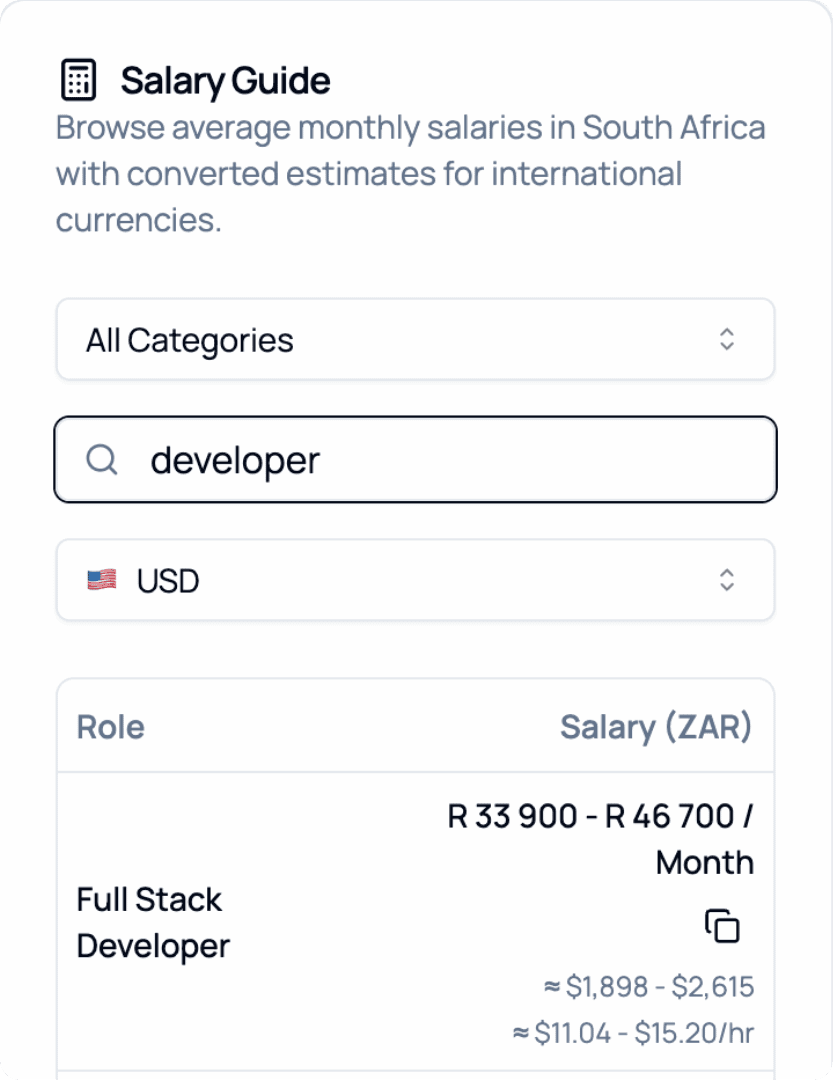
2026 Salary Guide: South Africa
Discover South African Salaries by Role. Compare costs and see how much you can save.