TL;DR
Learn how creative founders can scale content production without sacrificing quality, consistency, or founder focus.
Use a practical operating system for content planning, production queues, QA gates, approvals, and delivery handoffs.
Apply KPI and ROI frameworks that improve throughput and reduce bottlenecks with virtual assistant support.
Table of Contents
- Introduction
- What content production tasks can a VA handle for creative entrepreneurs?
- Which content pipeline workflows should be delegated first?
- How much does content-ops VA support cost and what ROI should you expect?
- How do you maintain quality while increasing production speed?
- How do you scale a creative content pipeline without bottlenecks?
- Final Thoughts
Introduction
If you are building support capacity in this vertical, start with the creatives industry page to align your content operations model with long-term growth goals.
Most creative founders do not struggle with ideas. They struggle with throughput. Great concepts exist, but publishing cadence is inconsistent. Assets are scattered. Production sequencing is unclear. Review loops are unpredictable. Approvals come late. The result is avoidable churn: last-minute rushes, missed windows, and uneven quality.
A virtual assistant can change this when the role is built around operations, not generic task support. The goal is simple: make content production predictable enough that creative quality goes up while founder stress goes down.
This guide gives you a practical blueprint to do that: delegation priorities, workflow controls, quality gates, KPI and ROI models, and scale patterns for growing creative teams.
For adjacent context, pair this with Virtual Assistant for Creative Entrepreneurs Guide (2026), Creative Entrepreneur Client Onboarding and Intake Playbook (2026), Creative Revision Workflow and Client Feedback Playbook (2026), How to Hire a Virtual Assistant for Small Business in 2026, Virtual Assistant Onboarding Checklist for 2026, and Virtual Assistant Cost Calculator Guide for SMB Teams.
For external references, use practical resources from SBA small business guidance, PMI project management resources, NIST small business cybersecurity guidance, IRS business recordkeeping guidance, and AICPA business resources.
What content production tasks can a VA handle for creative entrepreneurs?
Snippet answer: A creative operations VA can own repeatable content workflow tasks including calendar management, production queue updates, asset organization, status tracking, QA prep, approval routing, and delivery handoff coordination.
Content scale fails when too much coordination lives in the founder’s head. Delegating process ownership creates consistency.
Tasks a VA can reliably handle:
- Content calendar maintenance and publishing cadence tracking.
- Brief intake and completeness checks.
- Production board stage updates with owner/due-date discipline.
- Asset organization and version naming enforcement.
- QA checklist prep before review.
- Approval reminder cadence and escalation routing.
- Delivery-ready packet prep and post-publish confirmation.
Role boundaries that protect quality
A production-support VA should not replace final creative decisions.
Boundaries:
- No final editorial/creative signoff.
- No autonomous strategy shifts.
- No unapproved scope or timeline commitments.
- No process changes without governance review.
The role owns workflow reliability, not creative direction.
Fastest impact zones
Teams usually see immediate gains in:
- On-time content stage progression.
- Reduced production queue ambiguity.
- Cleaner handoffs and fewer missed dependencies.
These gains compound quickly at higher volume.
Which content pipeline workflows should be delegated first?
Snippet answer: Delegate repeatable, delay-sensitive workflows first: brief processing, production board hygiene, asset/version management, QA gate prep, approval reminder workflows, and publish handoff support.
Start with process lanes that create the most schedule friction.
First-wave delegation stack
Lane 1: Brief intake and readiness
- Collect briefs and required references.
- Score brief completeness.
- Flag missing inputs before production starts.
Lane 2: Queue and schedule governance
- Update stage movement in one board.
- Track due dates and dependencies.
- Surface overdue and at-risk items.
Lane 3: Asset management controls
- Enforce naming/version standards.
- Organize source and export files by workflow stage.
- Confirm handoff artifacts are complete.
Lane 4: QA gate support
- Run pre-review checklist.
- Validate requirement alignment before lead review.
- Route unresolved quality checks for owner decision.
Lane 5: Approval and publish handoff
- Trigger approval reminders by SLA.
- Capture approval evidence.
- Confirm publish or delivery completion and log next actions.
Delegation filter
Before assigning any task, confirm:
- Is it recurring?
- Is completion objectively checkable?
- Does delay impact schedule or quality?
- Is escalation path clear?
If yes, delegate in phase 1.
What to keep founder/lead-side in phase 1
- Final content direction decisions.
- Strategic narrative or offer positioning.
- High-impact client/stakeholder alignment calls.
- Final quality approvals for flagship assets.
This keeps creative leadership focused on leverage points.
How much does content-ops VA support cost and what ROI should you expect?
Snippet answer: The strongest ROI comes from increased throughput reliability, reduced rework, improved on-time delivery, and recovered founder focus—not just labor-cost comparison.
Content operations inefficiency has hidden costs: delayed launches, erratic quality, and founder decision fatigue.
Cost model components
Direct costs
- Monthly VA fee/compensation.
- Tooling seats for boards/docs/comms.
- Onboarding and SOP setup time.
- Weekly QA and operations review overhead.
Indirect costs
- Rework caused by poor handoff quality.
- Delays from missing inputs or approvals.
- Founder context switching across admin-heavy tasks.
- Opportunity cost from inconsistent publishing cadence.
Practical ROI model
Use:
ROI = recovered founder/lead hours + throughput gains + reduced rework value - total support cost
Illustrative baseline:
- Founder/lead spends 36 hrs/month on production coordination.
- Delegation-safe share = 55% (19.8 hrs).
- Blended value = $165/hr.
- Recovered value = $3,267/month.
Add likely gains:
- better publish consistency,
- fewer fire-drill edits,
- lower delay risk near deadlines.
KPI baseline for first 90 days
Track weekly:
- brief readiness pass rate,
- stage-to-stage cycle times,
- overdue item count,
- QA gate fail rate,
- approval lag median,
- founder admin hours recovered.
These indicators show whether your system is scaling correctly.
How do you maintain quality while increasing production speed?
Snippet answer: Maintain quality at higher speed by enforcing brief quality thresholds, stage-based QA gates, version control rules, and approval evidence requirements before publish/delivery transitions.
Speed without controls creates output volatility. Controls without cadence create bottlenecks. You need both.
Quality-speed control stack
- Brief quality gate
- no production start without minimum readiness threshold.
- Stage-definition discipline
- each stage has clear done criteria.
- Version governance
- one active version path with archive discipline.
- QA checkpointing
- checklist review before approval routing.
- Approval evidence rule
- no publish transition without approval trace.
Brief quality scoring model
Use a simple 100-point model:
- objective clarity (20)
- audience fit clarity (20)
- asset/reference completeness (20)
- success criteria clarity (20)
- stakeholder mapping completeness (20)
Threshold guidance:
- 85+ = ready
- 70-84 = ready with dependencies
- below 70 = hold and clarify
This prevents low-quality starts that later become revision churn.
Approval and escalation matrix
Define tiers:
- Tier 1: minor delay, low risk.
- Tier 2: moderate delay with schedule impact.
- Tier 3: critical delay with launch-risk implications.
Each tier should map to response-time expectations and named decision owners.
Weekly quality review agenda
Use 30 minutes:
- KPI snapshot and trend,
- oldest at-risk items,
- recurrent quality failures,
- SLA misses by owner,
- SOP patch priorities.
This cadence keeps quality and speed aligned.
How do you scale a creative content pipeline without bottlenecks?
Snippet answer: Scale by splitting pipeline lanes, assigning backup ownership, using queue-health dashboards, and making capacity decisions from KPI trends rather than ad hoc urgency.
A single VA can stabilize early growth. Sustainable scale requires architecture.
Scale phases
Phase 1: stabilization (0-60 days)
- one content-ops VA,
- SOP baseline,
- KPI baseline,
- escalation matrix active.
Phase 2: lane split (60-120 days)
- split planning/intake lane from QA/approval lane,
- assign backup owners,
- launch exception taxonomy dashboard.
Phase 3: governance (120+ days)
- add ops lead oversight,
- monthly process redesign cycle,
- capacity balancing by content type/value.
Scale signals to monitor
- rising backlog age,
- repeated approval delays,
- founder still handling routine queue admin,
- recurring launch-risk incidents.
These indicate process capacity constraints.
30-60-90 rollout playbook
Days 1-30
- define role boundaries,
- publish intake and stage SOPs,
- launch one queue board and file protocol,
- capture KPI baseline.
Days 31-60
- enforce SLA timers,
- run exception taxonomy,
- weekly trend review,
- patch top recurring blockers.
Days 61-90
- add backup owners,
- split overloaded lanes,
- refine escalation thresholds,
- decide capacity expansion path.
Internal links for implementation
- Virtual Assistant for Creative Entrepreneurs Guide (2026)
- Creative Entrepreneur Client Onboarding and Intake Playbook (2026)
- Creative Revision Workflow and Client Feedback Playbook (2026)
- How to Hire a Virtual Assistant for Small Business in 2026
- Virtual Assistant Onboarding Checklist for 2026
- Virtual Assistant Cost Calculator Guide for SMB Teams
Monthly scorecard template
Use weighted dimensions:
- Timeliness (25%)
- cycle-time trend
- SLA adherence
- Quality (25%)
- QA fail trend
- rework trend
- Control (25%)
- escalation compliance
- approval evidence completeness
- Commercial impact (25%)
- publish consistency
- launch-risk incident reduction
Use scorecards to guide process investment decisions.
SOP blueprint for content production lane
For each SOP include:
- Trigger
- Owner + backup owner
- Inputs required
- Outputs required
- SLA target
- Escalation trigger
- QA checkpoint
- Artifact location
This blueprint keeps production scale repeatable.
14-day stabilization checklist
- role boundary memo published,
- intake and production SOPs active,
- QA gate checklist deployed,
- queue dashboard launched,
- day-7 KPI review completed,
- top recurring blockers patched by day 14.
This checklist creates fast operational gains.
Risk controls for delivery integrity
- no production start without brief threshold,
- no stage transition without owner attribution,
- no publish handoff without approval trace,
- no unresolved critical blocker beyond SLA threshold.
These controls protect quality at speed.
Leadership dashboard metrics
Monthly dashboard should show:
- active content load by stage,
- overdue critical items,
- approval lag trend,
- QA fail and rework trend,
- founder coordination load trend.
This gives clear intervention points.
Governance ownership principle
Assign one owner for content pipeline SOP governance and KPI integrity. Without explicit ownership, process drift returns quickly as volume rises.
Content-type operating model
A pipeline scales faster when different content types use shared controls with type-specific overlays.
Short-form cadence content
- high frequency,
- tight turnaround,
- stronger batching emphasis,
- strict template discipline.
Long-form authority content
- lower frequency,
- deeper QA and review windows,
- dependency-heavy input gathering,
- stronger approval requirements.
Campaign support content
- synchronized launch deadlines,
- multi-asset dependencies,
- higher escalation sensitivity.
A VA can maintain one unified control framework while applying these overlays by content type.
Production backlog triage matrix
When backlog grows, triage by:
- deadline criticality,
- commercial impact,
- dependency risk,
- reusability value.
Score each item and sort queue execution accordingly. This reduces reactive prioritization and protects high-impact work.
Brief-to-production quality bridge
Many teams lose quality between brief approval and production execution. Add a bridge checklist:
- objective translated into measurable output criteria,
- audience and channel fit clarified,
- key references linked in one place,
- owner and due date confirmed,
- dependencies identified before work starts.
This bridge reduces avoidable clarification loops.
QA gate design by stage
Use stage-specific QA checks:
- Draft gate: structure, objective alignment, obvious quality errors.
- Pre-review gate: brand consistency, formatting readiness, dependency completion.
- Pre-publish gate: approvals present, metadata/packaging complete, handoff notes ready.
A VA-managed gate system improves quality predictability.
Publish reliability protocol
For each publish cycle:
- confirm final approved version,
- verify linked assets and references,
- execute publish checklist,
- log publish timestamp and owner,
- run post-publish verification.
This prevents “published but broken” incidents.
Throughput forecasting model
Use simple forecasting with:
- average items completed per week,
- average cycle time by content type,
- current queue size by stage,
- expected intake over next 2-4 weeks.
This gives an early warning when planned output exceeds operational capacity.
Dependency risk management
Production delays often come from dependency blind spots. Track:
- missing inputs,
- delayed approvals,
- upstream revision spillover,
- external asset readiness.
Tag and age dependencies so blockers are visible before deadlines are missed.
Team handoff contract
Define what a valid handoff requires:
- required context,
- required artifact links,
- owner assignment,
- due date and SLA,
- acceptance criteria.
No handoff should be considered complete without this contract.
Capacity decision framework (hire vs redesign)
When output pressure rises, decide using data:
- If queue grows despite clean SOP adherence, add capacity.
- If queue grows with recurring process failures, redesign workflows first.
- If high-impact work is delayed by low-impact noise, adjust triage and SLA structure.
This avoids scaling inefficient process patterns.
Weekly operations war-room template
A practical 25-minute agenda:
- KPI pulse check,
- at-risk deadlines,
- dependency blockers,
- owner assignments,
- SOP patches to ship this week.
Short, structured meetings keep momentum high.
60-day reliability milestones
By day 60 of implementation, healthy systems usually show:
- stable cycle-time trend,
- lower overdue backlog,
- improved QA pass rates,
- fewer launch-risk escalations,
- measurable founder time recovery.
If not, patch governance before expanding volume.
Leadership monthly decision memo
Use one page with:
- throughput and quality trend summary,
- root causes of misses,
- fixes implemented,
- unresolved risks,
- recommendation for next-month capacity and process priorities.
Decision-oriented reporting keeps scaling disciplined.
Process hardening sprint blueprint
Run a quarterly hardening sprint:
- map top 5 recurring failure modes,
- update SOPs and checklists,
- refresh template library,
- retrain on escalation matrix,
- benchmark KPI movement post-update.
This keeps systems healthy as complexity grows.
Client communication layer for production confidence
Production quality is not only internal. Client confidence depends on communication predictability. Add a communication layer with:
- scheduled progress summaries,
- explicit risk flags when dependencies move,
- milestone confirmations,
- concise “what changed / what’s next” updates,
- clear owner and due-date references.
A VA-managed communication layer reduces avoidable anxiety, speeds approvals, and keeps the client relationship proactive rather than reactive.
Operational resilience checklist for busy seasons
During high-demand windows, teams need resilience controls:
- maintain buffer slots for critical revisions,
- protect QA gate integrity even under deadline pressure,
- cap WIP (work in progress) per owner,
- enforce dependency escalation by SLA,
- review queue health daily instead of weekly.
These controls are simple, but they protect quality when pressure rises. They also make weekly planning more realistic and reduce last-minute firefighting that drains creative energy daily consistently.
Final Thoughts
Scaling content production is less about working harder and more about running a predictable system. A virtual assistant can anchor that system by owning the repeatable operations lane around planning, queue control, QA, approvals, and handoffs.
Use the creatives industry page to align this model with your broader growth architecture, then scale through SOP discipline, queue visibility, and escalation ownership.
When this lane is stable, creative teams ship more consistently, protect quality, and free founders to focus on strategy and high-value creative leadership. Over time, this operational consistency strengthens client trust, improves retention economics, and gives your business a far more reliable foundation for sustainable growth, larger engagements, and more confident forecasting across changing demand cycles and increasingly complex project portfolios.
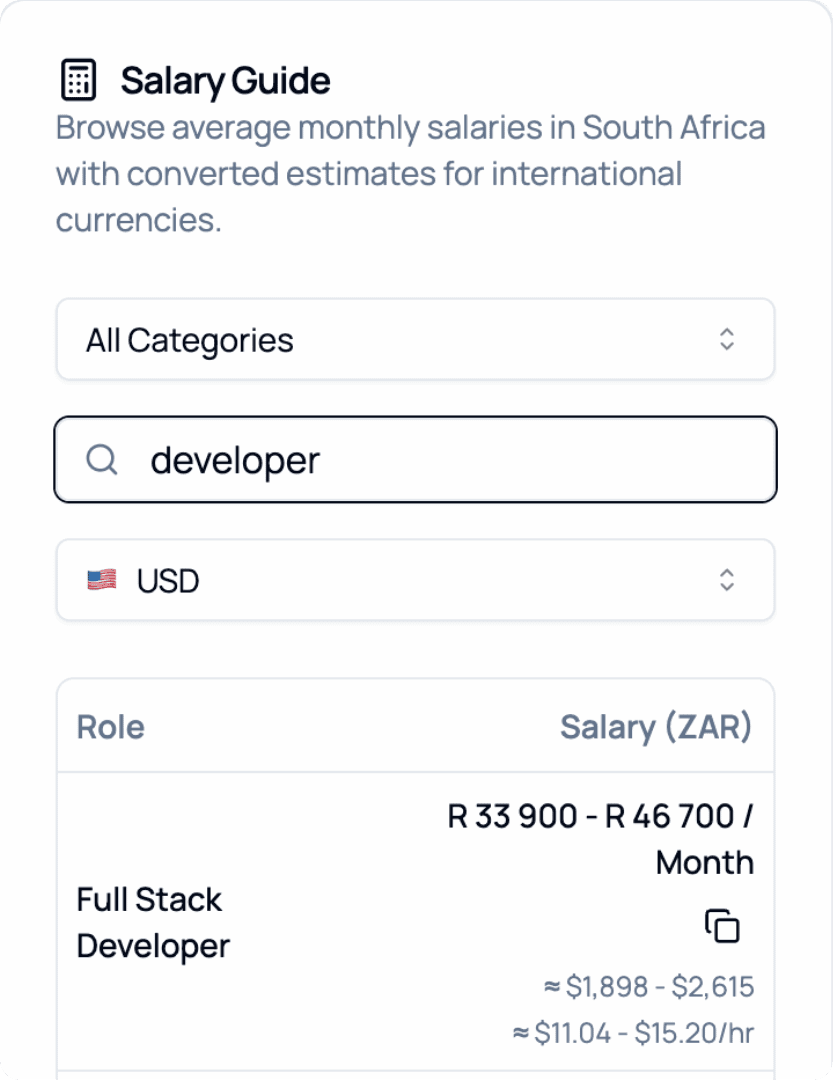
2026 Salary Guide: South Africa
Discover South African Salaries by Role. Compare costs and see how much you can save.