TL;DR
An outsourced assistant may prepare certificates, endorsements and applications for a licensed producer to review and sign, process changes the insured asks for and take down the facts of a claim. Oklahoma and Pennsylvania publish closely matching lists: recommending coverage, authorizing certificates and binders, and starting sales calls stay with a licensed producer.
The NAIC Insurance Data Security Model Law, adopted in 28 jurisdictions, exempts licensees with fewer than ten employees "including any independent contractors," so offshore contractors count toward the line. New York has required multi-factor authentication for any individual accessing a licensee's systems since November 1, 2025, and small agencies with the limited exemption still need it for every remote login.
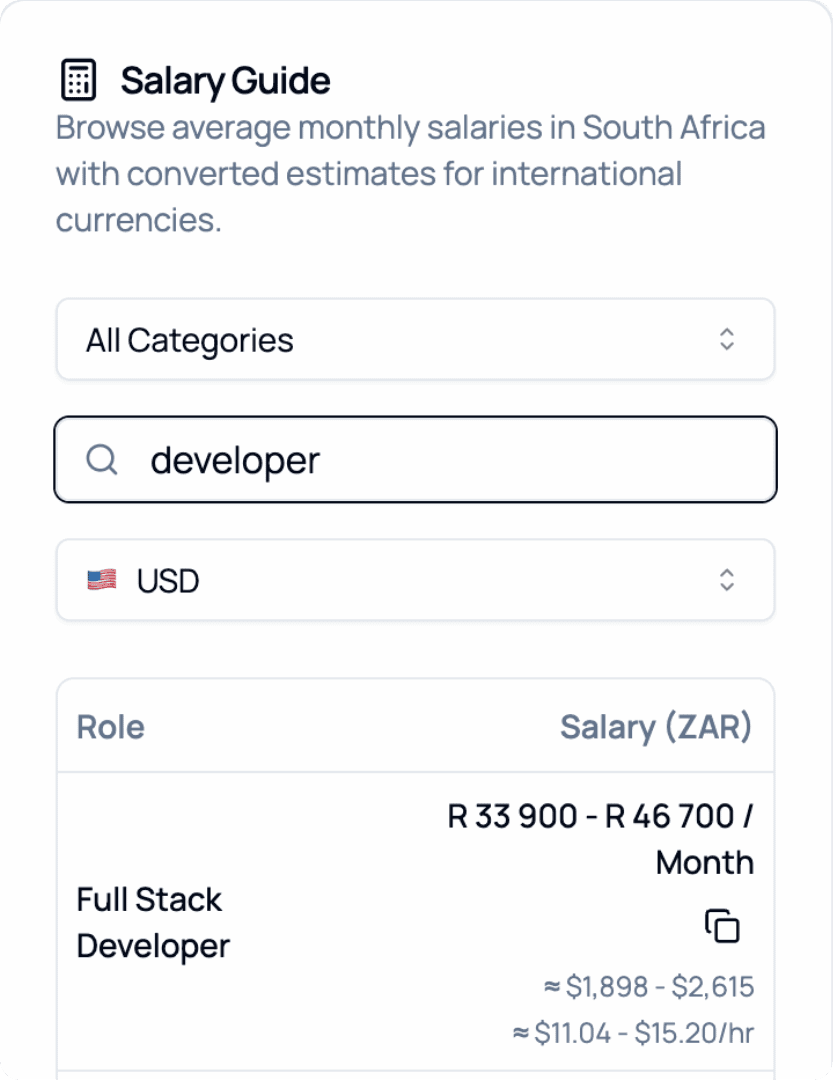
US customer service representatives in insurance earned a median $22.47 an hour in May 2025 (BLS), about $71,600 a year once benefits are added. HireSava's salary guide puts experienced South African support and admin hires at $960 to $1,920 a month full-time.
Table of Contents
- Where the license line falls
- A certificate request, start to finish
- The data security law your agency follows
- New York: multi-factor authentication since November 1, 2025
- If the assistant makes calls or sends texts
- What it costs in 2026
- Set up access before the first file
- A paid test, then one queue at a time
- Covering a US agency day from South Africa
- Hiring a South African insurance assistant through HireSava
- Sources and notes
Insurance back office outsourcing works when the outsourced assistant does the clerical part of each task and a licensed producer keeps the part that advises, sells or binds. Oklahoma and Pennsylvania publish the line in closely matching lists: an unlicensed person may prepare certificates, endorsements and applications for a producer's review and signature, process changes the insured asks for and take down the facts of a claim, but may not recommend coverage, authorize a certificate or binder, or start a sales call.
Two more sets of rules decide how you set the work up. The NAIC's Insurance Data Security Model Law, adopted in 28 jurisdictions, counts independent contractors toward its small agency exemption, so offshore hires can push an agency into a written security program. And if you hold a New York license, multi-factor authentication has been required since November 1, 2025 for any individual accessing your systems, and for every remote login even at agencies with the small business exemption. Every rule and figure below was checked against its source on November 26, 2026.
Where the license line falls
The NAIC's Producer Licensing Model Act, which the NAIC reworked in 1999 and 2000 to fit the licensing provisions of the Gramm-Leach-Bliley Act, says a person may not "sell, solicit or negotiate insurance" without a license for that line. It defines each verb by what the person does with a customer. Soliciting is "attempting to sell insurance or asking or urging a person to apply for a particular kind of insurance from a particular company." Negotiating is "conferring directly with or offering advice directly to" a purchaser about "the substantive benefits, terms or conditions of the contract."
The model then exempts an officer, director or employee of a producer whose activities "are executive, administrative, managerial, clerical or a combination of these, and are only indirectly related to the sale, solicitation or negotiation of insurance," provided the person receives no commission on policies written or sold. That exemption also covers employees whose work relates to underwriting, loss control, inspection or the processing, adjusting, investigating or settling of claims. It names employees, and a South African contractor is not one, so keep the contractor's work inside the clerical lists below, where it never becomes selling, soliciting or negotiating.
Oklahoma's Bulletin 2013-09 and Pennsylvania's Notice 2013-09 turn the model into working lists of licensed and clerical activities. Most of a back office queue falls on the clerical side:
| Work | The assistant may | A licensed producer keeps |
|---|---|---|
| Certificates of insurance | Record the request and prepare the certificate for the producer's review and signature, following the producer's instructions | Authorizing the issuance or delivery of the certificate |
| Endorsements and policy changes | Record a change the insured asks for, prepare the endorsement or process it through the system the carrier or producer maintains, and notify the producer | Recommending or starting a change, and signing endorsements, binders and policies |
| New business | Take down the applicant's information and prepare the application for the producer's review | Describing coverage and advising which policy or company to choose |
| Renewals | Ask the client for the facts the producer needs for the review, such as new locations, vehicles or payroll, and assemble the file | Recommending additions, deletions, limits or a different carrier |
| Rate questions | Give the cost of a specific coverage from a published rate manual or rate database when the client asks | Rates that cannot be read from a published list, and any advice on a coverage, deductible or limit |
| Claims | Take the factual information about a claim and ask the client for missing documents | Answering a request for advice about whether the policy covers the loss |
| Service emails and calls | Tell the insured what coverage the policy records show | Responding to any request for advice about policy provisions or coverage |
| Prospecting | Market research, prospect lists and booking appointments with producers, with no attempt to discuss a specific product | Starting sales calls, by phone or otherwise |
Oklahoma's bulletin gives a car example for the endorsement row. An unlicensed person may process an insured's request to delete one car from an auto policy and add its replacement, but may not phone a life insurance policyholder to suggest raising the face amount. The difference is who starts the change.
Requests for advice need a fixed handoff. Oklahoma's bulletin says that when a customer asks an unlicensed employee for advice, "the response must be made by a licensed producer," and Pennsylvania's notice says the unlicensed person "should advise the consumer they are being transferred to a licensee." Write that transfer into the assistant's email templates and call script, with the name of the producer who picks it up.
Check your own state before you write the job description. Florida defines solicitation as an attempt to persuade someone to buy through means that include "completing orders or applications for insurance products" and "describing the benefits or terms of insurance coverage, including premiums or rates of return," so a Florida agency should confirm the line with the Department of Financial Services before an unlicensed assistant fills in applications.
Keep commissions out of the pay plan. The clerical exemption holds only while the employee receives no commission on policies written or sold, and section 13 of the model bars a producer from paying "a commission, service fee, brokerage or other valuable consideration" to an unlicensed person for selling, soliciting or negotiating. Pay a monthly or hourly rate, and leave bonuses per policy or per sale out of the contract.
Licensing the assistant is harder than it sounds. The model gives a nonresident license to a person "currently licensed as a resident and in good standing in his or her home state," and defines a home state as a US state or territory, or the District of Columbia, where the producer "maintains his or her principal place of residence or principal place of business." Ask your insurance department before you plan a licensed role around someone who lives in South Africa.
A certificate request, start to finish
Certificates show the split clearly, because drafting one is clerical and issuing it is not. A typical overnight request runs like this:
- At 4:40 p.m. Eastern, a commercial client forwards a subcontract and asks for a certificate naming the general contractor as additional insured. In Johannesburg it is 23:40.
- At 08:00 in Johannesburg, 1:00 a.m. Eastern, the assistant opens the request, pulls the policy in the agency management system and reads the contract's insurance clause.
- The assistant drafts the certificate, usually on the ACORD 25 form, from the producer's standing instructions, and checks each requirement in the clause against the policy: the additional insured endorsement, waiver of subrogation, primary and noncontributory wording, and the limits.
- Where the policy does not meet a requirement, the assistant writes a note to the producer instead of telling the client whether the coverage is enough. That answer is advice.
- At 8:30 a.m. Eastern the producer reviews the draft and the note, then approves the certificate or calls the client. The assistant sends the approved certificate, logs the certificate holder and sets a reminder for the policy's expiration date.
The client has the certificate before 9:00 a.m., and the producer's only part was the review. The certificate tracking post covers expiration tracking in more detail.
The data security law your agency follows
For anyone engaged in providing insurance, the Gramm-Leach-Bliley Act's privacy and safeguards duties are enforced "by the applicable State insurance authority of the State in which the person is domiciled," under 15 U.S.C. 6805(a)(6). The security rules for an offshore assistant therefore come from state insurance law.
The NAIC adopted its Insurance Data Security Model Law in the fourth quarter of 2017. Its state page for summer 2026 lists 28 jurisdictions in the model adoption column: Alabama, Alaska, Connecticut, Delaware, Hawaii, Illinois, Indiana, Iowa, Kentucky, Louisiana, Maine, Maryland, Michigan, Minnesota, Mississippi, Missouri, New Hampshire, North Dakota, Ohio, Oklahoma, Pennsylvania, Puerto Rico, Rhode Island, South Carolina, Tennessee (portions of the model), Vermont, Virginia and Wisconsin. California, Florida, New York and Texas appear only under related activity, meaning other statutes or regulations address the subject there. New York's rules have their own section below.
Where the model applies, a licensee keeps a written information security program based on its own risk assessment, with an employee, an affiliate or an outside vendor designated as responsible for it. The program picks its controls from a list that includes access controls that admit only authorized individuals, encryption of nonpublic information sent over external networks or stored on laptops and portable devices, and "effective controls, which may include Multi-Factor Authentication procedures for any individual accessing Nonpublic Information." It also needs security awareness training for staff, a written incident response plan and oversight of third-party service providers: due diligence in choosing one, and a requirement that the provider protect the systems and information it can reach.
That last duty applies directly to an offshore hire. The model defines a third-party service provider as a person, not itself a licensee, "that contracts with a Licensee to maintain, process, store or otherwise is permitted access to Nonpublic Information." A South African contractor who works in your agency management system fits that definition, so the contractor agreement is where the safeguards you require belong.
Contractors count toward the small agency exemption
The model exempts "a Licensee with fewer than ten employees, including any independent contractors" from the information security program, and gives a licensee that stops qualifying 180 days to comply. An agency with seven staff that signs three offshore contractors reaches ten people, and the 180 days start.
States change the threshold, so read your own state's version before you count heads. Ohio, for example, exempts a licensee with fewer than 20 employees, less than $5 million in gross annual revenue or less than $10 million in assets, and its section does not say whether contractors count.
The exemption covers only the program. An exempt agency still notifies its insurance commissioner within 72 hours of determining that a cybersecurity event has occurred, when that state is its home state, or when the event involves nonpublic information of 250 or more of the state's residents and either must be reported under another law or is reasonably likely to cause material harm. For an event in a provider's system, the clock starts the day after the provider tells you or you otherwise learn of it, whichever comes first. Give the contractor a much shorter deadline for telling you.
New York: multi-factor authentication since November 1, 2025
New York regulates agents and brokers through 23 NYCRR Part 500, the DFS cybersecurity regulation, which covers anyone operating under a license under the Insurance Law. Its implementation timeline for small businesses is written for "DFS-licensed individual producers," mortgage loan originators and other businesses that qualify for an exemption.
Since November 1, 2025, a covered entity must use multi-factor authentication "for any individual accessing any of its information systems, regardless of location, type of user, and type of electronic information," according to DFS guidance published in July 2025, unless its chief information security officer approves equivalent controls in writing. An agency with the limited exemption must still use it for remote access to its systems, for remote access to third-party applications that hold nonpublic information, and for privileged accounts. An assistant signing in from South Africa is remote access, so the second factor goes on every login either way.
The limited exemption covers an entity with fewer than 20 employees and independent contractors, counted together with its affiliates, or less than $7.5 million in gross annual revenue in each of the last three fiscal years, or less than $15 million in year-end total assets. It is claimed by filing a notice of exemption within 30 days. It does not remove section 500.11, which requires a written policy for third-party service providers covering their risk assessment, the minimum cybersecurity practices they must meet, due diligence, periodic assessment, access controls including multi-factor authentication, encryption, and notice from the provider of any cybersecurity event that affects you.
Incidents at a third-party service provider count as your incidents for reporting. DFS requires notice "as promptly as possible but in no event later than 72 hours," and the agency files either a certification of material compliance or an acknowledgment of noncompliance by April 15 each year.
If the assistant makes calls or sends texts
Phone work is where the license line and federal telemarketing rules overlap. Oklahoma and Pennsylvania both list "initiating sales over the telephone or otherwise" as licensed activity. Both treat market research, prospecting and scheduling appointments with producers as clerical, as long as no attempt is made to solicit, to discuss a specific insurance product or to encourage replacement of an existing policy. An unlicensed caller can book the meeting; the producer makes the case for the policy.
Federal rules then set the hours. Under 47 CFR 64.1200(c), no one may make a telephone solicitation to a residential subscriber "before the hour of 8 a.m. or after 9 p.m. (local time at the called party's location)," or to a number on the national do-not-call registry. Calls to people who gave prior express invitation or permission, or with whom you have an established business relationship, fall outside the rule's definition of a telephone solicitation. That relationship lasts 18 months after a purchase or transaction and three months after an inquiry or application. Several states add their own calling rules, so check the states you call into.
Until US clocks change on March 14, 2027, 8 a.m. Eastern is 15:00 in Johannesburg and 8 a.m. Pacific is 18:00. After that date both arrive an hour earlier, at 14:00 and 17:00. Sort the call list by each number's local time, not by the agency's time zone.
For calls and texts that need consent under the TCPA, such as autodialed texts and prerecorded messages, FCC rules require you to honor a request to stop "within a reasonable time not to exceed ten business days from receipt of such request." In a notice published October 26, 2026, the FCC asked whether to cut that maximum to seven business days. Log every stop request the moment it arrives.
The FCC's one-to-one consent rule is no longer part of the regulation. It would have limited each consent to one seller at a time and to calls "logically and topically associated with the interaction that prompted the consent." The Eleventh Circuit vacated it on January 24, 2025, on a petition from the Insurance Marketing Coalition.
What it costs in 2026
Published figures. US hourly wages are annualized at 2,080 hours, and the salary guide converts its hourly examples at 160 hours a month:
| Source | Published figure | Per month |
|---|---|---|
| BLS, customer service representatives in insurance carriers and related activities, median wage (May 2025) | $22.47 an hour, about $46,738 a year | About $3,895 |
| The same wage with benefits, at the insurance industry's June 2026 wage share of 65.3 percent | About $71,574 a year | About $5,964 |
| BLS, insurance sales agents in insurance agencies and brokerages, median wage (May 2025) | $61,550 a year | About $5,129 |
| HireSava salary guide, South African mid-market band (customer support, experienced admin, recurring bookkeeping) | $960 to $1,920 a month full-time | $960 to $1,920 |
| HireSava salary guide, hourly examples | $8 to $12 an hour | About $1,280 to $1,920 |
The Occupational Outlook Handbook gives the customer service figure for insurance carriers and related activities, the industry group that includes agencies and brokerages. In June 2026, wages and salaries were 65.3 percent of employer compensation costs in that group and benefits 34.7 percent, a heavier benefits load than the 30.0 percent across all private industry.
Producer time is the larger number. At the agencies and brokerages median and the same wage share, a producer costs about $94,260 a year, or $45.32 for each of 2,080 paid hours. Suppose two producers each spend 10 hours a week on certificates, endorsements and data entry. That is 1,040 hours a year, about $47,100 in pay and benefits. A full-time South African assistant at $8 to $12 an hour, at the salary guide's 160 hours a month, costs about $15,360 to $23,040 a year. Some of those producer hours remain, because review and sign-off are licensed work, so time the review step during the first month and subtract it before you count savings.
Add the assistant's own logins to the budget: a seat in your agency management system, an email account on your domain and any carrier portal access, each with multi-factor authentication. Hiring through HireSava adds a Pro plan at $69 a month or Premium at $99 while you recruit, with no markup on the assistant's pay.
Set up access before the first file
- Give the assistant a personal login on every system: the agency management system, email, document storage and each carrier portal. A shared login defeats the access controls the model law lists and leaves no record of who changed a policy file.
- Check each carrier's agency agreement and portal terms for limits on who may sign in and from where, before you request a login for the assistant.
- Set the role to the queue. The assistant needs to draft and attach documents and update client records, not to delete records or change commission and accounting entries.
- Require full-disk encryption on any laptop that holds client data, or keep the work inside a virtual desktop so files never reach the device. The model law lists encryption for nonpublic information stored on laptops and portable devices.
- Put the safeguards in the contract: confidentiality, the security measures you require, notice of any security incident within 24 hours so you can meet a 72-hour regulator deadline, and return or deletion of your data when the work ends. The contract generator, the NDA generator and the data security planner help with the drafting.
- Tell your errors and omissions carrier about the arrangement, and ask in writing whether work done by an offshore contractor under a producer's supervision is covered.
A paid test, then one queue at a time
Test finalists on the work itself. Send a redacted subcontract and a summary of the client's policy, and ask for a certificate draft plus a note to the producer listing any requirement the policy does not meet, such as a missing waiver of subrogation. A strong candidate drafts the certificate and flags the gap without telling the client the coverage is fine. The skills test generator helps write the instructions, and the candidate scorecard keeps the comparison between finalists consistent.
After the hire, add work in stages:
- In week 1, set up logins and multi-factor authentication, write a one-page procedure for certificates, and have the assistant re-draft ten certificates you already issued so you can compare them with what went out.
- In week 2, move to live certificate drafts, with every one reviewed before it is sent.
- In week 3, add endorsement requests that clients start, still reviewed by a producer.
- In week 4, look at turnaround from request to issue, drafts sent back for changes and requests correctly routed to a producer, then add renewal preparation and loss run requests.
The SOP generator turns each procedure into steps a second assistant could follow.
Covering a US agency day from South Africa
South Africa keeps UTC+2 all year, with no daylight saving time. Until March 14, 2027, Johannesburg is 7 hours ahead of New York and 10 ahead of Los Angeles; after that, 6 and 9. An 08:00 to 16:00 shift in Johannesburg runs from 1:00 to 9:00 a.m. Eastern, so requests sent after hours are drafted before the office opens. A 14:00 to 22:00 shift covers 7:00 a.m. to 3:00 p.m. Eastern and 4:00 a.m. to noon Pacific, which suits phone work and same-day changes. The time zone overlap calculator shows the overlap for other shifts and cities.
Hiring a South African insurance assistant through HireSava
HireSava is a marketplace for hiring South African professionals directly: you post the role, interview and hire with no agency in the middle. Employers remain responsible for payroll, HR, and compliance for the people they hire. The insurance industry page and the role pages for a remote policy admin specialist, a remote claims processing specialist and a remote underwriting specialist list typical tasks, and insurance back office services for US agencies sets out a 90-day rollout. The offshore insurance back office staffing comparison compares offshore staffing models on quality control, compliance readiness, turnaround and cost.
When the task split and the access plan are ready, create an employer account and post the role. The pricing page lists the employer plans.
Sources and notes
This is general information for agency owners, not legal advice. Licensing and data security rules differ by state, so confirm them in each state where you hold a license. Sources were checked on November 26, 2026:
- National Association of Insurance Commissioners: the Producer Licensing Model Act (#218), sections 2, 3, 4, 8 and 13; the Insurance Data Security Model Law (#668), sections 3, 4, 6 and 9; and the model's state page, summer 2026 edition.
- Oklahoma Insurance Department: Bulletin No. 2013-09, on the sale, solicitation and negotiation of insurance, August 15, 2013.
- Pennsylvania Insurance Department: Notice 2013-09, Sale, Solicitation and Negotiation of Insurance, 43 Pa.B. 6740, November 9, 2013.
- The 2026 Florida Statutes: section 626.112, on the license required to solicit insurance.
- Ohio Revised Code: section 3965.07, exemptions from the information security program.
- 15 U.S.C. 6805, enforcement of the Gramm-Leach-Bliley Act's privacy and safeguards provisions.
- New York Department of Financial Services: 23 NYCRR 500.11, 500.12, 500.17 and 500.19; the multi-factor authentication guidance, July 2025; and the cybersecurity implementation timeline for small businesses.
- Federal Communications Commission: 47 CFR 64.1200; and the Further Notice of Proposed Rulemaking in CG Docket No. 02-278, FCC 26-67, adopted September 30, 2026 and published in the Federal Register on October 26, 2026.
- US Court of Appeals for the Eleventh Circuit: Insurance Marketing Coalition Ltd. v. FCC, No. 24-10277, January 24, 2025.
- US Bureau of Labor Statistics: the Occupational Outlook Handbook entries for insurance sales agents, last modified August 27, 2026, and customer service representatives, last modified October 29, 2026, for May 2025 pay; and Employer Costs for Employee Compensation, Table 4, for June 2026, released September 9, 2026.
- HireSava's South African salary guide, for full-time rates for remote South African hires.
- Time zones: the IANA Time Zone Database, and 15 U.S.C. 260a for US daylight saving time.
Monthly figures divide annual figures by 12. US hourly wages are annualized at 2,080 hours, and the salary guide's hourly examples use its 160 hours a month. The worked examples use assumed hours; replace them with your own time log.
Frequently Asked Questions
Explore related hiring options
Useful next pages based on this article's topic:
- Remote Policy Admin Specialist role — policy workflows, endorsements, and renewals
- Claims Processing service — faster claims handling and reduced admin drag
2026 Salary Guide: South Africa
Discover South African Salaries by Role. Compare costs and see how much you can save.