TL;DR
Eliminate E&O risks with a dedicated COI tracking Virtual Assistant.
Automate the "chase sequence" for renewal requests and policy endorsements.
Leverage South African technical talent for accurate, high-level auditing.
Table of Contents
- Why is manual COI tracking a liability risk for insurance agencies?
- How do you verify additional insured endorsements accurately?
- What is the most efficient workflow for COI renewal requests?
- How can an insurance VA reduce Errors & Omissions (E&O) exposure?
- The South African Advantage: Why the "SAVA" Profile Wins at COI Tracking
- Final Thoughts
Managing Certificates of Insurance (COIs) is one of the most dangerous tasks in an agency because it feels simple. You look for a checked box, file the PDF, and move on. But in 2026, a "checked box" for Additional Insured is legally meaningless without the right endorsement forms attached. This manual oversight is a major source of Errors & Omissions (E&O) exposure.
One way to fix this is to hire an insurance virtual assistant who specializes in technical auditing rather than just data entry. By moving this high-stakes work to a dedicated professional, you ensure that every policy your clients rely on is actually active and compliant.
Why is manual COI tracking a liability risk for insurance agencies?
Manual COI tracking is a liability risk because it often relies on a "checkbox fallacy" where staff verify the presence of coverage without auditing the specific underlying endorsements required by a contract. This creates massive gaps in protection, leaving the agency vulnerable to E&O claims if a loss occurs and the expected coverage isn't actually in place.
The Danger of Missing Endorsements (CG 20 10 and CG 20 37)
Most agencies just glance at the ACORD 25 form. But for construction and real estate clients, the form itself doesn't grant coverage.
-
The Endorsement Gap: You must verify that specific forms, like the CG 20 10 (Ongoing Operations) and CG 20 37 (Completed Operations), are physically attached to the COI.
-
Legal Meaningless: A checked box on a COI is not a legal substitute for the actual policy endorsement.
-
South African Precision: A certificate of insurance tracking virtual assistant from South Africa often comes with a legal or paralegal background, making them more likely to catch these "hidden" missing forms than a general data entry clerk.
Gaps in Coverage: The Hidden Cost of "Expired" Certificates
Policies expire constantly, and tracking dozens of subcontractors across multiple projects is an administrative nightmare.
-
Spreadsheet Failures: Many teams spend 15–20 hours a week managing manual spreadsheets, which are prone to human error.
-
The Expiration Trap: If a subcontractor is allowed on a job site with an expired policy, the primary client (your insured) assumes all the risk.
-
Audit Risk: Agencies often face "compliance debt" where hundreds of certificates are outdated, leaving the business exposed during a carrier audit.
How do you verify additional insured endorsements accurately?
Verifying additional insured endorsements accurately requires a technical audit of the physical policy forms rather than just checking a box on an ACORD 25 certificate. This process involves matching the specific endorsement language (e.g., CG 20 10 for ongoing operations) against the insurance requirements stipulated in a legal contract.
Technical Auditing: Matching Policy Forms to Contract Requirements
The most common mistake in COI tracking is assuming that a "Yes" in the Additional Insured column on a COI is legally binding. It is not.
-
The Documentation Rule: You must demand and review the actual endorsement page to ensure it matches the contract's specific demands, such as "Primary and Non-Contributory" language.
-
Reading Comprehension: A certificate of insurance tracking virtual assistant from South Africa often possesses high technical reading comprehension, allowing them to verify that the policy form edition (e.g., the 04 13 vs 11 85 edition) provides the correct scope of coverage.
-
Verifying Limits: The auditor must confirm that the limits shown on the certificate are not just the "policy limits," but the specific amounts available for that project, checking for any aggregate erosions.
Dealing with Non-Standard Carrier Endorsements
Not every carrier uses standard ISO forms, which makes the auditing process significantly more complex.
-
Proprietary Forms: Many carriers use their own internal wording for additional insured status, which may include restrictive language that excludes certain types of claims.
-
The "Rejection & Remediation" Loop: If a form is non-standard or deficient, the auditor must be assertive enough to reject it and explain exactly why to the third-party broker.
-
Language Nuance: South African remote workers are native English speakers, which is a major advantage when navigating the linguistic nuances of non-standard legal language that "Doer" style VAs from other regions might miss.
What is the most efficient workflow for COI renewal requests?
The most efficient workflow for COI renewal requests is a proactive, automated "chase sequence" that begins at least 30 days before a policy expires. Rather than waiting for a lapse to occur, a dedicated professional should manage a master tracker and initiate contact with subcontractors and their brokers early to prevent job site delays.
The 30-Day Chase: Proactive Communication with Subcontractors
A passive approach to renewals creates "compliance debt" and exposes your agency to E&O risk if a subcontractor works without coverage.
-
Multi-Channel Contact: Efficient workflows use a combination of automated emails and follow-up phone calls.
-
Polite Persistence: South African VAs excel at "polite persistence," using a professional and clear communication style to follow up on Day 3 and Day 5 after a request is ignored.
-
Escalation: If a renewal is not received within a week of expiration, the workflow should include escalating the issue to the client so they can decide whether to bar the subcontractor from the site.
Closing the Loop: Updating Agency Management Systems (AMS)
Retrieving the document is only half the battle; the data must be properly recorded to be useful.
-
Data Normalization: The VA extracts key dates and limits from the new PDF and enters them into the AMS (like Applied Epic or HawkSoft).
-
Realizing Software ROI: If your agency uses tools like TrustLayer or GetBCS, a VA ensures these platforms are actually updated and exceptions are cleared, rather than letting the software sit idle.
-
Secure Filing: The finalized, audited document is filed according to agency naming conventions, ensuring that it is easily retrievable in the event of a claim or audit.
How can an insurance VA reduce Errors & Omissions (E&O) exposure?
An insurance VA reduces E&O exposure by implementing rigorous, standardized auditing protocols that eliminate human oversight. By acting as a dedicated "second set of eyes," they ensure that every COI is cross-referenced against carrier filings and contract requirements, preventing the agency from certifying non-existent coverage.
Implementing a "Double-Check" System for High-Risk Accounts
In a busy agency, the person who receives a COI is often the same person who files it. This lack of oversight is where mistakes happen.
-
The Four-Eyes Principle: A certificate of insurance tracking virtual assistant introduces a mandatory review layer. Even if an account manager receives a document, the VA performs the technical audit to ensure nothing was missed during the initial rush.
-
Focus on High-Exposure Verticals: Accounts in construction, transportation, and healthcare carry higher risk. For these clients, a VA can perform a "deep dive" audit every quarter, not just at renewal.
-
Audit Trails: Every time a VA reviews a document, they leave a time-stamped note in the AMS. If a claim ever arises, the agency can prove they followed a strict compliance process, which is a powerful defense against negligence claims. According to industry discussions on how agents build their books, protecting your reputation through meticulous service is as important as sales.
Standardizing the Renewal Audit Checklist
Consistency is the only way to scale an agency without increasing risk. If every account manager has their own way of "checking" a COI, the agency has no control over its liability.
-
Removing Subjectivity: A VA uses a centralized checklist for every single document. This checklist includes verifying the AM Best rating of the issuing carrier, checking for the "Description of Operations" landmines, and ensuring the policy numbers match the previous year.
-
Carrier Rating Verification: Many agencies forget to check if the subcontractor’s carrier has been downgraded. A VA can cross-check carrier stability against SEC-filed BPO standards to ensure the client is actually protected by a solvent entity.
-
The "No-Go" List: VAs can maintain a list of restricted carriers or "red-flag" endorsements that are never acceptable for certain clients, automatically flagging these for agent review before they become a problem.
The South African Advantage: Why the "SAVA" Profile Wins at COI Tracking
The success of a technical workflow depends entirely on the person managing it. While many agencies look for "cheap" data entry, high-stakes tasks like COI auditing require a professional who understands legal consequences and professional liability. This is where the South African advantage becomes clear.
Assertive but Polite: The Communication Sweet Spot
Chasing missing documents is a delicate balance. If you are too passive, you get ignored; if you are too aggressive, you damage the relationship between your agency and the subcontractor.
-
The "Neutral" Tone: South African remote workers are native English speakers with a business culture modeled on Western standards. Their accent is widely perceived as professional and "neutral" by US and UK clients.
-
Persistence without Friction: The "assertive but polite" South African communication style is perfect for "chasing" third-party brokers and subcontractors for missing documents without damaging professional relationships.
-
Cultural Alignment: Because South African professionals operate within a Western legal and business framework, concepts like "fiduciary duty" and "compliance" are native to them.
A Surplus of Legal and Financial Talent
South Africa produces a structural surplus of graduates in fields directly relevant to insurance, such as law and commerce.
-
Paralegal Precision: Many South African VAs have legal or paralegal training, providing a level of reading comprehension that allows them to navigate complex endorsement language (like the CG 20 10 vs. CG 20 37) with ease.
-
Cost-Effective High Performance: You aren't just hiring "help"; you are hiring "arbitrage talent"—highly skilled professionals available at a lower cost due to currency differences.
-
Time Zone Efficiency: Operating at GMT+2, a South African VA is 6–7 hours ahead of the US East Coast. They can finish auditing an entire batch of COIs before your domestic team even logs in for the day.
Final Thoughts
Insurance is a game of risk management, but that shouldn't apply to your agency's operations. By moving technical auditing and COI renewal requests to a specialized certificate of insurance tracking virtual assistant, you protect your agency from E&O claims while freeing up your account managers to focus on what they do best: serving clients.
In 2026, the agencies that thrive will be those that decouple high-liability administrative tasks from their revenue-generating staff. Hiring talent from South Africa for insurance is the most effective way to build that "liability shield" without blowing your operational budget.
Explore related hiring options
Useful next pages based on this article's topic:
- Remote Policy Admin Specialist role — policy workflows, endorsements, and renewals
- Claims Processing service — faster claims handling and reduced admin drag
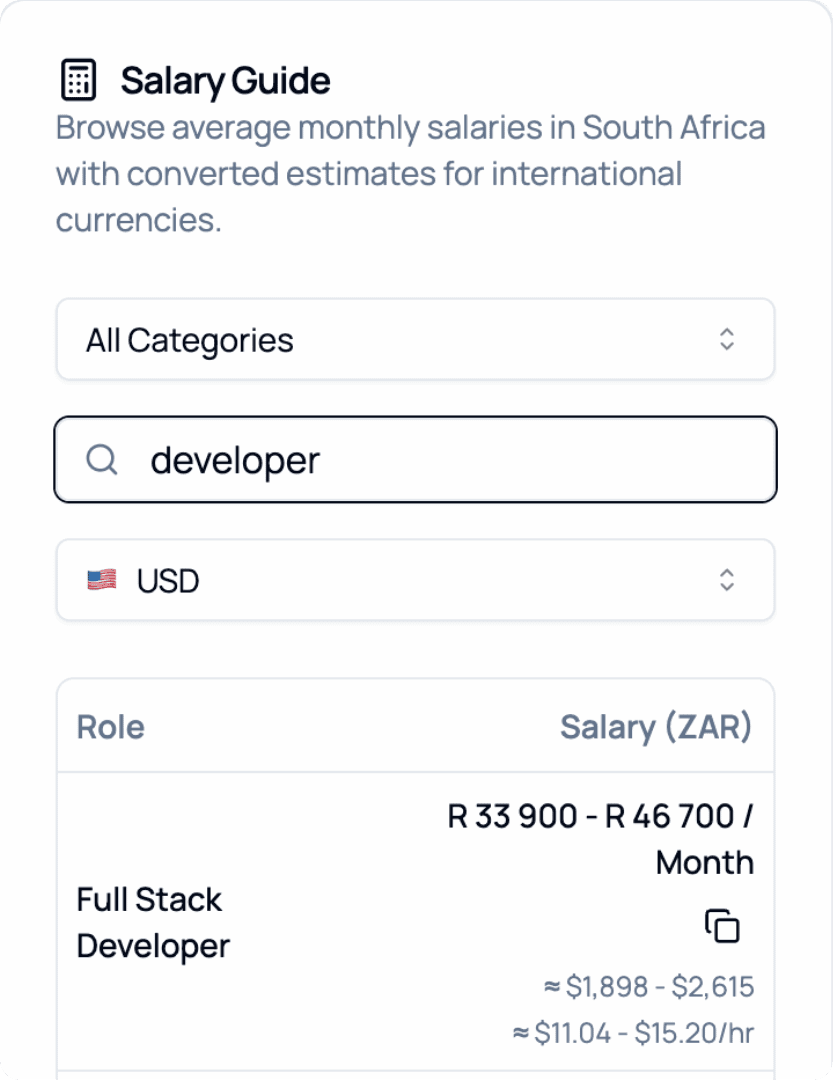
2026 Salary Guide: South Africa
Discover South African Salaries by Role. Compare costs and see how much you can save.