TL;DR
PPC can go to an agency, a freelancer or a specialist you hire and direct. WebFX, a US agency, publishes a fee of $975 or 15% of ad spend, whichever is higher, for $5,000 to $30,000 a month in spend. Clutch review data puts freelancers at $25 to $49 an hour and agencies at $100 to $149.
Open the Google Ads account yourself and keep Admin access, the payment method and advertiser verification on your side. A manager account that creates an account becomes its owner, and Google says the currency and time zone are permanently set at sign-up.
Give whoever runs the campaigns Standard access in Google Ads and Advertiser Campaign Manager in Microsoft Advertising, then write the spending rules down: Google can spend up to twice the average daily budget on a single day.
Table of Contents
- Three ways to outsource PPC
- Keep the account in your name
- Access to grant, platform by platform
- What an agency has to tell you
- Put the spending rules in writing
- A paid test before you hire
- The first month and the weekly report
- Working hours across time zones
- Hiring a South African PPC specialist through HireSava
- Sources and notes
To outsource PPC management, you pay an agency, a freelancer or a specialist you hire yourself to run your paid search and paid social campaigns, while the ad spend still goes from your payment method to Google, Microsoft or Meta. Agencies usually charge a monthly fee, a share of ad spend or the higher of the two, freelancers bill by the hour, and a specialist you hire costs a fixed salary or monthly rate whatever you spend.
The account should stay yours in every case. Open the Google Ads account under your own business login, keep Admin access and the payment method, and give the outside person the lowest role that lets them edit campaigns. Everything below was checked against its source on November 22, 2026.
Three ways to outsource PPC
| Option | How it is usually priced | Published figures | Source |
|---|---|---|---|
| Agency | A monthly retainer, a percentage of ad spend, or the higher of the two | WebFX: $750 a month for $100 to $5,000 in monthly ad spend; $975 or 15% of spend, whichever is higher, from $5,000 to $30,000; $4,500 or 12%, whichever is greater, above $30,000. Clutch: $100 to $149 an hour on average | WebFX price page, modified September 28, 2026; Clutch PPC pricing guide, updated September 21, 2026 |
| Freelancer | Hourly, or a flat monthly fee for a set number of hours | $25 to $49 an hour | Clutch, updated April 23, 2026 |
| Specialist you employ in the US | Salary plus benefits | Median wage of $78,760 a year in May 2025 for market research analysts and marketing specialists, the federal occupation group that includes paid search strategists; about $112,500 with benefits | BLS Occupational Outlook Handbook; BLS employer costs, June 2026 |
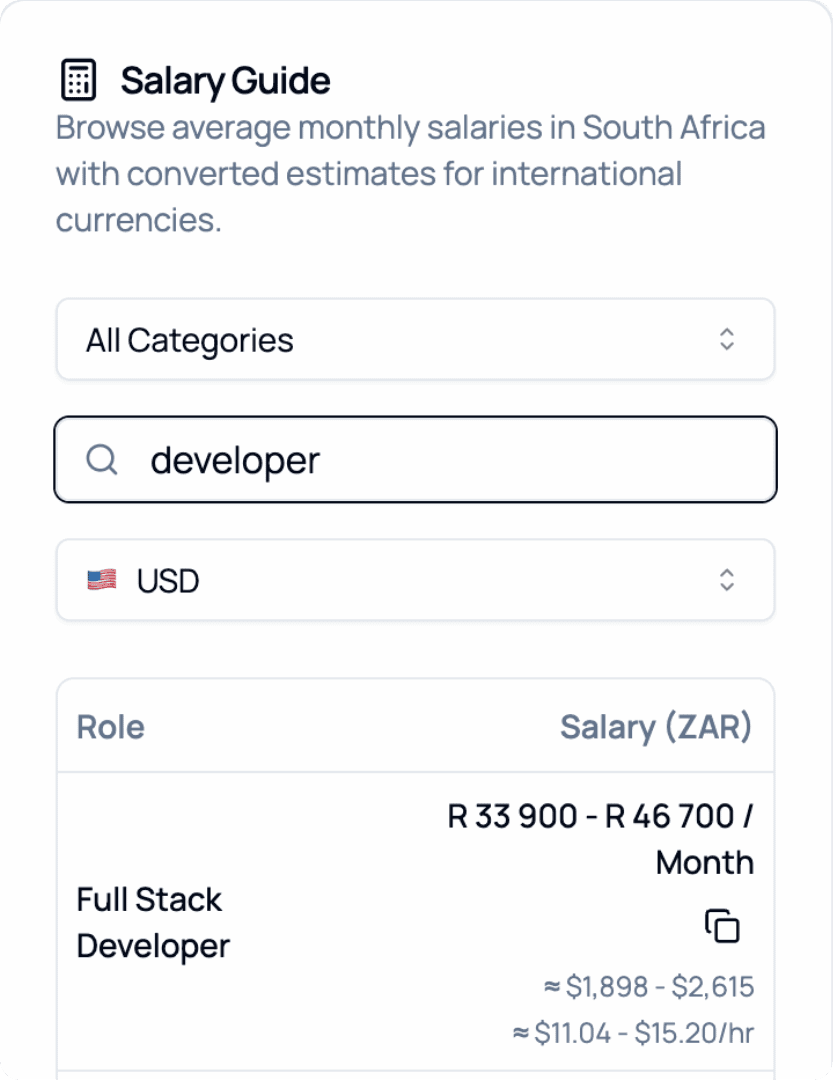
| Specialist you hire in South Africa | A monthly salary, or an hourly or monthly contractor rate | Average base salary of R276,000 a year, about $16,300, for digital marketing specialists with paid media skills. Remote rate of $12 to $20 an hour, or $1,920 to $3,200 for 160 hours, for social media and content VAs with advanced skills such as paid ads | PayScale, updated June 23, 2026, 20 salary profiles; HireSava salary guide |
WebFX's figures are one agency's published prices, not a market average, and its first month costs more: $1,200, $2,250 or $5,800 depending on the tier, because it includes a campaign audit and, on the two larger tiers, creative development. Clutch's figures come from reviews by clients of firms listed in its directory. PayScale's figure describes local pay inside South Africa and rests on 20 profiles; across all 110 profiles for digital marketing specialists it reports an average of R271,365. The South African salary guide gives the planning range for remote work paid by foreign employers.
An agency fee usually covers an account team, its tools and its reporting. With a freelancer or a direct hire you pay for one person's hours, and you supply the direction.
A worked example at $15,000 a month in ad spend
Take a business spending $15,000 a month on Google Ads. At WebFX's published rates the management fee is $2,250 a month, because 15% of $15,000 is more than the $975 minimum. That is $27,000 a year on top of the ad spend.
A South African specialist at $15 an hour costs $2,400 a month for 160 hours, or $1,200 for 80 hours. A US employee paid the BLS median costs about $6,563 a month in wages, or about $9,376 once benefits are included.
The gap moves with the budget. A 15% fee equals the $2,400 monthly cost of the full-time specialist at $16,000 of spend, and at $30,000 of spend the same agency charges $4,500. A specialist on a fixed rate costs the same at any spend, so the case for a direct hire grows as the budget grows and the work settles into a weekly routine.
An agency or a senior consultant is still the better choice when nobody on your side can set the strategy: which campaigns to run, what counts as a conversion and what a new customer is worth to you. A specialist does best once those decisions exist and the job is the weekly cycle of search terms, negative keywords, ad tests, budget pacing and reporting. Some businesses pay a consultant for a one-off audit and plan, then hire a specialist to run it.
Keep the account in your name
Ownership is the hardest decision to undo. Google says an account's time zone and its currency are both "permanently set when you set up your account," and the only fix is a new account. Campaigns can be copied across, but Google warns that "these solutions will not copy over historical data." If someone else opens the account for you, check both settings before any money is spent.
- Open the account with a Google login that belongs to the business, not to one employee or contractor. Choose the billing country where the business is registered, the currency you want to pay in and the time zone of the market you advertise in.
- Add the payment method yourself. In Google Ads, adding or editing a payment method on the payments profile takes Admin or Billing access.
- Complete advertiser verification yourself. Only Admin users can start and complete it, and once an account is verified, "some of your info will appear in ad disclosures and the Ads Transparency Center." Google's third-party policy lists "verifying your customer's account as your own" as a form of misrepresentation.
- Keep a second admin on your own side. Google warns: "If your account has only one administrator, you may lose access to your tags if that user becomes unavailable."
- Link an agency's manager account to the account you opened instead of letting the agency create one. "If a manager creates a new account, the manager will automatically become the owner of that account," according to Google, while a manager that links an existing account "won't have ownership of that newly linked client account by default."
Ownership matters because "A client account can only have one owner," and the admins of an owner manager account can invite and remove users, change their access and transfer ownership to another manager. You keep one lever either way: "The client account still owns its data and has the ability to remove ownership access by unlinking."
The same rule applies on the other platforms. In Microsoft Advertising, whoever signs up first is "granted the Super Admin user role," which can manage "everything related to billing and payments, account details, and other users," so sign up yourself. In Meta, keep the ad account in your own business portfolio and share it with the agency or freelancer rather than running your ads from an account in theirs. Meta's developer documentation describes the owning business granting another business access to an ad account and later taking it away, which it calls "removing an agency from your business."
Access to grant, platform by platform
| Platform | Role for the person running campaigns | What that role cannot do | Keep for yourself |
|---|---|---|---|
| Google Ads | Standard | Give account access or change access levels, accept or unlink manager accounts, add payment methods on the payments profile, link Google Analytics, start advertiser verification | Admin, plus Billing for whoever pays the invoices |
| Microsoft Advertising | Advertiser Campaign Manager | The role "can add and update campaigns, but cannot create or update users," and it "cannot manage any billing and payment tasks" | Super Admin |
| Meta ad account | Campaign and reporting access without admin rights, which Meta's developer documentation calls the General user role | "Cannot set anything at ad account level such as funding source itself" | Admin, which "Can manage all aspects of campaigns, reporting, billing and ad account permissions" |
Standard covers nearly all campaign work in Google Ads. A Standard user can edit campaigns, run performance and billing reports, and create conversions from Google Analytics events and key events. Linking Google Analytics to the account so that conversions can be imported takes Admin access, so do that once yourself.
Read only suits a candidate on a paid test or an outside auditor: it can view campaigns, use planning tools and run reports, but it cannot edit campaigns. Email only is for people who just need the reports. The SEO virtual assistant guide covers the matching roles in Search Console, Google Analytics and Google Business Profile.
Named logins also give you a record. Google Ads change history covers the past two years, and for edits made in the interface its User column shows "the email address of the person who made the change." A shared password hides who changed what. In accounts with more than three administrators, adding a user, removing one or changing a role also needs a second admin's approval, a security feature Google calls multi-party approval, and a request expires if nobody acts on it within 20 days.
What an agency has to tell you
Google's third-party policy covers "Third parties who purchase and manage advertising on their clients' behalf." Its transparency and account setup requirements are worth copying into the contract:
- Reports of Google costs must "report the exact amount charged by Google, exclusive of any fees that you charge."
- If your terms include a monthly performance report, it "must include data on costs, clicks, and impressions at the Google advertising account level."
- The agency must "provide your customers with the customer IDs for their Google Ads or AdWords Express accounts when requested."
- A management fee charged separately from Google's costs has to be disclosed: "At a minimum, inform new customers in writing before each first purchase and disclose the fee on all customer invoices."
- "Google requires that you use a separate account for each end-advertiser that you manage."
Google's guide for advertisers sets the floor: "At a minimum, you have the right to know the number of clicks, impressions, and the total cost of your Google ads." A freelancer working inside an account you own gives you all of that by default, because you can open the billing pages and the change history yourself.
A Google Partner badge means the agency's manager account meets Google's program requirements, which are checked daily: an optimization score of at least 70%, $10,000 of ad spend across managed accounts over 90 days, and at least half of its account strategists certified in Google Ads. Premier Partners must also rank in the top 3% of participating companies in their country, assessed once a year.
Read the badge for what it measures. Google defines optimization score as "an estimate of how well your Google Ads account is set to perform," and an account "can reach an optimization score of 100% by applying or dismissing all recommendations." Google says acting on recommendations "can help improve your campaign's performance," but the score describes how the account is set up, not the sales or leads it produces. Ask for results from accounts like yours, and check the date on any certificate: Google Ads certifications are valid for one year.
Put the spending rules in writing
A Standard user can change budgets and bids, so the limits belong in the brief. Google's own budget rules decide how much room there is.
Google treats a daily budget as an average. On any one day a campaign can spend up to "two times your average daily budget for most campaigns," and in a month Google charges no more than "30.4 times your average daily budget for most campaigns." A $500 average daily budget can spend $1,000 on a busy day and up to $15,200 in a month.
For a test with a fixed cost, use a campaign total budget instead. It works for Search, Standard Shopping, Performance Max, Demand Gen and YouTube campaigns, runs for up to 90 days on Search, Shopping and Performance Max, and Google says "an advertiser may be billed only up to the amount they entered for the campaign." The budget type cannot be changed after the campaign's start date is set.
Then decide which automated changes Google can make without you:
- Auto-apply recommendations can, on a schedule, add keywords and broad match keywords, change target CPA and target ROAS, and expand campaigns to Search partners or the Display Network. Google notes that "Budget raising isn't included," but the other changes still alter what your money buys. Keep auto-apply off unless you approve a named type.
- AI Max for Search campaigns can generate ad text "based on content from your domain, landing pages, existing ads, keywords in your ad group," and its final URL expansion sends traffic "to the most relevant URLs on your domain." Both need conversion-based Smart Bidding. Give the specialist the words your ads must never use, for the text guidelines, and the URLs that should never receive ad traffic, such as careers or login pages, for the URL exclusions.
Two scheduled Google changes may already be on the first month's list. Google announced on April 15, 2026 that Search campaigns using automatically created assets or the campaign-level broad match setting would move to AI Max automatically from September 2026, so check which AI Max settings those campaigns now carry. In an update on June 11, 2026, Google said the sunset and automatic upgrade of Dynamic Search Ads would begin in February 2027 instead. If your account still runs Dynamic Search Ads, ask for a migration plan before Google makes the switch.
If you advertise to people in the European Economic Area, the UK or Switzerland, Google's EU user consent policy requires consent for cookies where the law requires it and for "the collection, sharing, and use of personal data for personalization of ads," and it requires you to "retain records of consent given by end users." The consent banner is your decision. The specialist's part is checking that your tags pass each visitor's choice to Google through consent mode.
A short approval list keeps the arrangement clear:
- any budget change above a set share, for example 10%
- new campaigns, new conversion actions and changes to what counts as a conversion
- new landing pages, and ad text for anything regulated in your market
- turning on any auto-apply type or AI Max feature
A paid test before you hire
Pay for two to three hours of work, with Read only access and nothing else. These tasks show how a candidate treats your money:
- Search terms. Export the last 30 days of the search terms report and ask for 20 negative keywords with a reason for each. Google's test is simple: "If a search term isn't relevant enough to the products or services you offer, add it as a negative keyword." Strong answers also name the terms worth keeping and say whether each negative belongs on the campaign or on the ad group.
- Ad text. Ask for one responsive search ad for a named ad group. Google allows up to 15 headlines of 30 characters and up to 4 descriptions of 90 characters, with a minimum of 3 headlines and 2 descriptions. Check that every claim in the ad matches your landing page.
- Pacing. Ask how much the account could spend on its busiest day and in a full month at its current budgets, and how they would cap a 30-day test. A correct answer uses the two times and 30.4 times rules, or a campaign total budget.
- Recommendations. Ask which items on the Recommendations page they would apply, which they would dismiss, and why.
Score the answers for accuracy, for the order in which the candidate would work and for the questions they ask before proposing changes. The VA skills test generator builds a scored test for other tasks, and the reference check questions generator drafts questions for a former manager or client.
The first month and the weekly report
Spend the first week on reading and writing things down. The specialist lists every conversion action and what it counts, maps the campaign structure and the shared negative keyword lists, records the auto-apply and AI Max settings, and reads the last 90 days of change history. Each recurring task then gets a short written process, and the VA SOP generator gives a template. From the second week, changes come from a list you approve.
A weekly report should fit on one page:
- spend against budget for each campaign, with the reason for any gap
- conversions and cost per conversion by campaign, against the target you set
- search terms added as negatives, and search terms promoted to keywords
- changes made, taken from change history
- tests running, with their start dates
- next week's list, for your approval
Judge the first month on accuracy and turnaround. Agree the cost per conversion target for month three at the start, so that neither side is guessing later.
Working hours across time zones
South Africa keeps UTC+2 all year, with no daylight saving time. Until US clocks go forward on March 14, 2027, Johannesburg is 7 hours ahead of New York, 10 ahead of Los Angeles and 2 ahead of London.
For paid search the gap is useful. Google Ads reports by the account's time zone, so for an account set to New York time the reporting day closes at 07:00 in Johannesburg. A specialist who starts at 08:00 can check how yesterday's budgets paced and fix problems before New York opens. A working day of 08:00 to 17:00 in South Africa overlaps a London office day for six hours and a New York day for one.
Budget checks and routine changes do not need a live handoff, so a weekly call in the overlap and the change history carry most of the work. The time zone overlap calculator checks a schedule against your city.
Hiring a South African PPC specialist through HireSava
HireSava is a marketplace for hiring South African professionals directly: you post the role, interview and hire with no agency in the middle. Employers remain responsible for payroll, HR, and compliance for the people they hire. The remote paid ads specialist role page and the remote media buyer role page list typical tasks, the marketing and social media industry page covers the wider team, and the service pages cover PPC campaign management, paid ad campaign setup, paid ad optimization, ad copywriting, landing page optimization and marketing analytics and reporting.
The job description generator drafts the posting from the scope and access plan above, the contract generator drafts the agreement, and the guide to paying a South African contractor covers the payment side.
When the scope and the access plan are settled, create an employer account and post the role. The pricing page lists the employer plans.
Sources and notes
This is general information for employers, not legal or tax advice. Sources were checked on November 22, 2026:
- Google Ads Help: access levels, ownership of client accounts, language, time zone and currency settings, average daily budgets, campaign total budgets, auto-apply recommendations, optimization score, AI Max for Search campaigns, responsive search ads, the search terms report, change history, multi-party approval, Google Partner requirements and Google Ads certifications.
- Google Ads policies: the third-party policy, its transparency requirements, the advertiser guide to working with third parties and advertiser verification.
- Google: the EU user consent policy, the help page on consent mode and the announcement on Dynamic Search Ads and AI Max of April 15, 2026, updated June 11, 2026.
- Microsoft Advertising: account hierarchy and user permissions on Microsoft Learn, updated June 5, 2026.
- Meta for Developers: ad account roles and business-to-business functions. The labels in Meta's Business settings screen can differ from the role names in the developer documentation, which is cited because it states what each role can do.
- US Bureau of Labor Statistics: the Occupational Outlook Handbook entry for market research analysts, modified August 27, 2026, whose median pay uses May 2025 data, and Employer Costs for Employee Compensation for June 2026, in which wages and salaries were 70.0% of private industry compensation costs. The benefits estimate divides the median wage by 0.70. O*NET's profile of search marketing strategists places paid search consultants and paid search strategists in that occupation group.
- PayScale for South African digital marketing specialists with paid media skills, updated June 23, 2026, and for digital marketing specialists overall, updated October 17, 2026. A secondary source built from self-reported salary profiles, used because Statistics South Africa does not publish pay for this occupation separately.
- Agency and freelancer prices: WebFX's PPC pricing page, modified September 28, 2026, and two Clutch pages, the PPC pricing guide, updated September 21, 2026, and the freelancer and agency comparison, updated April 23, 2026. Clutch is a directory whose figures come from client reviews.
- HireSava's South African salary guide for the remote rate for social media and content VAs with advanced skills such as paid ads.
- Federal Reserve data on FRED: R16.9275 to the US dollar on November 13, 2026, the latest daily rate published.
- Time zones: the IANA Time Zone Database, and 15 U.S.C. 260a for US daylight saving time.
Monthly figures divide annual figures by 12, and dollar conversions use the FRED rate above.
Frequently Asked Questions
Explore related hiring options
Useful next pages based on this article's topic:
- Remote SEO Specialist role — organic growth execution and reporting
- On-Page SEO Optimization service — content relevance and ranking improvement
2026 Salary Guide: South Africa
Discover South African Salaries by Role. Compare costs and see how much you can save.