TL;DR
A video editing virtual assistant turns your raw recordings into finished videos to a written brief: cuts, captions, audio clean-up, B-roll, thumbnails and the upload. Topics, final approval, sponsor terms and copyright decisions stay with you.
Add the editor through YouTube Studio channel permissions, never your password. Editor (limited) can upload and publish but cannot see revenue, change permissions or delete published videos. Since July 15, 2025, YouTube has called repetitive, mass-produced uploads "inauthentic content," which cannot earn money.
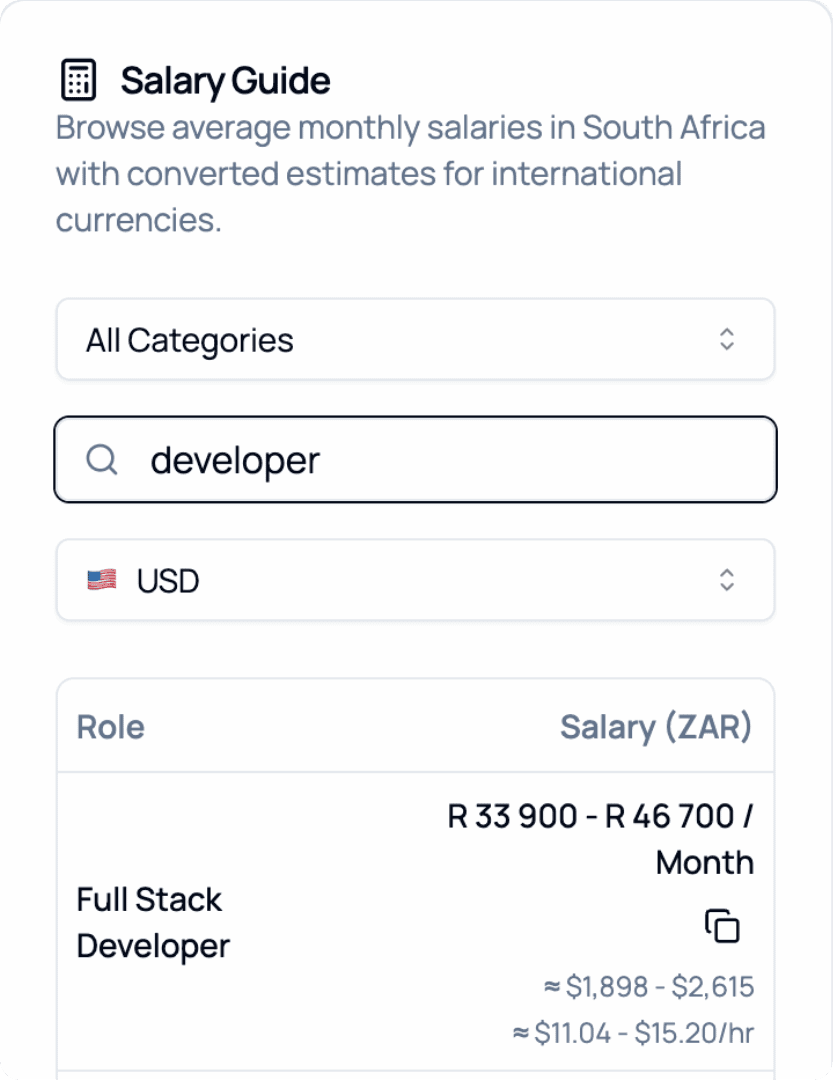
The US median wage for film and video editors was $75,420 in May 2025 (BLS). PayScale puts South African film and video editors at an average base salary of R236,395 a year, about $13,528. HireSava's salary guide places South African video editors at $960 to $4,000+ a month full-time.
Table of Contents
- What a video editing VA does
- A VA, a specialist editor or an agency
- Size the role from a timed test
- Give access through roles, not passwords
- Rules your editor applies on every video
- Who owns the edits
- What it costs in 2026
- A paid test before you hire
- The first month
- Turnaround across time zones
- Hiring a South African video editor through HireSava
- Sources and notes
A video editing virtual assistant is a remote editor who turns your raw recordings into finished videos to a written brief: cutting and pacing, captions, audio clean-up, B-roll and on-screen text, thumbnails, exports and the upload itself. Hire one when you record more than you can edit, and keep topic choice, final approval, sponsor terms and anything that could put the channel's monetization at risk with you.
Recent platform rules shape that brief. On July 15, 2025, YouTube renamed its "repetitious content" policy to "inauthentic content" to make clear that repetitive, mass-produced uploads cannot earn money. Shorts can now run up to three minutes, but a Short longer than one minute is blocked worldwide while it carries an active Content ID claim. Creators must also tell YouTube when realistic content was made or meaningfully altered with AI. Every rule and figure below was checked against its source on November 25, 2026.
What a video editing VA does
The US Bureau of Labor Statistics says film and video editors "arrange footage shot by camera operators and collaborate with producers and directors." For a creator, a coach or a small marketing team, you are the producer and the director. The editor works through a recurring queue to your brief.
| Work | You hand over | You get back |
|---|---|---|
| Long-form YouTube edit | Raw recordings, your outline, the style guide and a B-roll folder | A tightened cut with mistakes and long pauses removed, B-roll, lower thirds and music, exported to your spec |
| Shorts, Reels and TikTok clips | The long-form video or raw file, with timestamps of moments you like | Vertical 9:16 clips with burned-in captions and a suggested title for each |
| Podcast and webinar video | Camera or Zoom recordings and separate audio tracks | A synced edit that switches between speakers, with even levels and chapter markers |
| Captions | The final cut and a list of names and terms that must be spelled right | A corrected caption file for YouTube and captions burned into vertical clips |
| Thumbnails | Brand fonts and colors, photos, and the video's main point | Two or three options per video for you to choose from |
| Upload and publishing | The title and description you approved, or drafts for your approval | The upload with chapters, end screen, captions, and the paid promotion and AI answers you decided |
| Files and archive | Your folder structure and file naming rules | Project files, exports and assets stored where you can find them after the contract ends |
Keep these with you, whatever the editor's experience:
- What to make: topics, scripts and the on-camera work.
- Final approval before anything goes public.
- Sponsor deals and the wording of each disclosure.
- The music and stock footage accounts, which belong in your company's name.
- Channel ownership, and every decision on a copyright claim or dispute.
A VA needs a format to repeat. Without one, the first videos come back slowly and with long lists of corrections.
A VA, a specialist editor or an agency
A VA who edits suits repeatable formats: the weekly talking-head video, podcast episodes, the Shorts cut from them, and the publishing work around them. The value is consistency, plus the upload and caption hours you stop doing yourself.
A specialist editor suits story-driven long-form work, motion graphics, color grading or documentary pacing, where each video is its own creative project. Expect a higher rate and a separate brief for each video.
An agency or production company suits work that needs strategy, scripting and filming as well as editing. You buy a managed result and pay the agency's margin on top of the editor's time.
The test is simple. If you can describe the edit in a one-page style guide and it repeats every week, hire a VA. If you cannot yet, pay a specialist for the first few videos, then write down what they did and hand that guide to a VA.
Size the role from a timed test
Editing time depends on the footage, the format and the polish you expect, so the reliable number is your own. Time the paid test described further down, then multiply. Here is a worked example with figures you should replace with yours:
- Long-form: one 20-minute talking-head video a week. Suppose the test took 4 hours to edit, 45 minutes for a thumbnail and 30 minutes to upload with chapters and captions. That is 5.25 hours.
- Shorts: ten a week at 40 minutes each to cut and caption, plus 10 minutes each to post. That is about 8.3 hours.
- Revisions and file admin add roughly 10 percent, about 1.4 hours.
The total is about 15 hours a week, or about 65 hours a month: a part-time role. Doubling the output or adding a weekly podcast video turns it into a full-time one.
Give access through roles, not passwords
YouTube Studio's channel permissions let people help manage a channel "without needing access to your Google Account," and YouTube describes them as safer than sharing your password. The invitation goes to the editor's own Google account and expires after 30 days. A channel still run through an older Brand Account has to migrate to channel permissions first.
| YouTube role | Can | Cannot |
|---|---|---|
| Manager | Everything an Editor can do, plus manage permissions and delete content | Delete the channel |
| Editor | View all channel data, edit, upload and publish videos, delete drafts | Manage permissions, delete the channel or published videos, sign contracts |
| Editor (limited) | Everything an Editor can do | See revenue data |
| Subtitle editor | Add, edit, publish and delete subtitles | Edit anything else |
| Viewer (limited) | View channel details and analytics | Change channel content or see revenue data |
For an editor who uploads and schedules, Editor (limited) is the usual fit: full editing and publishing, no revenue figures, no permission changes and no way to delete a video that is already live. Keep Owner and Manager for yourself and a business partner. A caption specialist who never touches the edit only needs Subtitle editor.
Meta Business Suite offers the same split for a Facebook Page or an Instagram professional account: give the editor partial access for content tasks and keep full control yourself. Where a platform has no team access, the editor delivers finished files to a shared folder and you post them.
Keep raw footage and exports in your own cloud storage and share folders with the editor's account, so the files stay yours when the contract ends. A review tool saves rounds of email with timestamps typed by hand. Frame.io's free plan covers 2 members and 2 GB of storage, Pro costs $15 per member per month with 2 TB, and people you send a share link to can comment without a paid seat. The data security planner covers devices, passwords and offboarding for a remote hire.
Rules your editor applies on every video
Repurposing that can still earn money
YouTube's monetization policies define reused content as channels that "repurpose content that's already on YouTube or another online source" without "adding significant original commentary, substantive modifications, or educational or entertainment value." Allowed examples include clips used for a critical review and edited footage from other creators "where you add a storyline and commentary." Among the examples that are not allowed are short videos "compiled from other social media websites." The policy "applies even if you have permission from the original creator," and YouTube applies it to the channel as a whole.
The July 15, 2025 update renamed repetitious content to inauthentic content "to better clarify this includes content that is repetitive or mass-produced." YouTube called it a minor update and said such content was never eligible to earn money. Shorts cut from your own recordings are a different case from compilations of other people's clips. The policy targets videos with little original work added, and batches of near-identical videos made from one template. Tell the editor that every clip needs a reason to exist beyond filling the calendar.
Music: whose license covers the channel
Music licenses follow the account that bought them, not the person who placed the track.
- YouTube says tracks from its Audio Library are "copyright-safe." Partner Program members can monetize videos that use them, and those tracks won't be claimed through Content ID. Creative Commons tracks need a credit in the video description, while standard-license tracks don't. YouTube's page does not cover using these tracks off YouTube, so keep them to YouTube uploads.
- Stock music subscriptions are licensed to the subscriber. Epidemic Sound's Creator plan, for example, excludes "Business & client work" and digital ads and covers one monetized channel per platform, while its Pro plan covers professionals and freelancers creating content for clients. Buy the subscription in your company's name and add your own channels to it, so you control the license and its renewal.
- TikTok's ads help center says "Businesses cannot use the general music library for commercial usage" and points them to its Commercial Music Library, a pre-cleared library of 1 million songs, for organic posts, video ads and branded content.
- On YouTube, a claim costs more on Shorts. Any Short longer than one minute with an active Content ID claim is blocked worldwide until the claim is resolved. Keep claimed music out of longer Shorts entirely.
Sponsored segments
When a video includes a paid promotion, YouTube says "you have to let YouTube know by selecting the paid promotion button in your video details," which adds a disclosure label at the start of the video. For US audiences the FTC expects more. Its guidance for influencers says the disclosure "should be in the video and not just in the description uploaded with the video," that viewers are more likely to notice disclosures "made in both audio and video," and that you should not assume a platform's disclosure tool is good enough. The editor should never trim a spoken or on-screen disclosure out of a sponsor segment, and a Short cut from that segment needs a disclosure of its own.
AI edits that need a label
YouTube requires creators "to disclose content that is generated or meaningfully altered with AI when it appears realistic," for example a video that makes it look as if a real person gave advice they never gave. Aesthetic edits need no disclosure: color adjustment or lighting filters, beauty filters, caption creation and AI help with an outline or script. The question sits in YouTube Studio's upload flow, where YouTube calls it the AI use setting. YouTube may add a label itself, for example to content that carries C2PA metadata, and creators who consistently fail to disclose risk removal of content or suspension from the Partner Program.
One rule in the brief covers this: the editor flags any AI voice, any AI-generated footage that looks real and any change to a face or voice, and you decide the disclosure before the video goes live.
Who owns the edits
Put ownership in writing before the first file moves. The default rules differ between the US and South Africa, and both require a signed document to move ownership.
In the US, a commissioned work is a work made for hire only if it falls into one of nine categories, one of which is "a part of a motion picture or other audiovisual work," and only if the parties sign a written agreement that expressly says so. The US Copyright Office's Circular 30 is blunt: "If a work fails to satisfy any of these requirements, it is not a work made for hire." The person who made it then owns it, and under 17 U.S.C. 204(a) a transfer of ownership is not valid unless it is in writing and signed by the owner or the owner's authorized agent.
South Africa's Copyright Act starts from the author owning the work, in section 21(1)(a). Section 21(1)(d) gives the employer work made under a contract of service, and section 21(1)(c) gives a person who commissions and pays for a cinematograph film the copyright in it, unless the parties agree otherwise under section 21(1)(e). Whether an edit of footage you supplied counts as a commissioned film is a question for a South African lawyer. Section 22(3) settles the practical point: an assignment of copyright has no effect unless it is in writing and signed by or on behalf of the person assigning it. Section 22(5) allows copyright in future work to be assigned in advance.
The contract should cover:
- An assignment to your business of copyright in every deliverable, including future work under the contract, signed by the editor.
- A statement that the work is made for hire where the law allows it, with the assignment as the fallback.
- Project files as well as exports: the editing project, graphics files and any templates built for your channel.
- A license to use presets or templates the editor built before working for you, wherever they appear in your videos.
- Portfolio use only with your permission, and never before a video is public.
- Confidentiality for unreleased videos, sponsor terms and channel analytics.
The VA contract generator drafts a base agreement with intellectual property and confidentiality clauses. Its intellectual property clause leaves tools and templates the editor owned beforehand with the editor, so add the work made for hire statement, the preset license, project files and portfolio terms from the list above. The NDA generator covers confidentiality before raw footage changes hands, and the virtual assistant contract guide explains the clauses for South African hires in more detail.
What it costs in 2026
Published figures, with rand converted at the Federal Reserve's rate of R17.475 to the dollar on November 20, 2026:
| Source | Published figure | Per month |
|---|---|---|
| BLS, US film and video editors, median wage (May 2025) | $75,420 a year | $6,285 |
| BLS, lowest-paid 10 percent of US film and video editors | Less than $40,280 a year | Less than $3,357 |
| PayScale, South African film and video editors, average base salary | R236,395 a year, about $13,528 | About $1,127 |
| PayScale, South African range (10th to 90th percentile) | R113,000 to R427,000 a year | About $539 to $2,036 |
| HireSava salary guide, South African graphic designers and video editors | $6 to $25+ an hour | $960 to $4,000+ full-time |
The BLS wage is not the full cost of a US employee. Wages and salaries were 70.0 percent of private employers' compensation costs in June 2026, with benefits making up the other 30.0 percent. At that ratio, a $75,420 salary implies about $107,700 a year in total compensation, or about $8,980 a month.
PayScale's figures come from 130 self-reported salary profiles in South Africa. HireSava's salary guide prices full-time remote work for overseas employers and lists video editors among the specialist hires in its $2,800 to $4,000+ a month band. For the 65-hour month sized above, an editor at $10 an hour costs about $650 a month, and one at $20 about $1,300.
Budget for tools too. DaVinci Resolve has a free version, and DaVinci Resolve Studio costs $295 from Blackmagic Design. Frame.io costs $0, $15 or $25 per member per month on its Free, Pro and Team plans. A music subscription in your company's name comes on top. Agree in writing who pays for which license, because a license the editor buys stays with the editor when the contract ends.
A paid test before you hire
Give every finalist the same task, pay for it, and score it the same way.
- Send 10 to 15 minutes of real footage. A video you have already published keeps confidential material out of the test, though candidates can see your version. Unpublished footage needs a signed NDA first.
- Include the brief: the audience, target length, pace, caption style, fonts and colors, where music comes from, and one reference video you like.
- Ask for a three-to-five-minute long-form section, two vertical Shorts with captions, one thumbnail and the project file.
- Set the deadline you would set in normal work, such as 48 hours, then send one round of revision notes to see how the candidate handles feedback.
Specify the export in the brief. YouTube recommends an MP4 file with H.264 video, AAC-LC or Opus audio at 48 kHz, the same frame rate the footage was recorded at, and about 8 Mbps for 1080p or 35 to 45 Mbps for 4K at standard frame rates.
| Criterion | What to check |
|---|---|
| Story and pacing | Each section keeps its point, and dead air and repeated takes are gone |
| Accuracy | Names are spelled right, captions match the audio, and no words are clipped at the cuts |
| Audio | Levels stay even between speakers and music, with no hiss or room echo left in |
| Brand rules | Fonts, colors, lower thirds and caption style follow the brief |
| Delivery | The export matches the spec, files follow your naming rules, and the project file opens cleanly |
| Feedback | Every revision note is applied, and the candidate asked questions instead of guessing |
The skills test generator helps write the written part of the test, and the candidate scorecard keeps the comparison between finalists consistent.
The first month
- In week 1, set up access, shared folders and the review tool, write a one-page style guide, and have the editor re-cut a video you already published so you can compare it with your own version.
- In week 2, move to new edits, with full review before anything goes live. Log every correction in one shared document.
- In week 3, add Shorts and uploads, with your approval before each video is published.
- In week 4, review on-time delivery, revision rounds per video, errors caught at review and caption corrections, then turn repeated corrections into rules in the style guide.
When the corrections log stays short, hand over scheduling and let the editor publish on the agreed calendar. The SOP generator turns the style guide into a step-by-step procedure that a second editor could follow.
Turnaround across time zones
South Africa keeps UTC+2 all year, with no daylight saving time. Until US clocks go forward on March 14, 2027, Johannesburg is 7 hours ahead of New York, 10 ahead of Los Angeles, 2 ahead of London and 9 behind Sydney. That gap suits editing. Footage uploaded at the end of a US working day is edited during the South African day, and the cut is waiting the next morning. A weekly call in the overlap covers feedback, and the time zone overlap calculator checks the hours against your city.
Plan for file sizes as well. Bitrate in megabits per second, multiplied by seconds and divided by 8, gives megabytes. Twenty minutes of footage recorded at 100 megabits per second is 15,000 MB, or about 15 GB, which takes about 40 minutes to download on a 50 Mbps line and longer to upload on a slower one. Agree on proxy files or compressed review copies for long recordings, and ask each candidate about their connection and backup power. The load shedding and internet reliability guide lists the questions to ask.
Hiring a South African video editor through HireSava
HireSava is a marketplace for hiring South African professionals directly: you post the role, interview and hire with no agency in the middle. Employers remain responsible for payroll, HR, and compliance for the people they hire. The video editing VA role page lists typical tasks, and the service pages cover basic video editing, advanced video editing and post-production and video script writing. The job description generator drafts the posting from the scope you settled above.
When the brief, the access plan and the paid test are ready, create an employer account and post the role. The pricing page lists the employer plans.
Sources and notes
This is general information for employers, not legal advice. Sources were checked on November 25, 2026:
- YouTube Help: channel permissions; channel monetization policies, including the July 15, 2025 update on inauthentic content and the reused content policy; disclosing altered or synthetic content; three-minute Shorts, for the length limit for videos uploaded on or after October 15, 2024 and the block on longer Shorts with an active Content ID claim; paid product placements, sponsorships and endorsements; the YouTube Audio Library; and recommended upload encoding settings.
- Meta Business Help Center: How to give Facebook Page access in Meta Business Suite.
- TikTok: Commercial Music Library, last updated July 2025.
- Epidemic Sound: Which plan is right for you, for the plan comparison table.
- Federal Trade Commission: Disclosures 101 for Social Media Influencers, November 2019.
- US Copyright Office: Circular 30, Works Made for Hire; and 17 U.S.C. 204 for transfers of copyright ownership.
- South Africa's Copyright Act 98 of 1978: section 21, ownership of copyright, and section 22, assignment and licences.
- US Bureau of Labor Statistics: the Occupational Outlook Handbook entry for film and video editors and camera operators, for duties and May 2025 pay, last modified August 27, 2026; and Employer Costs for Employee Compensation for June 2026, released September 9, 2026.
- PayScale for South African film and video editor pay, updated August 25, 2026: a secondary source built from self-reported salaries, used because it is the published figure for this job title.
- Prices: the DaVinci Resolve Studio page and Frame.io pricing, viewed November 25, 2026.
- Federal Reserve data on FRED: R17.4750 to the US dollar on November 20, 2026, the latest daily rate published.
- Time zones: the IANA Time Zone Database, and 15 U.S.C. 260a for US daylight saving time.
Monthly figures divide annual figures by 12, and rand amounts are converted to dollars at the exchange rate above. The worked examples use assumed editing times and hourly rates; replace them with figures from your own paid test.
Frequently Asked Questions
Explore related hiring options
Useful next pages based on this article's topic:
- Virtual Assistant role overview — hiring and onboarding guidance
2026 Salary Guide: South Africa
Discover South African Salaries by Role. Compare costs and see how much you can save.