TL;DR
A logistics virtual assistant runs the desk work around freight: tracking, dock appointments, carrier packets, proofs of delivery, invoices, freight claims and demurrage checks. A dispatch service that decides which of several carriers gets a load needs broker authority, and customs entries and hazmat paperwork have licensing and training rules of their own.
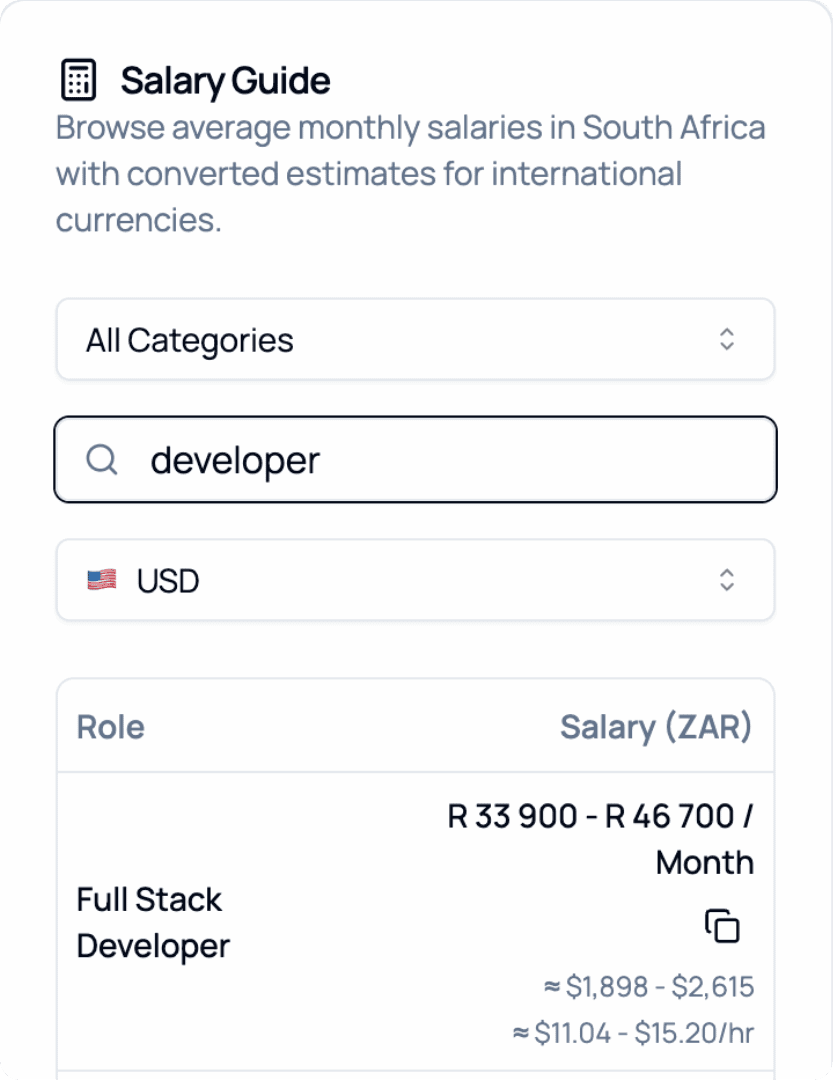
Hired directly from South Africa, a VA with a few years of experience costs about $960 to $1,600 a month for 160 hours. A US cargo and freight agent at the 2025 median wage costs about $6,340 a month once benefits are added.
South Africa is on UTC+2 all year, so a 15:00 to 23:00 shift covers 07:00 to 15:00 in Chicago until March 13, 2027 and 08:00 to 16:00 from March 14.
Table of Contents
A logistics virtual assistant is a remote coordinator who runs the desk work around freight: tracking loads, booking dock appointments, collecting carrier packets and proofs of delivery, invoicing, and following up on claims and disputed fees. Hired directly from South Africa, a VA with a few years of experience costs about $960 to $1,600 a month for full-time hours, based on the general admin bands in the HireSava South African salary guide, while a US cargo and freight agent at the 2025 median wage costs about $6,340 a month once benefits are added.
The limits on the job come from US federal rules, not from where the VA sits. A dispatch service that arranges loads for several carriers and decides which one gets each load needs broker authority. Preparing entry documents for US Customs and Border Protection is customs business, and the regulations require a broker's license for it unless the importer does the work itself or through its own authorized regular employees. Hazmat paperwork belongs with someone trained under the hazardous materials rules. The rest of a freight desk's routine, from check calls to claim files, can move to a VA once the steps are written down.
What a logistics VA does in each kind of freight business
"Logistics VA" covers very different queues. Write the scope around the queue the VA will own and the system they will work in, then keep the decisions in the last column with your own team.
| Business | Work a VA can own | Keep with your team |
|---|---|---|
| Freight broker | Check calls and ETA updates, carrier packets and FMCSA lookups, load board posts written from the rep's instructions, rate confirmations sent for signature, proofs of delivery, shipper invoices, the transaction record brokers must keep | Picking the carrier, setting the rate, approving exceptions and claims |
| Trucking company | Load details sent to drivers, bills of lading, proofs of delivery and lumper receipts collected, detention time logged, each driver's available hours checked before a load is offered | Rate and load acceptance decisions, safety calls |
| 3PL or warehouse | Dock appointment scheduling, advance ship notices and receipts keyed into the warehouse management system, cycle count reconciliations prepared, client status reports | Inventory adjustments and write-offs, client billing disputes |
| Shipper or ecommerce brand | Purchase order and inbound tracking, pickup bookings, carrier invoices checked against quotes, freight claims filed and followed up | Carrier selection, claim settlements |
| Importer | Supplier documents collected for the customs broker, Importer Security Filing data chased, containers and free time tracked, demurrage and detention invoices checked | Entry preparation and filing, tariff classification, valuation |
Freight companies choosing between a dispatch coordinator, a shipping documentation coordinator and a customs administrator can compare those three scopes in the freight role guide. HireSava's VA for Logistics and Remote Broker Support Specialist pages cover the broader roles, and the shipment tracking and logistics documentation pages cover those two queues on their own.
What a logistics VA costs next to a US hire
The Bureau of Labor Statistics publishes 2025 median wages for the US jobs closest to a logistics VA's work. Adding benefits at the rate BLS measured for private industry office and administrative support workers in June 2026, $11.51 for every $25.22 in wages, turns each median into a monthly employer cost.
| Option | Monthly cost | Basis |
|---|---|---|
| US production, planning and expediting clerk | About $7,240 | $59,650 a year median wage (2025), plus benefits |
| US cargo and freight agent | About $6,340 | $52,260 a year median wage (2025), plus benefits |
| US dispatcher (not police, fire or ambulance) | About $6,110 | $50,340 a year median wage (2025), plus benefits |
| US shipping, receiving and inventory clerk | About $5,490 | $45,260 a year median wage (2025), plus benefits |
| Managed logistics VA, Wing Assistant full-time plan | $1,699 | Published price for 160 hours a month |
| South African VA with a few years of experience, hired directly | $960 to $1,600 | $6 to $10 an hour for 160 hours |
| South African VA, entry level, hired directly | $640 to $960 | $4 to $6 an hour for 160 hours |
The US rows divide each median by 12 and multiply it by 1.456, the ratio of total compensation ($36.73) to wages ($25.22) per hour worked in that BLS series. The South African rows come from the general admin bands in the salary guide, which has no separate freight band. The guide's premium band, from $1,920 a month, is for roles that carry "revenue impact, executive exposure, or specialist platform depth."
A worked example: a broker that pays a South African VA $8 an hour for 160 hours spends $1,280 a month on pay, about $5,060 less than the US cargo and freight agent figure, or about $60,750 a year. A HireSava Pro membership is $69 a month. Budget the same software seats you would buy for any coordinator, such as a transportation management system (TMS) login, a load board subscription and a phone line, and run your own numbers in the offshore cost savings calculator.
Shifts that cover US and UK freight hours
South Africa is on UTC+2 all year. US clocks go forward on the second Sunday in March, which is March 14, 2027, and back on the first Sunday in November, so the gap to New York, Chicago and Los Angeles shrinks by an hour from mid-March to early November. UK clocks go forward on March 28, 2027.
| Office | Dates | 10:00 to 18:00 in South Africa | 15:00 to 23:00 in South Africa |
|---|---|---|---|
| New York | To March 13, 2027 | 03:00 to 11:00 | 08:00 to 16:00 |
| New York | From March 14, 2027 | 04:00 to 12:00 | 09:00 to 17:00 |
| Chicago | To March 13, 2027 | 02:00 to 10:00 | 07:00 to 15:00 |
| Chicago | From March 14, 2027 | 03:00 to 11:00 | 08:00 to 16:00 |
| Los Angeles | To March 13, 2027 | 00:00 to 08:00 | 05:00 to 13:00 |
| Los Angeles | From March 14, 2027 | 01:00 to 09:00 | 06:00 to 14:00 |
| London | To March 27, 2027 | 08:00 to 16:00 | 13:00 to 21:00 |
| London | From March 28, 2027 | 09:00 to 17:00 | 14:00 to 22:00 |
The early shift suits work that should be finished before a US office opens: overnight tracking updates sorted into an exception list, appointment requests sent to receivers, proofs of delivery matched to loads and invoices drafted. It also gives a UK freight office a full day of overlap. The late shift puts the VA on live check calls and appointment changes through most of the East Coast and Central business day, while a Los Angeles afternoon falls late at night in South Africa. The time zone overlap calculator works out other shift times.
If the VA is your employee rather than an independent contractor, section 17 of the Basic Conditions of Employment Act treats work after 18:00 and before 06:00 as night work. For employees earning at or below the earnings threshold, R269,600.90 a year from 1 May 2026, night work needs the employee's agreement, an allowance or a reduction in working hours, and transportation available between home and the workplace at the start and end of the shift. A shift that ends at 23:00 also stays outside the extra duties for regular night work, which apply when someone works longer than one hour after 23:00 at least five times a month or 50 times a year. The Act's definition of an employee excludes independent contractors, and the contractor or employee comparison covers how to classify the role.
Sydney is 9 hours ahead of South Africa until April 4, 2027 and 8 hours ahead after that, so an 08:00 start in South Africa is 17:00 or 16:00 in Sydney. An Australian team should plan on overnight handoffs rather than live cover: document checks, supplier follow-up during European hours and next-day booking preparation.
US rules that limit the job
These are US federal rules. If your freight moves under other countries' rules, put the same questions to each regulator: who may arrange transport for others, who may prepare customs filings and who may handle dangerous goods paperwork.
Allocating loads among several carriers takes broker authority
Federal rules define a broker as "a person who, for compensation, arranges, or offers to arrange, the transportation of property by an authorized motor carrier" (49 CFR 371.2). A carrier's employees and bona fide agents are not brokers "when they arrange or offer to arrange the transportation of shipments which they are authorized to transport and which they have accepted and legally bound themselves to transport." Bona fide agents are "persons who are part of the normal organization of a motor carrier and perform duties under the carrier's directions pursuant to a preexisting agreement which provides for a continuing relationship, precluding the exercise of discretion on the part of the agent in allocating traffic between the carrier and others."
FMCSA's June 2023 guidance says "allocating traffic" means "any exercise of discretion on an agent's part when assigning a load to a motor carrier." It adds: "If a dispatch service arranges transportation on behalf of multiple motor carriers and engages in the allocation of traffic, pursuant to 49 CFR 371.2, it is not a bona fide agent and must obtain broker operating authority registration." The guidance also says "the greater control a carrier has over a dispatcher's actions, the less likely the dispatcher is to exercise independent discretion in sourcing and allocating loads and hence need broker authority."
For a trucking company hiring a VA to dispatch its own trucks, the guidance lists factors that point to a bona fide agent. Four of them can be written into the VA's contract:
- a written contract that "clearly reflects the motor carrier is appointing the dispatch service as a licensed agent for the motor carrier," with the insurance and liability responsibilities of each side
- pay from the carrier under that contract, with no billing to or compensation from a broker, third-party logistics company or factoring company
- disclosure that the VA is a dispatch service operating under an agreement with your company, and that each shipment is arranged for your company only
- no handing a load on to another carrier
A broker's VA works inside the brokerage instead, so the limits there are your own: write down which carriers the VA may offer loads to, and which rates or exceptions need a rep's approval.
Driver coercion rules cover the VA
Under 49 CFR 390.6, "a motor carrier, shipper, receiver, or transportation intermediary, including their respective agents, officers, or representatives, may not coerce a driver of a commercial motor vehicle to operate such vehicle in violation of" a list of rules that includes parts 390 to 399, where the hours of service limits sit.
Those limits let a property-carrying driver drive 11 hours within the 14 hours after coming on duty following 10 consecutive hours off duty. Driving stops once 8 hours of driving have passed without a 30-minute break, except for drivers who qualify for the short-haul exceptions, and after 60 hours on duty in 7 days, or 70 hours in 8 days for a carrier that runs every day of the week (49 CFR 395.3). A VA who books or reschedules loads should see each driver's available hours before offering a load or agreeing to a later appointment, and should escalate to the dispatcher or safety manager when the time does not fit instead of pressing the driver.
Hazmat paperwork needs trained staff
The hazardous materials rules define a hazmat employee to include anyone who "prepares hazardous materials for transportation" (49 CFR 171.8). Under 49 CFR 172.704, a new hazmat employee may do that work before training only under "the direct supervision of a properly trained and knowledgeable hazmat employee," the training must be completed "within 90 days after employment or a change in job function," and recurrent training is due "at least once every three years." Keep hazmat bookings and shipping papers with a trained employee unless the VA completes the same training.
Customs entries need a licensed broker or your own employee
Customs regulations define customs business to include "the preparation, and activities relating to the preparation, of documents in any format and the electronic transmission of documents and parts of documents intended to be filed with CBP in furtherance of any other customs business activity, whether or not signed or filed by the preparer" (19 CFR 111.1). A license is required "to transact customs business as a broker" (19 CFR 111.2). The exception covers an importer acting "solely on his own account and in no sense on behalf of another," along with "his authorized regular employees or officers who act only for him."
An importer that wants a VA on its customs work can keep entry preparation and filing with its licensed broker and give the VA the work around it: collecting commercial invoices, packing lists and bills of lading from suppliers, and answering the broker's questions from company records. The Remote Customs Administrator role page is the starting point for that hire.
The VA can also chase Importer Security Filing data. The seller, buyer, importer of record number, consignee number, manufacturer, ship-to party, country of origin and HTSUS number are due "no later than 24 hours before the cargo is laden aboard the vessel at the foreign port," and the container stuffing location and consolidator are due as early as possible and, in most cases, no later than 24 hours before arrival in a US port (19 CFR 149.2). The ISF importer or its authorized agent files, so the VA's part is getting the supplier's answers to that person in time.
Deadlines a VA can track for you
Freight claims
A carrier "may not provide by rule, contract, or otherwise, a period of less than 9 months for filing a claim against it under this section and a period of less than 2 years for bringing a civil action against it under this section," and the 2 years run from the carrier's written notice that it has disallowed any part of the claim (49 U.S.C. 14706(e)(1)). The bill of lading or contract sets the actual window, so the VA should log it when the claim is opened.
A claim has to identify the shipment, assert liability for the loss, damage, injury or delay, and claim "a specified or determinable amount of money" (49 CFR 370.3). The carrier must acknowledge it in writing within 30 days unless it pays or declines it in that time (49 CFR 370.5). It must pay, decline or make a firm compromise settlement offer in writing within 120 days of receiving the claim, and if it cannot, it must tell the claimant in writing the status and the reason for the delay at that point and every 60 days after while the claim is pending (49 CFR 370.9). A VA who files each claim with its documents can chase the acknowledgment at 30 days and the decision at 120.
Demurrage and detention invoices
An importer's VA can check every demurrage and detention invoice for ocean containers against the Federal Maritime Commission's billing rules before it is paid. Those rules say a billing party "must issue a demurrage or detention invoice within thirty (30) calendar days from the date on which the charge was last incurred," and if it does not, "the billed party is not required to pay the charge" (46 CFR 541.7). Each invoice must carry minimum information, including the bill of lading and container numbers, the free time allowed with its start and end dates, the dates charged, the rate and the tariff rule or contract it comes from, and contact details for disputes (46 CFR 541.6). Leaving out required information "eliminates any obligation of the billed party to pay the applicable charge" (46 CFR 541.5). The billing party must allow "at least thirty (30) calendar days from the invoice issuance date" to request mitigation, refund or waiver (46 CFR 541.8).
On September 23, 2025, a federal appeals court set aside one section of the rule, 46 CFR 541.4, which limited who may be sent an invoice. The FMC says that "apart from section 541.4, the rest of the Rule remains in effect."
Broker transaction records
A broker's VA can build the record a broker must keep for each transaction as the load closes. Under 49 CFR 371.3 it holds the consignor's name and address; the originating carrier's name, address and registration number; the bill of lading or freight bill number; the broker's compensation and who paid it; any non-brokerage service with its compensation and payer; and any freight charges collected with the date paid to the carrier. Brokers keep these records for three years, and each party to a brokered transaction has the right to review the record.
Carrier checks a broker's VA can run
FMCSA's SAFER Company Snapshot is free and searched one carrier at a time by USDOT number, MC or MX number, or company name. A record shows the USDOT status, any out-of-service date, the operating authority status, the physical address and phone number, power units and drivers, cargo carried, inspection and out-of-service results, crashes and any safety rating. A VA can run the same check on every new carrier before its first load:
- Look up the USDOT number and confirm the USDOT status and operating authority are active, with no out-of-service date.
- Compare the name, address and phone number on the record with those in the carrier's emails and paperwork, and call the number on the record rather than the one in an email signature.
- Request the certificate of insurance from the carrier's insurance agent with your company as certificate holder, and confirm the policy with the agent.
- Check that power units, drivers and cargo carried fit the load.
- File the packet with the date of the lookup, and send any mismatch to the rep instead of booking the load.
Hiring the VA and handing over the work
Write the scope before the job post: which queue the VA owns, the system of record, the decisions they may make alone and the ones that need sign-off. The job description generator and SOP generator turn that into a post and a written process.
Test with a paid work sample built from your own paperwork with names and rates removed: a carrier packet with an expired insurance certificate and a phone number that does not match the FMCSA record, a demurrage invoice missing its free time dates, and a set of check call notes to log. Score whether the candidate catches each problem and escalates it rather than fixing it quietly. The skills test generator and candidate scorecard structure the test and the scoring.
Give the VA their own TMS, email and load board logins with multi-factor authentication, so every change carries their name. The data security planner sets access by type of data. Hand over the queues in order of risk: tracking and status updates first, then appointments and documents, then carrier packets and invoices, with claims last. The contract generator covers hours, confidentiality and notice.
Employers still weighing countries can compare South Africa with the Philippines for logistics VAs.
HireSava lets you post the role and hire a South African logistics VA directly, with no agency in the middle. Employers remain responsible for payroll, HR, and compliance for the people they hire, which is why the scope, the contract and the rules above stay yours to set. When the queue, the shift and the decision limits are written down, create an employer account and post the job. Plans and prices are on the pricing page.
Sources and notes
This is general information for employers, not legal advice. Transportation, customs and employment rules change, and state rules and your contracts add to them. Sources were checked on November 18, 2026:
- US Bureau of Labor Statistics, occupational projections and worker characteristics: 2025 median annual wages of $52,260 for cargo and freight agents (SOC 43-5011), $50,340 for dispatchers, except police, fire, and ambulance (43-5032), $45,260 for shipping, receiving, and inventory clerks (43-5071) and $59,650 for production, planning, and expediting clerks (43-5061).
- US Bureau of Labor Statistics, Employer Costs for Employee Compensation, table 4, June 2026: private industry office and administrative support occupations, $36.73 in total compensation, $25.22 in wages and salaries and $11.51 in benefits per hour worked.
- Wing Assistant, logistics virtual assistant: $1,699 a month for a full-time plan of 160 hours and $1,099 for a part-time plan of 80 hours, with no date shown for the prices. A vendor's own published price.
- HireSava, South African salary guide: general admin bands of $4 to $6 an hour (entry level) and $6 to $10 an hour (a few years of experience) at 160 hours a month, and the premium band description.
- South African Government, South Africa at a glance: GMT +2 hours.
- 15 U.S.C. 260a, advancement of time (LII): US daylight saving time runs from the second Sunday of March to the first Sunday of November.
- GOV.UK, when do the clocks change: March 28, 2027.
- NSW Government, daylight saving: ends April 4, 2027. Tourism Australia, time zones: AEST is UTC +10 and AEDT is UTC +11.
- Basic Conditions of Employment Act 75 of 1997, section 17 and section 1 (Acts Online): night work, and the definition of an employee.
- DLA Piper, BCEA earnings threshold and national minimum wage increase, April 21, 2026: R269,600.90 a year from 1 May 2026, and section 17(2) among the provisions that do not apply above it. A secondary source, used in place of the Government Gazette notice.
- 49 CFR 371.2 and 371.3 (LII): broker and bona fide agent definitions, and broker records.
- Federal Motor Carrier Safety Administration, Definitions of Broker and Bona Fide Agents, 88 FR 39368, June 16, 2023.
- 49 CFR 390.6 and 395.3 (LII): coercion and the property-carrying driver hours of service limits.
- 49 CFR 171.8 and 172.704 (LII): hazmat employee definition and training.
- 19 CFR 111.1, 111.2 and 149.2 (LII): customs business, broker licensing and Importer Security Filing timing.
- 49 U.S.C. 14706 and 49 CFR 370.3, 370.5 and 370.9 (LII): claim periods, claim contents, acknowledgment and disposition.
- 46 CFR 541.5, 541.6, 541.7 and 541.8 (LII): demurrage and detention billing. Federal Maritime Commission, U.S. Court of Appeals issues decision in case on demurrage and detention billing practices, November 20, 2025.
- Federal Motor Carrier Safety Administration, SAFER Company Snapshot.
Frequently Asked Questions
Explore related hiring options
Useful next pages based on this article's topic:
- Virtual Assistant role overview — hiring and onboarding guidance
2026 Salary Guide: South Africa
Discover South African Salaries by Role. Compare costs and see how much you can save.