TL;DR
Outsource the "Triple-Net (NNN)" data chase to South African VAs to achieve 100% utility data coverage.
Use "empathetic persistence" to secure cooperation from tenant AP departments for GRESB and SEC compliance.
Avoid "brown discounts" and boost Net Operating Income (NOI) through accurate energy benchmarking and data normalization.
Reduce back-office costs by 40-60% while meeting the rigorous "Institutional Grade" data standards of 2026.
Table of Contents
- How do you handle Scope 3 utility data collection without burning out your team?
- Why is a South African VA the best fit for managing ESG data compliance?
- What does a scalable workflow for NNN utility data extraction look like?
- How does outsourcing ESG data management improve your portfolio's asset value?
- Conclusion
How do you handle Scope 3 utility data collection without burning out your team?
To handle Scope 3 utility data collection efficiently, real estate firms use specialized virtual assistants for real estate to manage the tedious outreach and extraction process. By outsourcing the collection of tenant-paid utility data (common in NNN leases), firms can meet GRESB and SEC reporting requirements accurately without diverting their core team from high-value asset management tasks.
The "NNN" Data Gap
- The Problem: In Triple-Net (NNN) leases, tenants hold the utility accounts directly. Landlords often have zero visibility into energy usage but are now legally required to report this "Scope 3" emission data for benchmarking and compliance.
- The Friction: Most teams fail because chasing dozens, or hundreds, of tenants for PDF invoices is a low-value, high-frustration task. In the "higher for longer" interest rate environment of 2026, forcing high-paid asset managers to do this work compresses yields and destroys operational efficiency.
- The Regulatory Risk: In 2025 and 2026, "estimated" data is no longer acceptable to investors. Tougher ESG laws are now penalizing inefficient properties, creating a real risk of "brown discounting" for non-compliant assets.
Moving from Manual to Managed
- The Solution: A dedicated workflow where a specialized South African virtual assistant for compliance serves as the "Utility Concierge". They take the burden of "document scavenging" off your property managers, ensuring the ESG data supply chain remains unbroken.
- The Goal: Achieving a 100% data coverage ratio across your portfolio. This ensures you avoid GRESB penalties and maintain the "Institutional Grade" status required for capital market momentum in 2026.
- Operational Alpha: By deploying a real estate ESG outsourcing strategy, firms can achieve cost savings of 40–60% compared to in-house staff while maintaining superior data accuracy.
Why is a South African VA the best fit for managing ESG data compliance?
South African virtual assistants are ideal for ESG data management because of their high English proficiency, legal-adjacent training, and cultural alignment. They possess the "empathetic persistence" needed to navigate complex tenant relationships and the technical attention to detail required to normalize messy utility data for institutional-grade reporting.
The "Empathetic Persistence" Factor
- The Nuance: Chasing utility data isn't just data entry; it’s a relationship task. It requires a human touch to call tenant accounts payable departments and secure cooperation where a cold automated email would likely fail.
- Conversational Warmth: South African VAs are known for their "Ubuntu", a cultural philosophy of interconnectedness, which translates into a professional yet warm communication style. This makes them highly effective for the "soft touch" check-in calls that secure tenant data without causing friction.
- Neutral Accents: South African talent offers a globally neutral English accent that is perceived as both authoritative and friendly. This allows them to integrate seamlessly with US and UK-based real estate firms, maintaining a high degree of "cultural affinity" with your clients and tenants.
High-Level Analytical Training
- Beyond Copy-Paste: Unlike traditional low-cost outsourcing destinations that may focus on simple data entry, South Africa’s workforce is often educated in Western legal and financial frameworks.
- Contextual Understanding: Many South African talents come from legal or financial BPO backgrounds. They don’t just "see" a PDF; they understand the significance of terms like "Base Year" or "Pro-Rata Share" in a lease context, making them suitable for complex lease administration.
- Strategic Capability: The rigorous education system in South Africa supports logical tasks like COI auditing and ESG data supply chain management. They can identify discrepancies, such as a missing policy endorsement, and logically determine the necessary next steps rather than just flagging an error.
What does a scalable workflow for NNN utility data extraction look like?
A scalable ESG data workflow involves four stages: proactive tenant outreach, secure document retrieval, data extraction from diverse invoice formats, and normalization into a centralized CRM or ESG platform. Using a specialized virtual assistant for real estate ensures this cycle happens monthly, preventing a "data crunch" during the stressful Q1 reporting season.
The Outreach & Retrieval Loop
- Proactive Scheduling: Instead of scrambling in January, a VA sets up a monthly cadence to collect invoices, ensuring data flows in consistently throughout the year.
- The "Utility Concierge" Approach: Rather than sending cold emails, real estate can rely on South African virtual assistants for compliance approach, calling tenant AP departments to secure "read-only" portal access or setting up auto-forwarding for utility invoices.
- Portal Management: VAs log into diverse utility provider portals (like PG&E or ConEd) to pull usage data directly once tenant authorization is secured, bypassing the need for manual tenant intervention.
- Authorization Logistics: The VA manages the "Letter of Authorization" (LOA) process, populating forms with tenant details and using DocuSign to streamline signatures, which allows utility companies to release data directly to the landlord.
Data Normalization & QA
- Standardizing the Mess: The VA converts varied metrics, KWh, Therms, and CCFs, from PDF invoices into a unified format (like MTCO2e) required for GRESB data management and other ESG software like Measurabl.
- Anomaly Detection: Before data is uploaded, the VA checks for "Spikes and Zeros", for example, flagging a unit with zero water usage as a potential meter failure or identifying energy usage >20% higher than the previous year for an HVAC review.
- The Human Audit: While AI can attempt to read invoices, it often fails on blurry PDFs or complex multi-meter bills; a VA provides the manual "Quality Assurance" to ensure all data is audit-ready and institution-grade.
- Tracking Performance: The VA maintains a "Master Utility Tracker" to monitor the Data Coverage Ratio, the percentage of floor area with actual vs. estimated data, which is a key metric for avoiding GRESB penalties.
How does outsourcing ESG data management improve your portfolio's asset value?
Outsourcing ESG data management boosts asset value by ensuring compliance with global standards, which helps avoid "brown discounts" and attracts institutional capital. Accurate data allows for better energy benchmarking, leading to targeted retrofits that lower operating costs and increase Net Operating Income (NOI) across the entire portfolio.
Avoiding the "Brown Discount"
- The Risk: Properties with poor or missing ESG data are seeing lower valuations and higher insurance premiums in 2026–2027.
- The Regulatory Penalty: Tougher ESG laws are now actively penalizing inefficient properties, making the administrative burden of data collection a prerequisite for asset value preservation.
- The Value: A clean, verified data trail makes your assets "Institutional Grade" and ready for disposition or refinancing at a moment’s notice, especially as the "Refi Wave" of 2026 approaches.
- The Capital Advantage: High-quality data is no longer optional; it is a prerequisite for financing in a market where investors demand real data over estimates.
Boosting NOI through Benchmarking
- Spotting Outliers: When a virtual assistant for real estate tracks all utility data, you can quickly identify "Spikes and Zeros"—flagging units with wasted energy or faulty meters that drain profit.
- Operational Alpha: Use that data to implement energy-saving measures that directly increase the bottom line rather than just guessing where the waste is.
- Cost Efficiency: By using South African virtual assistants for compliance, firms achieve cost savings of 40–60% on back-office operations compared to in-house staff, further protecting margins in a high-interest-rate environment.
- Data Coverage: Maintaining a high "Data Coverage Ratio" prevents penalties from benchmarks like GRESB, ensuring your portfolio remains competitive in a bifurcated market.
Conclusion
The real estate winners of 2026 will be defined by their operational resilience. By moving beyond simple "admin support" to a specialized real estate ESG outsourcing model, you transform a tedious compliance burden into a source of Operational Alpha.
Explore related hiring options
Useful next pages based on this article's topic:
- Remote Real Estate Coordinator role — real estate operations and deal support
- MLS Listing Management service — listing speed, accuracy, and compliance
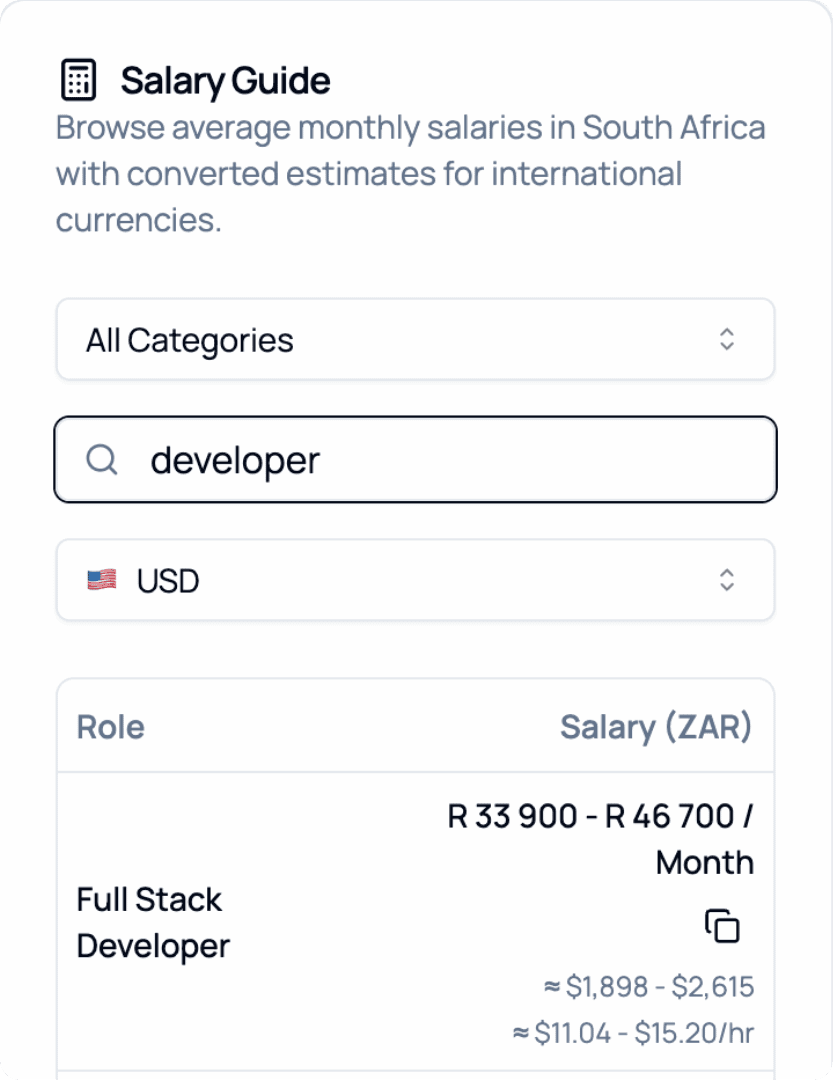
2026 Salary Guide: South Africa
Discover South African Salaries by Role. Compare costs and see how much you can save.