TL;DR
Manual prospecting by outsourced specialists is more effective than "spray and pray" automation in 2026.
Hiring a South African demand gen specialist cuts costs by 70%, lowering Cost Per Meeting (CPM) from ~$187 to ~$58.
A "Split Funnel" model separates lead generation (outsourced) from closing (in-house), optimizing expensive AE time.
Risks are mitigated through "Playbook Defense," graduated autonomy, and keeping data within your own CRM infrastructure.
The "Human-in-the-Loop" approach combines AI efficiency with human nuance to avoid platform bans and build trust.
Table of Contents
- What are the risks of outsourcing demand generation, and how do we mitigate them?
- How do we integrate a South African remote worker into our US/UK Sales Team?
- Can we outsource just the "Lead Gen" part and keep "Closing" in-house?
- Why hire a human when AI is cheaper?
- The ROI of the South African Advantage
- Final Thoughts
B2B demand generation is hitting a wall. For years, the play was simple: buy a massive lead list, plug it into an automation tool, and blast out thousands of emails. But this "spray and pray" method has stopped working. Buyers are tired of generic spam, and platforms like LinkedIn are banning accounts that use bots.
The math doesn't add up anymore for domestic teams. You can't pay a US-based SDR $90,000 a year to manually research 10-K reports and write individual messages. It’s too expensive, and domestic talent often burns out on these repetitive tasks within 15 months. To stay competitive, companies are moving toward outsourced demand generation to handle the "heavy lifting" of manual prospecting.
One of the most effective ways to scale this is to hire a digital marketing virtual assistant who can execute high-touch outreach without the massive overhead. Many businesses are choosing to hire talent from south africa because of the unique mix of native English skills, cultural alignment with Western markets, and a time zone that overlaps perfectly with the US and UK.
By using outsourced marketing solutions, you can move away from risky automation and build a predictable pipeline using real humans.
What are the risks of outsourcing demand generation, and how do we mitigate them?
To mitigate the risks of outsourced demand generation, companies should use a "Playbook Defense" that includes strict standard operating procedures (SOPs), tiered autonomy where managers review drafts before sending, and "Technological Sovereignty" by keeping all work within the company’s own email and CRM infrastructure.
Protecting Your Brand and Data
The primary concerns around outsourcing high-stakes sales functions often involve reputational damage from "rogue" messaging and the security of lead data. If a contractor sends a tone-deaf message, it can go viral and hurt your brand. There is also the fear of "knowledge leakage" if a specialist takes your proprietary strategies to a competitor.
You can build a "moat" around your brand using these steps:
- The 90-Day Playbook: Provide a comprehensive SOP that includes approved templates, your specific tone-of-voice, and a "Do Not Say" list of forbidden phrases.
- Graduated Autonomy: Start new hires with research and list building only. Move to a "Drafts Only" phase in month two, where a manager approves every message before it is sent.
- In-House Infrastructure: Always issue a company email address (name@yourcompany.com) and a seat on your own sales engagement platform. This ensures you own the relationship history and can revoke access immediately if the contract ends.
- Compliance Alignment: South Africa’s Protection of Personal Information Act (POPIA) aligns closely with GDPR, ensuring that hire south african remote workers comes with a built-in understanding of high data protection standards.
How do we integrate a South African remote worker into our US/UK Sales Team?
To integrate a specialist effectively, you must treat them as a core team member rather than a "vendor" by establishing a "Golden Hour" for real-time video stand-ups, providing full access to your internal tech stack (Slack, HubSpot, Zoom), and fostering a culture of immediate feedback on market intelligence.
Building a Borderless Revenue Team
Integration is the primary factor that prevents churn and keeps morale high. When a remote worker is isolated, they lose context of the shifting sales landscape. Successful organizations use a "Sync and Scale" framework:
- The "Golden Hour" Stand-up: Mandate a specific time where your specialist overlaps with the domestic team (e.g., 9:00 AM EST / 3:00 PM SAST) for a video call. This builds rapport and allows for rapid course correction.
- Tech Stack Parity: Don’t relegate your outsourced team to separate systems. Give them the same seats on Slack and your CRM to ensure data flows seamlessly and they feel a sense of belonging.
- Cultural Exchange: South Africans value relationship building; spending five minutes on non-work "small talk" builds the trust necessary for long-term loyalty.
- Market Intel Loops: If your Closers hear a new objection on a call, that intel must reach the Demand Gen Specialist immediately so they can adjust their outreach hooks.
Staying updated on the latest sales trends from HubSpot can help your team align their outreach with shifting buyer behaviors. Using data-backed benchmarks, like those found in Klenty’s cold email research, ensures your integrated team is aiming for realistic, high-performance goals.
Can we outsource just the "Lead Gen" part and keep "Closing" in-house?
Yes, and this "Split Funnel" model is often the most effective structure for high-growth B2B companies. It operates on the principle of comparative advantage, ensuring that your most expensive domestic assets—your Account Executives (AEs)—spend their time exclusively on high-value conversations rather than manual data entry.
The Logic of the Split Funnel
This approach succeeds because it acknowledges that "hunting" for leads and "closing" deals require fundamentally different psychological profiles. Successful prospecting requires high resilience, meticulous attention to detail, and a high tolerance for repetitive tasks. In contrast, closing requires deep empathy, complex negotiation skills, and long-term strategic thinking.
By using outsourced marketing solutions to handle the top-of-funnel work, you gain three strategic advantages:
- Cost Efficiency: It is financially inefficient to pay a senior Closer, who may earn $150,000+ per year, to scrape LinkedIn for email addresses. By hiring a specialist in South Africa for roughly $25,000, you redirect your expensive domestic talent toward 100% revenue-generating activities like demos and negotiations.
- Rapid Scalability: If you need more pipeline next month, you can add two or three hire talent from south africa roles in a matter of weeks. Scaling a domestic closing team is significantly slower and carries much higher financial risk.
- Reduced Burnout: Domestic SDRs often burn out because they view prospecting as a temporary stepping stone. In South Africa, these are viewed as premium, long-term career opportunities, leading to much higher retention and consistent pipeline quality.
The Handoff Protocol
The critical success factor for this model is the "handoff". To ensure a seamless transition, the specialist should not just book a meeting, but provide a full prospect "dossier" including:
- Verified decision-maker contact details.
- Specific "hooks" from recent 10-K filings or podcasts used in the outreach.
- Initial discovery notes regarding the prospect's pain points.
This ensures your AE enters every call fully briefed, maintaining the professional standard your brand requires.
Why hire a human when AI is cheaper?
The best approach to outsourced demand generation in 2026 is a "Human-in-the-Loop" model. While AI can draft messages and clean data at scale, humans are essential for navigating complex cultural nuances, reading subtle buying signals, and ensuring platform safety on sites like LinkedIn, which increasingly ban automated bot activity.
The Limits of Pure Automation
AI agents often promise to automate the entire sales development role for a fraction of the cost. However, strictly relying on AI has revealed significant limitations in high-stakes B2B environments.
- Nuance and Context: AI frequently struggles with sarcasm, cultural humor, and complex buying signals. For example, if a prospect posts about "surviving a messy migration," an AI might pitch a migration tool (too late), whereas a human knows to offer post-migration optimization (timely).
- Trust Signals: In an era of deepfakes and mass-produced content, "human" has become a premium trust signal. Buyers are becoming adept at spotting AI-generated text that feels "too smooth" or uses repetitive structures.
- Platform Safety: Most AI tools that interact directly with LinkedIn risk permanent account bans. A human digital marketing virtual assistant working manually ensures your profile remains safe and your reputation stays intact.
The Hybrid Winner
Smart organizations don't choose between human and machine; they use both. A South African specialist can use AI tools to generate first drafts and organize massive lists, but the final decision and the "click" to send are always human. This captures the efficiency of modern technology with the safety and efficacy of human judgment.
The ROI of the South African Advantage
To see the impact of outsourced marketing solutions, consider a mid-market company needing 40 meetings per month. A domestic hire in the US might cost $90,000 annually, leading to a cost-per-meeting (CPM) of roughly $187.50. In contrast, a South African specialist costs approximately $28,000 for the same output, dropping your CPM to just $58.33.
This creates a powerful multiplier effect. For the same $90,000 budget, you can hire three specialists in South Africa, generating 120 meetings per month instead of 40. This 3x pipeline growth for a lower total cost allows companies to test new markets with significantly lower risk and maintain a healthier customer acquisition cost.
Final Thoughts
The secret to growth in 2026 isn't a new "growth hack" or more aggressive automation. It is the disciplined, daily execution of high-quality, personalized outreach—the "heavy lifting" that builds pipelines brick by brick.
By deciding to hire talent from south africa, you gain the human nuance needed to build trust, the high English proficiency required for professional communication, and a cost structure that allows you to scale without burning out. This allows your expensive domestic team to stop scraping lists and start closing deals.
In a world that is automating everything, the companies that win will be those that use a digital marketing virtual assistant to humanize their brand at scale.
Explore related hiring options
Useful next pages based on this article's topic:
- Remote SEO Specialist role — organic growth execution and reporting
- On-Page SEO Optimization service — content relevance and ranking improvement
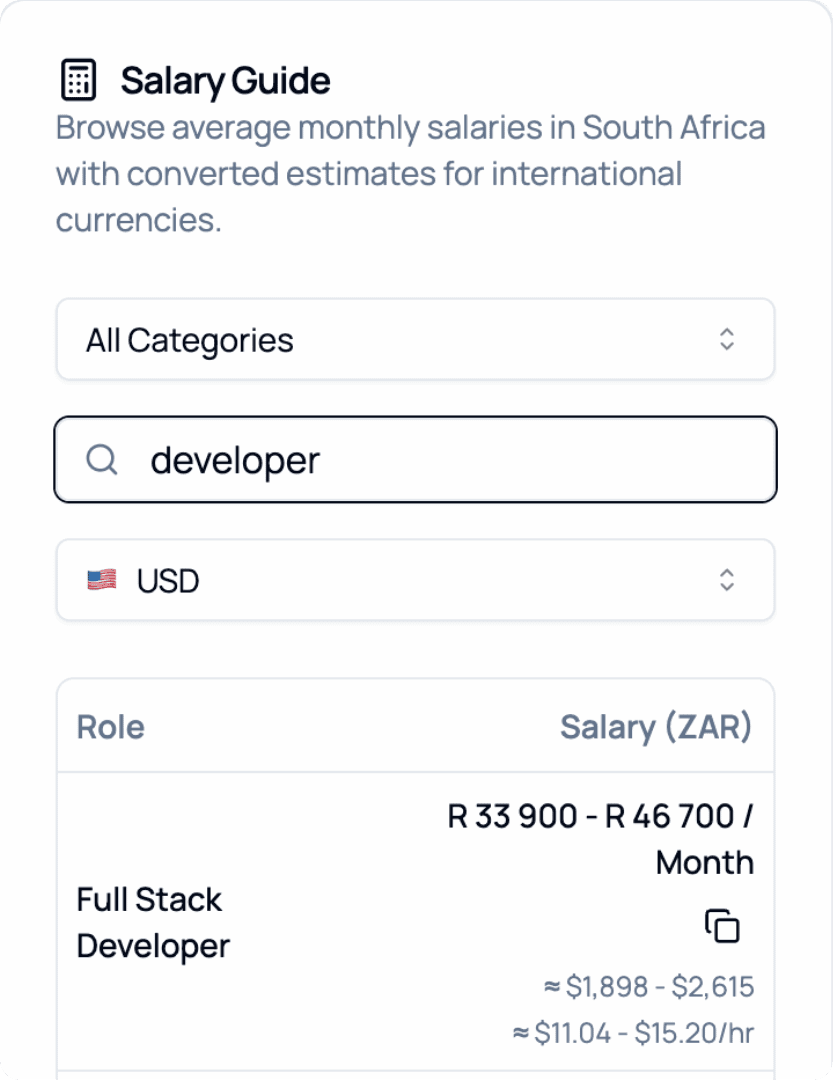
2026 Salary Guide: South Africa
Discover South African Salaries by Role. Compare costs and see how much you can save.