TL;DR
Prevent stockouts with "safety stock" optimization and dynamic reorder points.
Sync inventory across Shopify, Amazon, and TikTok Shop to avoid "overselling".
Hire South African talent to manage demand forecasting and supplier relations.
Table of Contents
The ecommerce landscape of 2026 isn't defined by how easy it is to start a business, but by how difficult it is to scale one profitably. While global sales are projected to hit $37.05 trillion, the barrier to sustained profitability has risen dramatically due to saturated markets and high acquisition costs. To survive, brands must shift focus from front-end marketing to the "back-end" machinery of inventory science.
Managing stock across Shopify, Amazon, and TikTok Shop quickly turns into a complex logistical puzzle where a single error leads to stockouts or wasted capital. Many brands bridge this gap by choosing to hire an ecommerce virtual assistant from South Africa talent to act as an ecommerce virtual assistant, ensuring that supply always meets demand without overextending resources.
In this guide, we’ll break down the biggest ecommerce inventory management challenges and solutions for 2026, from technical math to the human talent needed to run it all.
How Do You Calculate Safety Stock and Reorder Points for Scaling Brands?
Safety stock acts as a buffer against supply chain variability and demand spikes. It is calculated by subtracting average usage times average lead time from maximum usage times maximum lead time. The Reorder Point (ROP) is then determined by adding this safety stock to the lead time demand, triggering replenishment alerts.
The Mathematics of Availability
Scaling brands cannot rely on "gut feeling" for restocking; they must move to statistical models that account for variability. Using a safety stock calculation formula is the only way to protect your margins during supply chain volatility.
-
The Master Safety Stock Formula:
Safety Stock = (Max Daily Sales × Max Lead Time) - (Avg Daily Sales × Avg Lead Time)
Context: This formula accounts for the "worst-case scenario"—when sales are at their highest and suppliers are at their slowest.
Risk: Relying only on averages ensures you will be out of stock 50% of the time during periods of volatility.
-
The Standard Deviation Approach (Z-Score): For high-volume brands, a more precise method involves the Z-score to represent a desired service level (e.g., 95% availability):
Safety Stock = Z × √((Avg Lead Time × σd²) + (Avg Daily Demand² × σLT²))
Economic Order Quantity (EOQ) and ROP
Once you have your buffer, you need to know exactly when to pull the trigger on a new order.
-
Reorder Point (ROP) Trigger:
ROP = (Avg Daily Unit Sales × Avg Lead Time Days) + Safety Stock
-
Economic Order Quantity (EOQ): To balance holding costs against ordering costs, use the formula:
EOQ = √((2 × D × S) / H)
Dynamic Adjustments: If shipping costs (S) rise, you should mathematically order more units less frequently; if warehouse fees (H) rise, you should order fewer units more often.
Because supplier lead times change constantly, many brands use an inventory management virtual assistant to update these inputs weekly. This ensures your ROP is accurate to current reality, not just the theory you had six months ago.
How Can You Prevent Stockouts Across Multiple Sales Channels?
Preventing stockouts requires real-time multi-channel inventory synchronization to ensure stock levels update instantly across all platforms. Brands must combine automated software with accurate demand forecasting for 2026, adjusting for supply chain volatility and seasonal trends to maintain an optimal inventory turnover ratio.
The Difficulty of Multi-Channel Inventory Synchronization
Selling on multiple platforms like Amazon, Shopify, and eBay simultaneously creates a high risk of "overselling." If you have one item left and two people buy it on different sites at the same time, you face a cancelled order and a penalty from the marketplace.
-
Centralized Systems: You need a single source of truth. Your inventory management software must "talk" to every sales channel every few seconds.
-
Data Integrity: Discrepancies often start in the product catalog. According to research on effective product catalog management, poor data architecture leads to inventory errors that kill customer trust.
-
Human Oversight: Even the best software has API glitches. A South African remote operations manager can monitor these syncs during US or UK business hours, catching errors before they result in a "refund" email to a frustrated customer.
Demand Forecasting 2026: Beyond Historical Data
Supply chain volatility is the new normal. Relying on what you sold in 2023 to predict 2026 is a recipe for failure.
-
Inventory Turnover Ratio: You want to move stock quickly, but not so fast that you can’t replenish. A low ratio means your capital is trapped in a warehouse; a ratio that is too high means you're constantly fighting stockouts.
-
Agile Forecasting: Modern brands look at "micro-trends." If a product starts trending on social media, you need an ecommerce virtual assistant to adjust your replenishment orders immediately, rather than waiting for the end-of-month review.
-
Buffer for Volatility: Lead times are no longer guaranteed. Successful brands are now adding a "volatility buffer" of 10-15% to their standard lead time calculations to account for global shipping delays.
By hiring South African remote workers, brands get access to talent that is highly proficient in English and operates in a time zone that overlaps perfectly with Europe and the East Coast of the US. This means your inventory is being managed while your primary market is awake and buying.
How Can Automation and Talent Improve Inventory Turnover Ratios?
Improving inventory turnover requires a dual approach: automation for real-time tracking across channels and human analysis to identify "dead stock" and "slow movers". By automating reorder alerts and employing talent to negotiate with suppliers and manage promotions for slow inventory, brands maximize cash flow efficiency.
The "Dead Stock" Detective
Dead stock—inventory that has not sold in 365 days—is a financial liability that incurs storage fees and ties up working capital. In fast-moving sectors like fashion or electronics, these items can lose 20-50% of their value due to depreciation and seasonality.
-
Tracking GMROI: Brands must monitor Gross Margin Return on Investment to ensure they earn a profit for every dollar invested in stock. Use the formula:
GMROI = Gross Margin / Avg Inventory Cost
If this ratio falls below 1.0, the business is losing money on that inventory.
-
ABC Analysis for Prioritization: Categorize inventory to focus management efforts where they matter most.
- A-Items: High-value, fast-moving products requiring strict control and frequent cycle counts.
- B-Items: Moderate value items often managed through automated reordering.
- C-Items: Slow-moving products that are prime candidates for liquidation or long-tail SEO strategies.
Human-Led Value Recovery
A South African remote operations manager or dedicated VA can run weekly "Age of Inventory" reports to catch underperforming SKUs before they become obsolete. Instead of slashing prices indiscriminately, they can implement targeted recovery strategies:
-
Strategic Bundling: Pair slow-moving "C-items" with bestsellers to increase the perceived value and clear warehouse space.
-
Tiered Markdowns: Implement rules-based discounts (e.g., 20% off after 60 days) to move stock while preserving as much margin as possible.
-
Re-Commerce & Liquidation: Coordinate with "Pre-Loved" marketplaces or bulk liquidators to recover partial value from discontinued items.
Why Should You Outsource Inventory Monitoring to Specialized Talent?
Outsourcing inventory monitoring to specialists ensures continuous oversight of stock levels, lead times, and supplier performance without distracting leadership. These experts manage daily reconciliation, PO generation, and data accuracy, providing the human intelligence required to interpret ERP data and prevent costly supply chain disruptions.
The South African Operations Advantage
When looking to hire talent from south africa for inventory roles, the benefit isn't just a lower price tag. You are accessing a workforce specifically trained in the mechanics of global trade.
-
Analytical Education: South Africa produces a high volume of graduates with degrees in commerce and supply chain management. You aren't hiring a generalist; you are hiring a professional who understands Bills of Lading and Incoterms.
-
Cost vs. Capability: For the cost of an entry-level admin in the US or UK, brands can secure mid-level operational talent. This allows you to deploy a "human layer" over your software to catch what the AI misses—like adjusting orders for seasonal factory shutdowns.
-
Time Zone Compatibility: South Africa is perfectly aligned with UK and European business hours. For US-based brands, South African teams are accustomed to shift work that covers the East Coast, ensuring inventory updates happen while your market is active.
-
High English Proficiency: Successful logistics requires clear communication with global suppliers and freight forwarders. South African talent offers a neutral accent and native-level English, preventing the "lost in translation" errors that lead to shipping disasters.
Conclusion
Scaling an ecommerce brand in 2026 is no longer about who can spend the most on ads. It's about who can manage their "back-end" machinery with the most precision. By solving ecommerce inventory management challenges and solutions through a combination of mathematical formulas and skilled talent, brands move from fragile growth to resilient profitability.
Whether you need to refine your safety stock calculation formula or synchronize stock across five different channels, a dedicated ecommerce virtual assistant from South Africa provides the discipline and data-driven mindset needed to keep your shelves full and your capital fluid.
Explore related hiring options
Useful next pages based on this article's topic:
- Remote Ecommerce Specialist role — store operations and channel performance
- Inventory Management & Forecasting service — stock planning and margin protection
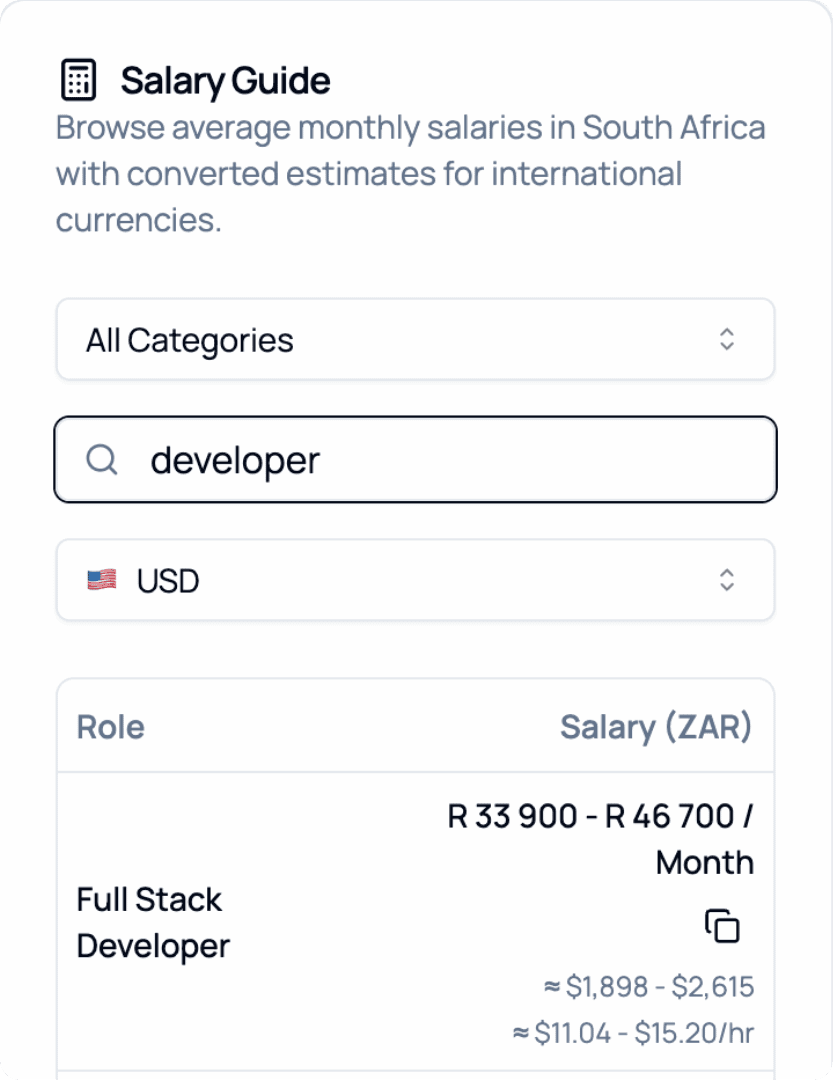
2026 Salary Guide: South Africa
Discover South African Salaries by Role. Compare costs and see how much you can save.