TL;DR
Manual vendor insurance tracking creates "insurance gaps" that leave property owners liable for millions in claims.
A "Forensic COI Audit" proactively checks policies 30 days before expiration, preventing coverage from lapsing.
South African virtual assistants act as compliance officers, leveraging legal literacy to catch nuanced endorsement errors.
Automated vendor tracking strengthens "risk transfer," ensuring liabilities stay with the vendor, not the property owner.
Centralized compliance lowers operating expenses and boosts portfolio value by making assets "audit-ready" for investors.
Table of Contents
Real estate is a game of risk management. While most property owners focus on interest rates and market liquidity, a more immediate threat often hides in the filing cabinet: real estate vendor insurance compliance. When a contractor steps onto your property, they bring more than just tools; they bring potential liability. If their insurance is expired or their paperwork is flawed, that liability lands directly on your balance sheet.
The operational reality in 2026 is that manual tracking isn't enough to protect your assets. Relying on property managers to catch every expiring policy leads to "administrative drag" that costs more than just time. It leads to a "protection gap" where a policy might lapse on a Friday, but the vendor is still on-site on Monday. To scale safely, firms are moving toward a specialized real estate virtual assistant model to handle the heavy lifting of forensic auditing.
South African talent is uniquely positioned to solve this friction. With a workforce educated in Western legal frameworks and high English proficiency, they can navigate complex insurance endorsements that generalist assistants often miss. By integrating these specialists into your real estate virtual assistant workflow, you can ensure that every vendor is vetted with institutional-grade accuracy before they ever set foot on your property.
What are the biggest risks of manual vendor compliance in 2026?
The primary risks of manual vendor compliance include "insurance gaps" where policies expire without notice, missing "Additional Insured" endorsements, and inadequate coverage limits. In 2026, a single claim from an uninsured vendor can lead to million-dollar lawsuits, soaring premiums, or making a property entirely uninsurable.
The "Insurance Gap" Trap
Managing a portfolio is a marathon of paperwork. When you track insurance manually, you're relying on a spreadsheet that is only as good as the last time someone looked at it. This creates a dangerous "insurance gap."
- Timing Issues: A vendor’s policy might expire on a Friday. If they are scheduled to perform maintenance on Monday morning and your team hasn't checked the update, you are operating with total liability. A single slip-and-fall during this window means the property owner carries the full financial burden.
- Administrative Fatigue: Checking technical documents is boring. Busy property managers often prioritize tenant issues over verifying policy numbers. This leads to "skipping" verification steps just to clear the to-do list, which leaves your entire portfolio exposed to Real estate vendor insurance compliance failures.
Hidden Language Failures
Even if a vendor sends over a document that looks valid, the devil is in the details. Software can scan for dates, but it often misses the nuance of the language.
- Endorsement Errors: Many automated systems miss whether the "Additional Insured" language specifically matches your property’s exact legal entity. If the name is slightly off, maybe "LLC" is missing or the name of a subsidiary is used, the insurance carrier can deny the claim.
- Policy Specifics: Liability standards are tightening. According to reports from firms like Cushman & Wakefield, operational hardening is forcing owners to seek higher margins through efficiency. A vendor might have standard General Liability, but they may lack the "Umbrella Coverage" or specific endorsements required by stricter 2026 liability policies. If your manual process doesn't catch the lack of an umbrella policy for a high-risk job like roofing, you're one accident away from a major loss.
How do you build a "Forensic" COI audit workflow?
A forensic COI audit workflow involves creating a 30-day "expiry outlook" report, contacting insurance brokers directly three weeks before policy expiration, and verifying that "Additional Insured" endorsements exactly match the management agreement. This proactive approach ensures zero coverage gaps and shifts risk away from the asset owner.
The Pre-Emptive Strike Protocol
Most property managers wait for a vendor to send a renewed certificate. This is a mistake. By the time the vendor remembers, the old policy has often already lapsed. A forensic vendor compliance workflow flips the script by being proactive rather than reactive.
- Broker Communication: Instead of chasing a busy contractor who is likely on a job site, your assistant contacts the insurance broker directly. This happens three weeks before the expiration date. Brokers are usually more responsive and provide the correct documents faster than the vendors themselves.
- Compliance Matrix: Not all vendors carry the same risk. A roofer needs significantly higher limits than a carpet cleaner. You need a master list of requirements categorized by vendor type. This ensures every contractor is vetted against the specific risk level they bring to the property.
Verifying Insurer Solvency
A piece of paper is worthless if the insurance company behind it doesn't have the money to pay a claim. Part of effective property management risk mitigation is checking the financial health of the carrier.
- NAIC & A.M. Best Ratings: Your workflow should include a step to check the Insurer NAIC Number to confirm the carrier is solvent. Most institutional owners require a rating of A- or better from A.M. Best to ensure the insurer can actually cover a major loss.
- The Rejection Script: If a COI doesn't meet your standards, don't just say "it's wrong." Your team should use specific, non-generic rejection notices. For example: "Missing endorsement form CG 20 10." This tells the broker exactly what is missing, which prevents the back-and-forth emails that stall projects.
Why are South African remote talents best for legal-adjacent compliance tasks?
South African virtual assistants are uniquely qualified for compliance tasks because many have backgrounds in paralegal work or insurance administration. Their education in Western legal frameworks allows them to interpret complex document verbiage, such as the difference between "General Liability" and "Professional Liability," with institutional-grade accuracy.
Legal and Financial Literacy
When you hire South African virtual assistants for property management, you aren't just hiring data entry help. You are hiring professionals who understand the weight of a contract.
- Common Law Roots: South Africa’s legal system is based on Roman-Dutch law but heavily influenced by English Common Law. This makes the transition to US or UK contracts seamless. They understand the "why" behind an additional insured endorsement, which means they catch errors that others would ignore.
- Critical Thinking: A generalist VA might see a date and mark it as "complete." A SAVA looks at the policy exclusions. They can logically identify if a vendor’s "pollution exclusion" will be a problem for a remediation contractor and flag it before the work starts.
The "Ubuntu" Communication Advantage
Effective compliance requires a mix of firmness and professionalism. You have to tell a broker they are wrong without burning the bridge.
- Firm but Professional: South Africans are known for a culture of "Ubuntu" (humanity toward others), which translates to a very high emotional intelligence in business. Combined with neutral accents that are easily understood in the US and UK, they can conduct the "soft-touch" negotiations needed to get brokers to prioritize your paperwork.
- Follow-the-Sun Efficiency: Time zone compatibility is a massive leverage point. If you are based in the US, a South African VA is working while you sleep. They can complete a full audit of every new vendor added the previous day. When your property managers log in at 8:00 AM, the compliance report is already sitting in their inbox. This "follow-the-sun" model keeps your projects moving without a 24-hour delay for paperwork.
How does automated vendor tracking improve property asset value?
Robust vendor tracking improves asset value by lowering insurance loss ratios and protecting Net Operating Income (NOI) from unexpected legal costs. By ensuring all liabilities are covered downstream, property owners become more "appetizing" to top-tier insurers and institutional investors, often leading to lower premiums and higher portfolio valuations.
Strengthening the Risk Transfer
The goal of insurance compliance is simple: when an accident happens, the vendor’s insurance should pay, not yours. This is called risk transfer. If your compliance is weak or your records are missing, a claim might bounce back to your own policy. This increases your loss ratio and eventually hikes your premiums.
By maintaining a tight vendor compliance workflow, you protect your bottom line. As noted in recent Cushman & Wakefield market reports, preserving margins is the priority for 2026. Institutional investors look for properties with "clean" risk profiles. If you can provide a report showing every vendor is fully vetted, your asset is naturally more valuable during a sale or appraisal.
Audit Readiness
Selling or refinancing a property requires deep due diligence. If your certificates of insurance are scattered across different property managers' emails or physical folders, it slows down the deal. A centralized, digital repository of verified documents makes your property "audit-ready."
It proves to potential buyers that the asset has been managed with institutional-grade oversight. Having a dedicated specialist handle your Certificate of Insurance (COI) tracking means you are always ready for an insurance company audit or a surprise inspection. This level of organization signals to lenders that you are a low-risk borrower, which can help in securing better financing terms.
Lowering Operating Expenses and Preventing Delays
Hiring a full-time risk manager in the US is expensive and often unnecessary for mid-sized portfolios. However, skipping the role entirely is a gamble. Centralizing this function under a SAVA hub gives you high-level quality control at a fraction of the cost of a local hire. This lowers your overall operating expenses (OpEx) and directly boosts your NOI.
- Avoiding Project Halts: Proactive renewals prevent costly delays. Nothing stops a renovation or emergency repair faster than an expired insurance policy. If a vendor's insurance expires mid-project, work must legally stop. A proactive real estate virtual assistant ensures renewals happen behind the scenes so the hammers keep swinging.
- Synergy and Cost Control: High-quality talent from South Africa, often ranked highly on Clutch.co for BPO services, allows your local team to stop playing "paperwork police." They can focus on tenant retention and asset growth while the compliance engine runs in the background.
Managing risk doesn't have to be a bottleneck. By using specialized South African virtual assistants for property management, you move from chasing paperwork to building a more resilient, more valuable portfolio. It’s a simple shift that protects your assets and your time. If you want to scale without the liability, integrating a real estate virtual assistant into your compliance workflow is the most logical next step.
Final Thoughts
The reality is that administrative friction shouldn't be the thing that sinks your ROI. You need a system that runs without you having to micromanage every insurance certificate or chase down a busy broker. By bringing on a specialized real estate virtual assistant from South Africa, you are getting more than a helper; you are getting a compliance officer who understands the legal stakes. This move protects your assets, keeps your projects on schedule, and lets you focus on finding the next deal instead of hunting for a missing endorsement. It is a practical shift that turns a major liability into a managed, quiet part of your business.
Explore related hiring options
Useful next pages based on this article's topic:
- Remote Real Estate Coordinator role — real estate operations and deal support
- MLS Listing Management service — listing speed, accuracy, and compliance
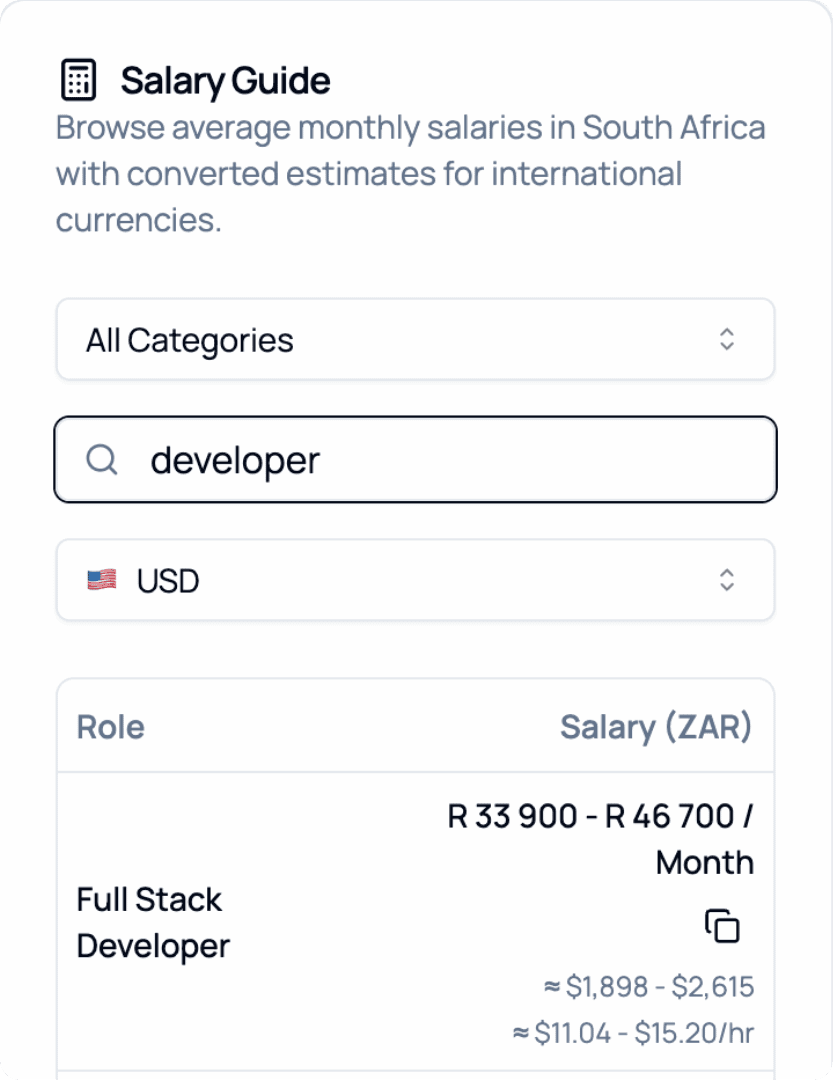
2026 Salary Guide: South Africa
Discover South African Salaries by Role. Compare costs and see how much you can save.