TL;DR
Systematically outsource 12 critical legal admin tasks, including conflict checks, discovery data entry, and records retrieval.
Overcome "Sunday Night Dread" by building a reliable back-office machine that keeps your practice compliant and organized.
Reduce "lockup" and improve cash flow by having a dedicated assistant manage invoicing and accounts receivable follow-ups.
Table of Contents
It begins as a subtle encroachment on your Sunday evening. What used to be a time for rest or family becomes a period of low-level anxiety, a phenomenon widely recognized among legal professionals as the "Sunday night dread".
This is not necessarily a fear of the courtroom or the complexity of the law itself, you have trained for those challenges. Rather, it is the dread of the administrative mountain waiting on your desk: the unfiled motions, the unbilled hours, the chaotic inbox, and the client follow-ups that slipped through the cracks during a frantic week of litigation. Why don’t we just delegate all of these tasks to a virtual legal assistant?
The "Hidden" Growth Killer in Small Practices
There exists a pervasive paradox within the modern legal landscape, particularly for solo practitioners and small-to-mid-sized firms in the United States, the United Kingdom, and Australia. Success, ironically, often feels like failure. As your reputation grows and your client base expands, the administrative infrastructure required to support that growth begins to cannibalize the very thing you sell: your time.
We have analyzed the operational structures of hundreds of law firms, and the data reveals a stark reality: more clients mean more administration, which eventually leads to a hard ceiling on billable hours. According to the 2024 Legal Trends Report, while solo and small firms are capturing more revenue than in previous years, they are witnessing only modest gains in actual billable hours. The growth is happening, but it is inefficient growth.
The friction of running the business is slowing down the practice of law. This administrative creep is the "hidden" growth killer. It manifests in:
- "Lockup": The delay between doing the work and getting paid, which creates cash flow crises even in profitable firms.
- Attorney Burnout: Highly skilled advocates spend up to 40% of their day performing tasks that do not require a law degree, effectively functioning as the world's most expensive filing clerks.
However, there is a data-backed solution emerging from high-performing firms. The industry is witnessing a strategic pivot away from the "do-it-all" superhero model toward a distributed workforce model. Firms that leverage remote legal support services are seeing significant upticks in profit margins by shifting non-billable, process-heavy tasks to lower-cost, high-skill regions.
This guide provides an exhaustive 12-task checklist designed to help you hire talent from South Africa and scale your efficiency. By outsourcing legal administrative tasks, attorneys can reclaim the mental bandwidth required for high-level strategy and client advocacy.
How South African Talents Benefit Law Firms?
In the global marketplace for talent, not all outsourcing destinations are created equal, particularly for the legal sector. While other regions may offer general administrative support, the legal industry requires a specific blend of linguistic precision, cultural affinity, and institutional knowledge.
1. Time Zone Alignment: The "Follow-the-Sun" Workflow
One of the historical friction points of outsourcing has been latency, the delay between assigning a task and receiving the output. South Africa offers a geographic advantage that resolves this for the major Western legal markets:
- For UK and Europe: South Africa Standard Time (SAST) is virtually aligned (GMT+2), allowing for a synchronous working relationship.
- For US Firms: Specifically on the East Coast, the 6-7 hour difference creates a powerful "overnight" workflow. You assign a brief at 5:00 PM EST; by 8:00 AM the next morning, the completed work is in your inbox.
- For Australian Firms: The "hand-off" model ensures momentum is never lost; as the Australian day ends, the South African day begins.
2. Legal & Linguistic Parity: A Common Law Foundation
Unlike many hubs operating under Civil Law systems, South Africa's legal system is heavily rooted in English Common Law. A South African law graduate understands:
- Stare Decisis (precedent).
- The adversarial trial structure and the sanctity of "privilege".
- Native-level English proficiency with neutral accents, ensuring clear, professional communication with clients.
3. Cost-Effectiveness: The Economic Arbitrage
The economic argument is compelling. Firms can often secure professionals with university degrees (LL.B) for a fraction of local costs.
| Role Comparison | Average Annual Cost (US/UK/AU) | Average Annual Cost (South Africa Remote) | Potential Savings |
|---|---|---|---|
| Legal Assistant | $55,000 - $75,000 | $18,000 - $30,000 | ~60-70% |
| Junior Paralegal | $60,000 - $80,000 | $20,000 - $32,000 | ~60-70% |
| Legal Secretary | $45,000 - $60,000 | $15,000 - $25,000 | ~60-70% |
* Data synthesized from 2024-2025 industry salary reports
12 Legal Tasks to Outsource Today
Streamlining Client Intake & Communication
Task 1: Initial Client Screening & Intake
- What: The systematic processing of inbound inquiries to determine if a prospect's legal issue aligns with your firm's practice area.
- Why: Attorneys often spend 5+ hours a week on unqualified leads, representing thousands of dollars in lost revenue.
- How: A South African specialist integrates into your VoIP (e.g., RingCentral) and CRM (e.g., Clio Grow) to trigger immediate outbound calls. They use empathetic scripting based on "Ubuntu" to filter prospects and schedule consultations only for qualified leads.
Task 2: Calendar Management & Appointment Scheduling
- What: Strategic management of professional diaries, including court dates, depositions, and internal case reviews.
- Why: Calendar mismanagement is a leading cause of malpractice claims.
- How: VAs with delegate access to Outlook or Google Calendar actively coordinate times, build "buffer time" for travel, and cross-reference court dockets to avoid conflicts.
Task 3: Basic Client Follow-ups
- What: Routine status updates (e.g., "Your motion has been filed") to maintain client satisfaction.
- Why: Clients who feel ignored file bar complaints, yet "quick" calls often spiral into 30-minute therapy sessions for the attorney.
- How: Remote assistants use case management software templates to provide human, native-level English reassurance during "quiet periods" of litigation.
Managing the Paper Trail (Document & Case Admin)
Task 4: E-Filing & Court Document Preparation
- What: Preparing and uploading pleadings to portals like PACER (US) or eCourts (AU). This includes OCR, bookmarking exhibits, and redacting PII.
- Why: Rejected filings due to minor formatting errors create significant liability.
- How: Utilizing the time difference, an attorney can finish a brief at 6:00 PM; the South African assistant spends the next few hours formatting and preparing the package for a final review at 9:00 AM.
Task 5: Legal Transcription
- What: Converting audio from depositions or hearings into strictly formatted text.
- Why: AI transcription often struggles with multi-speaker legal proceedings and technical terminology.
- How: South African transcriptionists use a hybrid model, correcting AI-generated base layers to differentiate between "statute" and "statue", ensuring accuracy for court records.
Task 6: Document Formatting & Table of Authorities
- What: Generating automated Tables of Contents (TOC) and Tables of Authorities (TOA) and fixing broken indentation.
- Why: Building a TOA manually is excruciatingly tedious and prone to error.
- How: Assistants use advanced MS Word skills and legal plugins to hyper-link citations in e-briefs, elevating work quality without costing attorney time.
Boosting Law Firm Efficiency through Backend Operations
Task 7: Conflict Checks
- What: Systematic searches against the firm’s database to prevent ethical breaches.
- Why: Failure to identify a conflict can lead to disqualification and severe ethical sanctions.
- How: Remote assistants run names through software like Caret Legal and prepare a "Conflict Report," allowing the attorney to make a final determination in 2 minutes instead of 20.
Task 8: Docketing & Deadline Tracking
- What: Calculating litigation deadlines based on court rules (e.g., statutes of limitations).
- Why: Missed deadlines are the primary cause of malpractice claims.
- How: Assistants act as a "human backup," reviewing weekly docket reports and sending a "Deadline Digest" every Monday morning.
Task 9: Billing & Invoicing
- What: Reviewing time entries, generating invoices, and following up on Accounts Receivable.
- Why: "Lockup" (work done but not yet paid) kills cash flow.
- How: Finance assistants generate "pre-bills" and handle the uncomfortable task of chasing money, separating the "money conversation" from the legal one.
Research & Specialized Support
Task 10: Preliminary Legal Research
- What: Gathering case law and statutes using databases like Westlaw or LexisNexis.
- Why: Spending 5 hours searching for a case "on point" is expensive for the client and often leads to write-downs.
- How: Because SA law is based on precedent, they know how to identify the ratio decidendi versus obiter dicta in a judgment.
Task 11: Records Retrieval
- What: Logistical process of obtaining medical records, police reports, or employment files.
- Why: Relentless phone calls and faxes create bottlenecks in personal injury cases.
- How: Remote assistants file HIPAA releases, maintain a tracking spreadsheet, and organize records once they arrive.
Task 12: Data Entry for Discovery
- What: Reviewing, indexing, and coding large volumes of documents in platforms like Relativity.
- Why: Manually renaming thousands of files is mind-numbing for expensive local staff.
- How: With legal training, they can flag "hot docs" (smoking gun evidence) during the data entry process.
FAQs
What about data protection & ethics?
Security is paramount. South Africa operates under the Protection of Personal Information Act (POPIA), which is closely modeled on the EU’s GDPR.
- Protocols: Work is done via secure client portals or VPNs.
- Compliance: Every worker signs a strict NDA and Data Processing Agreement that complies with local ethics rules (e.g., ABA or SRA).
How do I manage the quality?
Shift from "hiring a magician" to "building a process".
- Templates: Start with highly templated tasks like Intake or Billing.
- Feedback: Treat the remote worker like a junior associate, providing constructive feedback and clear SOPs.
Isn't this just a virtual assistant?
No. There is a critical distinction between a general VA and specialized remote legal support services. The talent sourced through HireSava often holds LL.B degrees or paralegal certifications. They are legal professionals who understand the stakes of a missed deadline.
Moving from "Doing Everything" to "Leading Your Firm"
The transition to outsourcing is as much psychological as it is operational. To break through "Superhero Syndrome," use the "Delete, Delegate, Do" framework:
- Delete: Tasks adding no value.
- Delegate: The 12 tasks listed above.
- Do: High-level strategy, court appearances, and client counseling.
The Action Step: Pick the two tasks you hate most, the ones causing the most Sunday Night Dread. Hand them off to a South African specialist. You aren't just offloading work; you are purchasing the freedom to leave the office at 5:00 PM, knowing your firm's administrative machine is humming.
Final Thoughts
The "administrative creep" is a silent killer of profitability, but it is a solvable problem. By systematically outsourcing these 12 tasks, law firms can shatter the ceiling on their billable hours.
Ready to scale your practice? Explore HireSava’s virtual legal assistants / specialists to find your first legal support specialist. We’ve analyzed the data and built the pipeline so you don’t have to. You are in safe hands.
Explore related hiring options
Useful next pages based on this article's topic:
- Remote Paralegal role — case support, research, and document workflows
- Legal Document Preparation service — drafting and filing support for legal teams
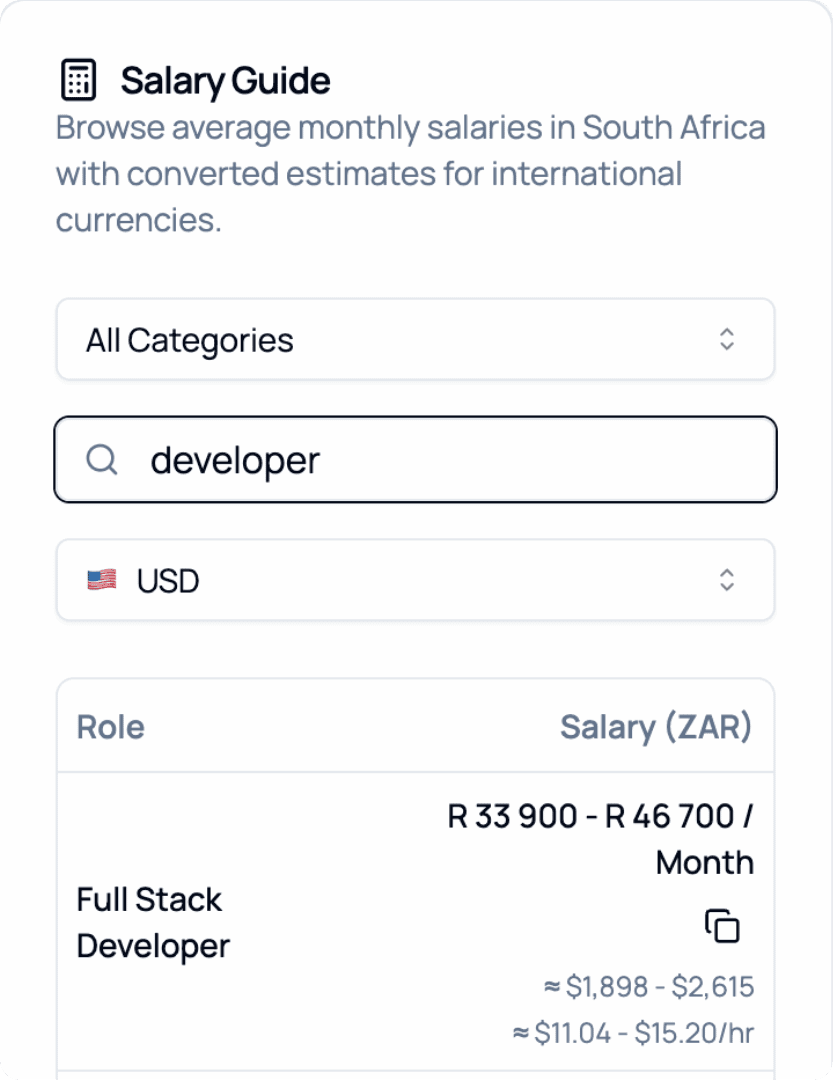
2026 Salary Guide: South Africa
Discover South African Salaries by Role. Compare costs and see how much you can save.